Start with a slow walk along the shore
You do not need a long hike to enjoy birdwatching by a lake. Choose a public path, overlook or other permitted access point where you can move slowly and stop without blocking the way. A short route with several places to pause often works better than trying to cover the entire shoreline. Before setting out, check local access rules and note where the path returns to your starting point.
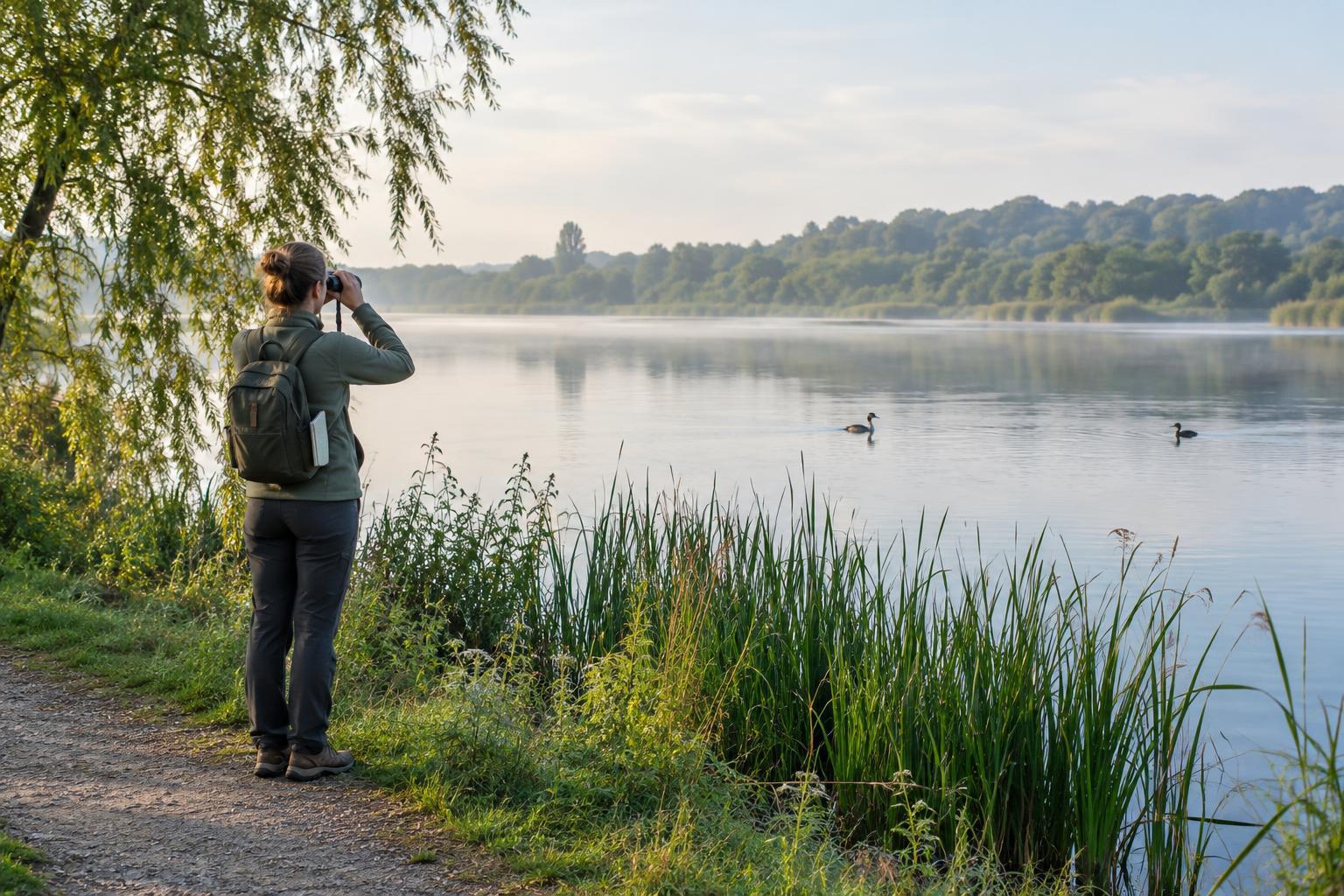
Give yourself a few minutes at each stop. Listen before you scan: a call, rustle or splash may tell you where to look. Then search the water, shoreline and nearby trees in sections rather than sweeping your eyes back and forth. Birds can be easier to notice when you stay still and let the scene settle around you.
Look where habitats meet
Different parts of a lake offer different kinds of shelter and food. Open water is a good place to scan for birds swimming or diving. Shallow edges, muddy patches and exposed rocks may draw birds that feed near the waterline. Reeds and other shoreline plants can conceal movement, while overhanging branches offer places to perch. If you can see several of these areas from one spot, take your time there.
Pay attention to transitions: where a creek enters the lake, where trees give way to an open bank, or where calm water meets a patch of vegetation. Avoid pushing through plants to get a clearer view. Watching from an established path or lookout protects the shoreline and gives birds space to carry on with what they are doing.
Pack for comfort, not complexity
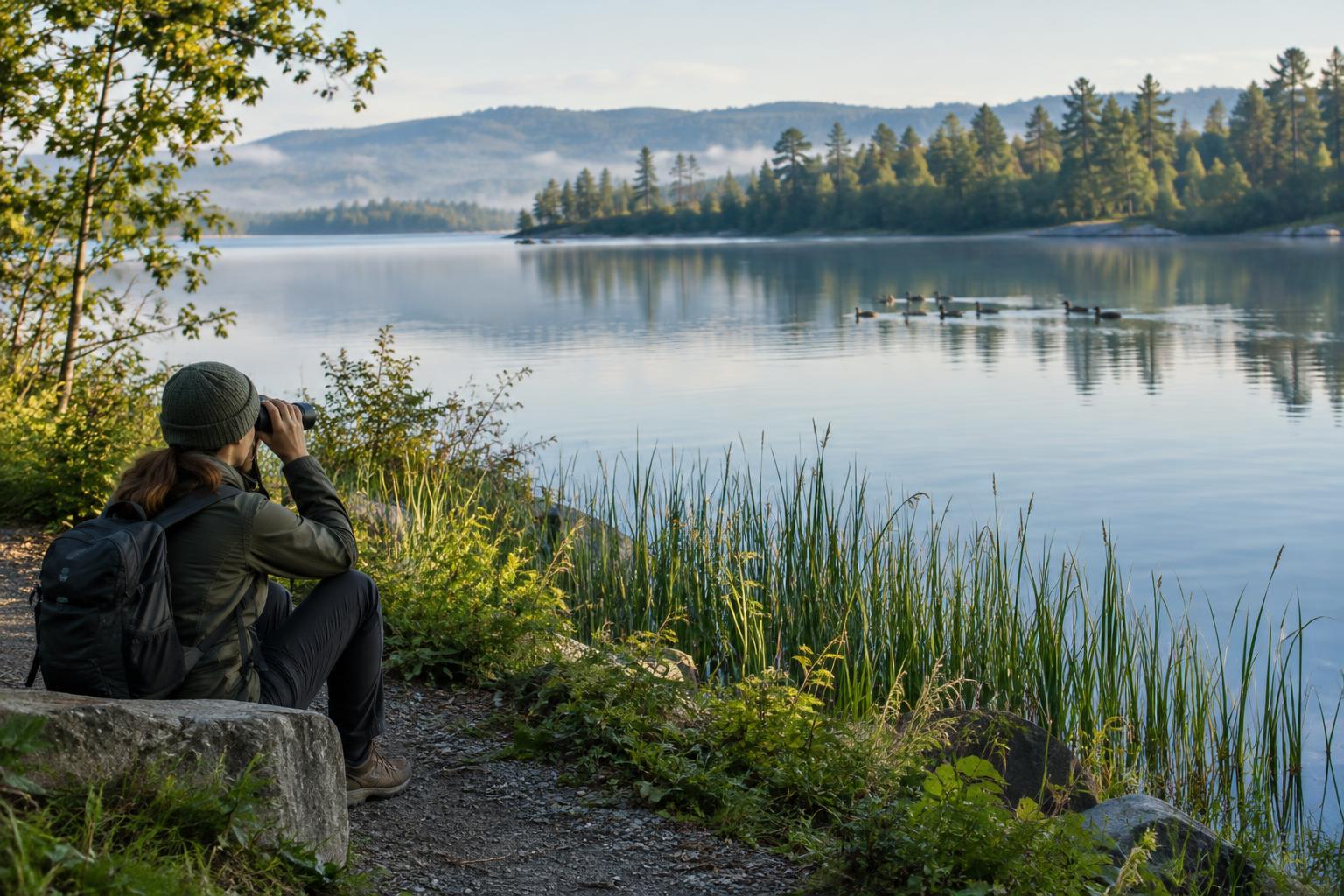
Binoculars are useful, but they are not a requirement. If you bring a pair, practice focusing before you leave: find a bird with your eyes first, keep looking at it, then raise the binoculars. A pocket notebook or a notes app can help you record details such as size, shape, color, behavior and location. Those observations are often more useful than trying to name every bird immediately.
For a comfortable outing, bring water, weather-appropriate layers and shoes suited to the path. A hat can reduce glare when you scan the lake, and a small bag keeps your hands free. If you plan to sit, consider a lightweight pad or use an existing bench. Pack out anything you bring in, including snack wrappers.
Watch quietly and give birds room
The best view is not always the closest one. If a bird stops feeding, moves away or repeatedly calls as you approach, step back and watch from farther away. Keep to marked routes where provided, and respect any posted restrictions around nesting or sensitive areas. Do not feed birds; observing their natural behavior is part of the pleasure of the outing.
For a relaxed weekend, try an unhurried visit when the light is comfortable and you have time to linger. Conditions can change, so there is no need to plan your day around a promise of sightings. If you are with a friend, take turns pointing out what you notice before reaching for an identification guide. Comparing observations can be as enjoyable as arriving at a name.
Make a small record of the visit
A few notes can turn a brief walk into a memory you can revisit. Write down where you paused, what the birds were doing and which sounds you heard. If you want photographs, begin with a picture of the habitat rather than rushing after a close-up. A shoreline, a stand of reeds or a bird on a distant branch can all help tell the story of the morning.
Keep photography secondary to the birds’ comfort. Stay on the path, avoid surrounding or following a bird for a better angle, and accept that some encounters are best enjoyed without a camera. When you return, look through your notes and choose one thing to watch for next time. Birdwatching rewards familiar places: the more patiently you visit, the more details you are likely to notice.