Start with a few places that matter most
Before filling a map with pins, ask each traveler what they would most like to do. The answers might be a shoreline walk, a swim, a leisurely lunch or time with a camera. Choose one or two priorities for each full day rather than trying to fit every suggestion into the schedule. A short list makes it easier to spot which stops belong together.
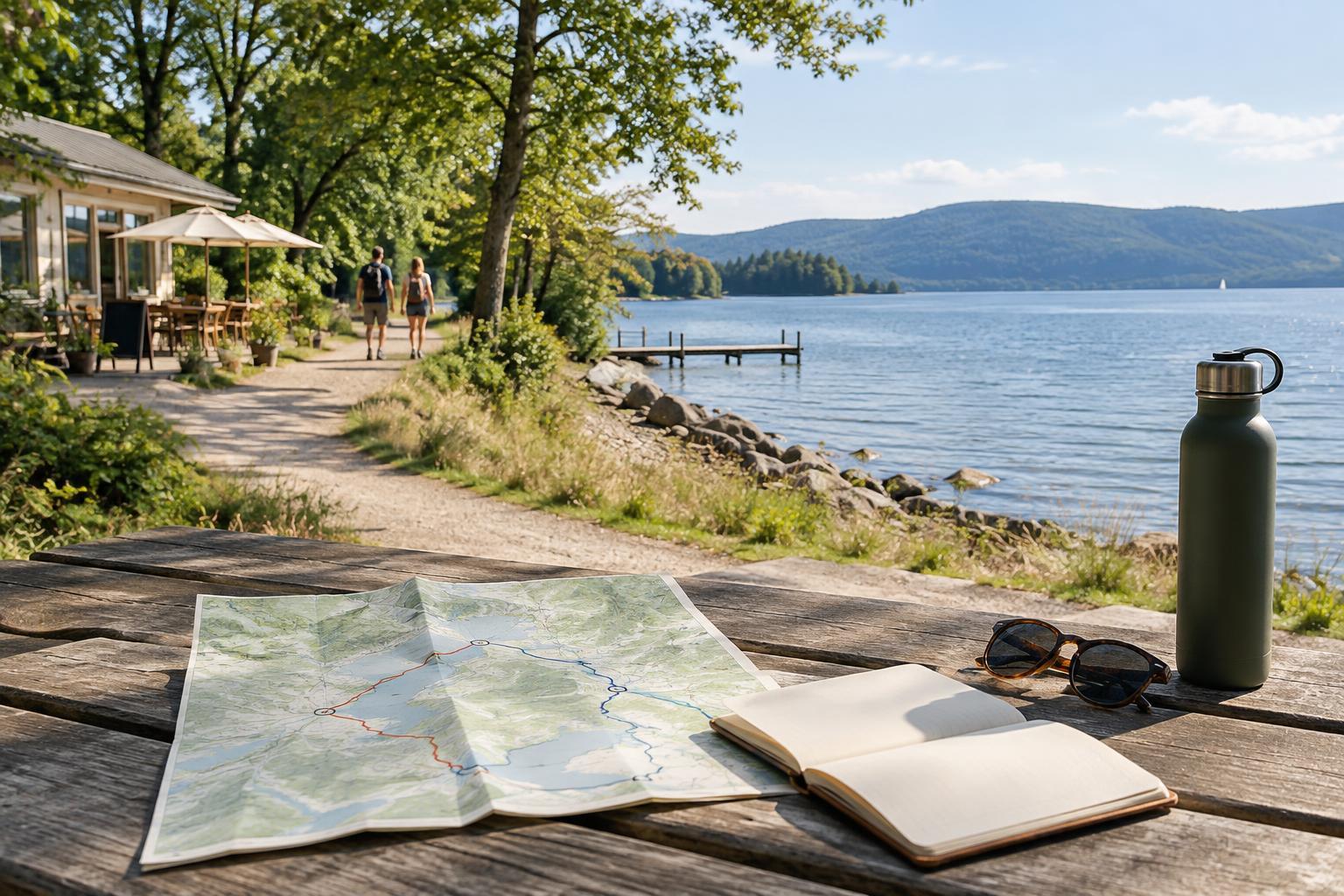
Mark the accommodation, your chosen activities and any essential stops, such as a grocery shop, on the same map. Look for clusters instead of judging distance by how close places appear to the water. A lake may separate two points that look near each other on a map, while the roads between them take a longer route. An outing usually feels simpler when its stops are on the same side of the lake or along a natural route from where you are staying.
Build each outing around one anchor
Give each half-day outing a main purpose. A morning could revolve around an easy trail, followed by breakfast or coffee nearby. An afternoon might center on a beach, with a short scenic stop on the way back. The anchor gives the outing direction; the smaller stop is optional. If a walk takes longer than expected or everyone wants to stay by the water, you can drop the extra stop without feeling that the day has gone wrong.
Think about when each activity will feel most comfortable for your group. Some travelers prefer an active outing early and a quiet afternoon; others would rather linger over breakfast before going anywhere. Place meals where they make sense along the route instead of crossing the area simply to eat at a particular time. If you plan to bring food, check whether your intended stopping place has a suitable spot to sit and whether you will need to carry everything back out.
Avoid treating the drive between stops as empty time. Parking, finding an entrance and gathering your belongings all add small transitions. Leave breathing room between an anchor activity and a reservation or agreed meeting time, especially when the outing involves changing clothes or cleaning up afterward.
Check how you will actually reach the shore
A waterfront address does not always mean there is a public place to enter the water, park or take a walk. Before building a day around a stop, check the specific access point you intend to use and look for practical details such as parking, walking distance, facilities and any posted restrictions. If you cannot confirm what you need, keep another nearby option in mind rather than making the entire day depend on that one location.
Pay attention to the last part of the journey, not just the driving route. A short distance on the map may still involve a steep path, uneven ground or a long walk from parking. Match stops to the people and equipment in your group. Carrying a picnic, towels and a cooler to several locations can make an otherwise relaxed outing feel like a series of moves. Sometimes the better plan is to settle in one place for longer.
For activities on the water, allow time to learn the local rules and assess conditions when you arrive. If the conditions or access do not suit your group, switch to a land-based outing. A flexible plan makes that decision easier.
Leave a simple route, not a rigid timetable
Once you have grouped your stops, write each outing as a short sequence: starting point, main activity, possible meal stop and return route. You do not need a minute-by-minute schedule. Note only the times that genuinely matter, such as a booking or a check-in deadline. This keeps the plan useful without making the weekend feel managed.
Choose one low-effort alternative for each outing, ideally in the same area. A sheltered café or an easy drive to a viewpoint may work when a longer outdoor plan loses its appeal. The alternative should require little preparation; otherwise it becomes another itinerary to maintain. Share the outline with your travel companions so everyone knows which parts are priorities and which can change.
Finally, protect some time near your accommodation. A well-grouped day is not an invitation to add more stops simply because they fit on the route. The advantage of traveling efficiently is having space to return, put your bags down and enjoy an unhurried lakeside weekend.