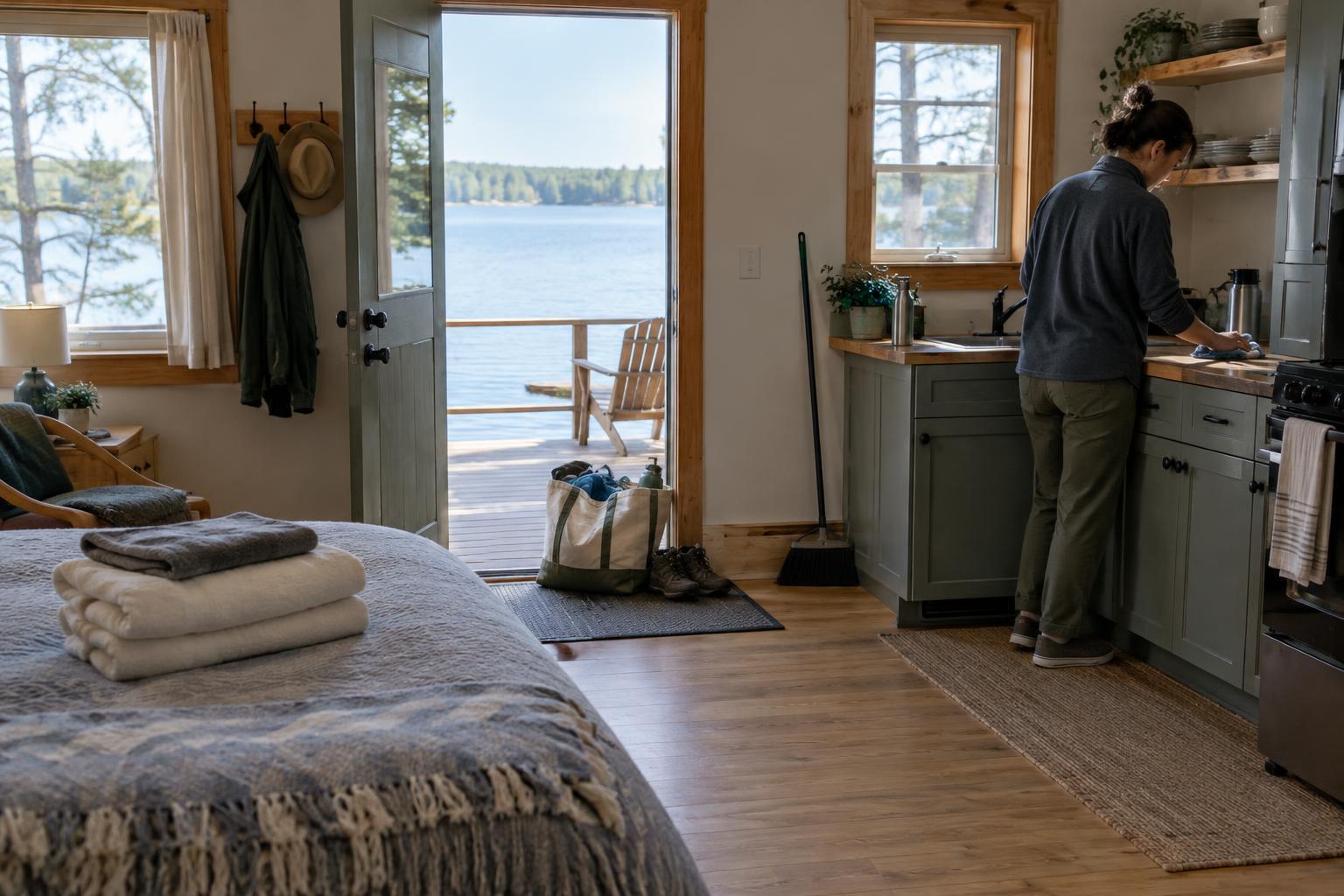
Read the instructions before your last morning
Checkout at a lakeside rental is rarely complicated, but the details vary from place to place. One stay may ask guests to start the dishwasher and take out rubbish; another may ask only that doors are locked and keys are returned. Check the listing and any arrival guide before your final evening. Note the checkout time, where to leave keys, what to do with used linens and whether the host has specific instructions for outdoor equipment.
If two sets of instructions seem to disagree, ask the host which one to follow rather than guessing. A brief question the day before departure is easier to resolve than a hurried message from the driveway. Keep the answer somewhere you can find it in the morning, especially if another person in your group will be the last to leave.
Know what a cleaning fee does and does not mean
A cleaning fee, where one applies, generally helps cover preparation for the next guests. It does not necessarily mean you can leave food, rubbish or muddy equipment behind. At the same time, paying a fee does not automatically make you responsible for deep-cleaning the rental. The useful distinction is between ordinary departure tasks stated by the property and work that requires cleaning supplies, special equipment or substantial time.
Look for concrete requests rather than relying on assumptions. Instructions might ask you to wash dishes, place used towels in one spot or put bagged rubbish in a designated bin. If a request is unclear or seems impractical, contact the host politely. Leave enough time for the tasks you have agreed to, but do not take apart beds, move furniture or use unfamiliar cleaning products unless the property specifically asks you to.
Give lakeside messes a little extra attention
Water, sand and trail dirt tend to travel indoors. Before departure, check the entryway, bathroom and any spot where you stored shoes, towels or swimwear. Shake sand from belongings outside where appropriate, gather your own wet items and make sure you have not left damp clothing tucked into a closet. If the rental provides a drying area, follow its instructions for anything you borrowed.
Outdoor spaces deserve a separate glance. Collect your belongings from the dock, deck or patio, including water bottles and small items that are easy to overlook. Return borrowed chairs, paddles or games to their designated places if that is part of the house guidance. Do not attempt to repair or move equipment that appears damaged; let the host know what you noticed. Check for any property-specific directions about grills or fire pits rather than assuming they should be cleaned or emptied in a particular way.
Build a short departure routine
A calm checkout starts the night before. Pack most of your bags, gather chargers and set aside what you need for breakfast. In the morning, deal with food according to the rental’s instructions: take your groceries, dispose of perishables where directed and do not assume the next guests can use opened items. Run through the stated dish, linen and rubbish tasks, then walk room to room for personal belongings.
Save a few minutes for the details that are easiest to miss. Check bedside outlets, bathroom shelves, the refrigerator and any storage space you used. Look through the outdoor area once more, then set heating or cooling, close windows and secure doors as instructed. A simple division of jobs can help when travelling with others: one person handles bags, another checks the kitchen, and someone makes the final walkthrough.
Communicate clearly when something went wrong
Spills, broken items and misplaced keys can happen on an ordinary weekend. If something needs attention, tell the host promptly and describe it plainly. A message that identifies the item and its location is more helpful than leaving a surprise for the next person. If a checkout task cannot be completed because supplies are missing or a bin is inaccessible, explain that too.
Before leaving, make sure you have followed the property’s key-return or lock-up procedure. A quick departure message may be useful if the host requests one, but it need not be a long report when everything is in order. The goal is straightforward: follow the rental’s specific instructions, leave everyday messes under control and give the host a clear heads-up about anything that needs attention.