Plan for surfaces, not just the forecast
The best shoe plan for a lakeside weekend starts with where your feet will go. A cabin porch, gravel path, wooden dock, and pebbly shoreline ask different things of your footwear. Before packing, sketch out your likely activities: a short walk to breakfast, a longer trail outing, time near the water, or an evening spent mostly indoors. That list is more useful than packing for every possible weather change.
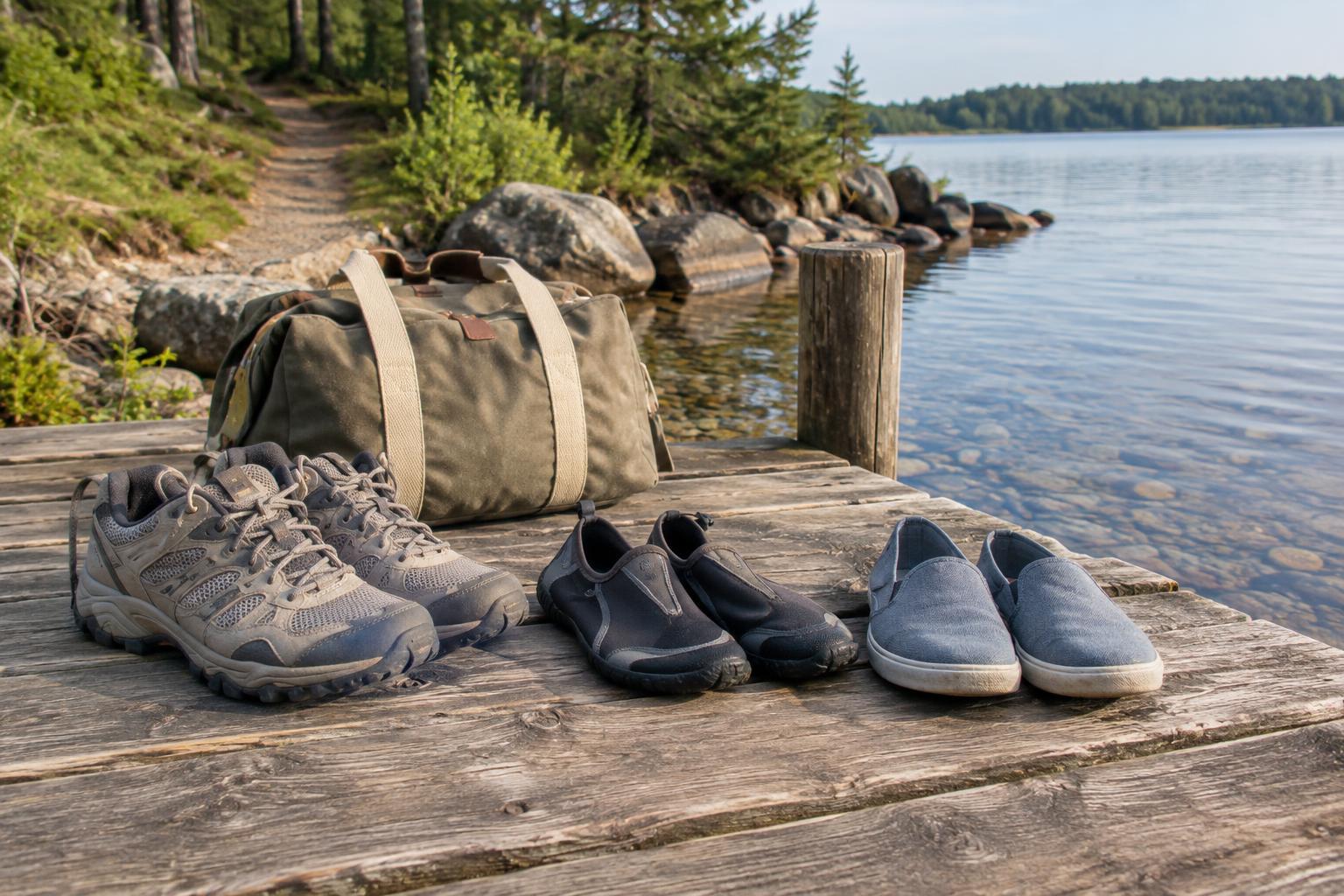
Pay particular attention to transitions. A shoe that feels secure on a dry path may feel less dependable on damp boards, while an open sandal that is pleasant at the water’s edge may be uncomfortable on loose gravel. You may not need a separate pair for every surface. For many relaxed trips, a comfortable walking pair plus one water-friendly option covers the main activities.
Make your walking shoes earn their space
For paths and easy trails, start with shoes you have already worn comfortably for a few hours. Look for a stable fit, enough room for your toes, and a sole with tread suited to the ground you expect. If the itinerary includes uneven roots or rocky stretches, a more supportive walking or trail shoe may feel better than a thin casual sneaker. For level paths and town stops, your everyday walking shoes might be enough.
Consider how the shoes handle a little moisture, but do not assume that “waterproof” means worry-free. A waterproof shoe can help with shallow puddles and wet grass, yet water that enters over the top may take longer to dry. A breathable shoe may be more comfortable in warm conditions if you can avoid soaking it. Either way, pack socks you can change into after a damp walk. Dry feet make the rest of the day more pleasant.
Treat docks as a traction question
Docks deserve a moment of caution, even when they look clean. Boards can be slick when wet, and algae or grit can change the feel underfoot. Choose footwear that stays on securely and has a sole that grips reasonably well on smooth surfaces. Flip-flops may be convenient for a short trip outside, but they can shift under your foot when you change direction or carry a bag.
Move deliberately on wet decking, steps, and ramps rather than relying on any shoe to prevent a slip. If you expect to board a boat, check whether your host or boat operator has footwear preferences. A clean pair with soles that do not leave marks may be useful, but requirements can vary. Keeping your shoes free of mud also makes it easier to move between a trail, a dock, and an indoor space.
Choose shoreline footwear for what is under the water
A sandy entry and a stony shoreline call for different choices. If you plan to wade, launch a kayak, or spend time where you cannot clearly see the bottom, a secure water shoe or water-friendly sandal can help protect your feet from rough textures. Look for a fit that will not slip off in water and a sole that offers more protection than a thin beach sandal. No shoe removes every hazard, so step carefully and avoid entering water where conditions are unclear.
Think about drying time, too. Some water-friendly shoes drain readily but can carry sand and small stones; others feel comfortable on land but stay damp for hours. If your plans include both wading and a café stop, you might bring a dry pair to change into rather than asking one wet shoe to do everything. After using shoreline shoes, shake out debris and let them air-dry before putting them back in your bag.
Pack a small footwear kit
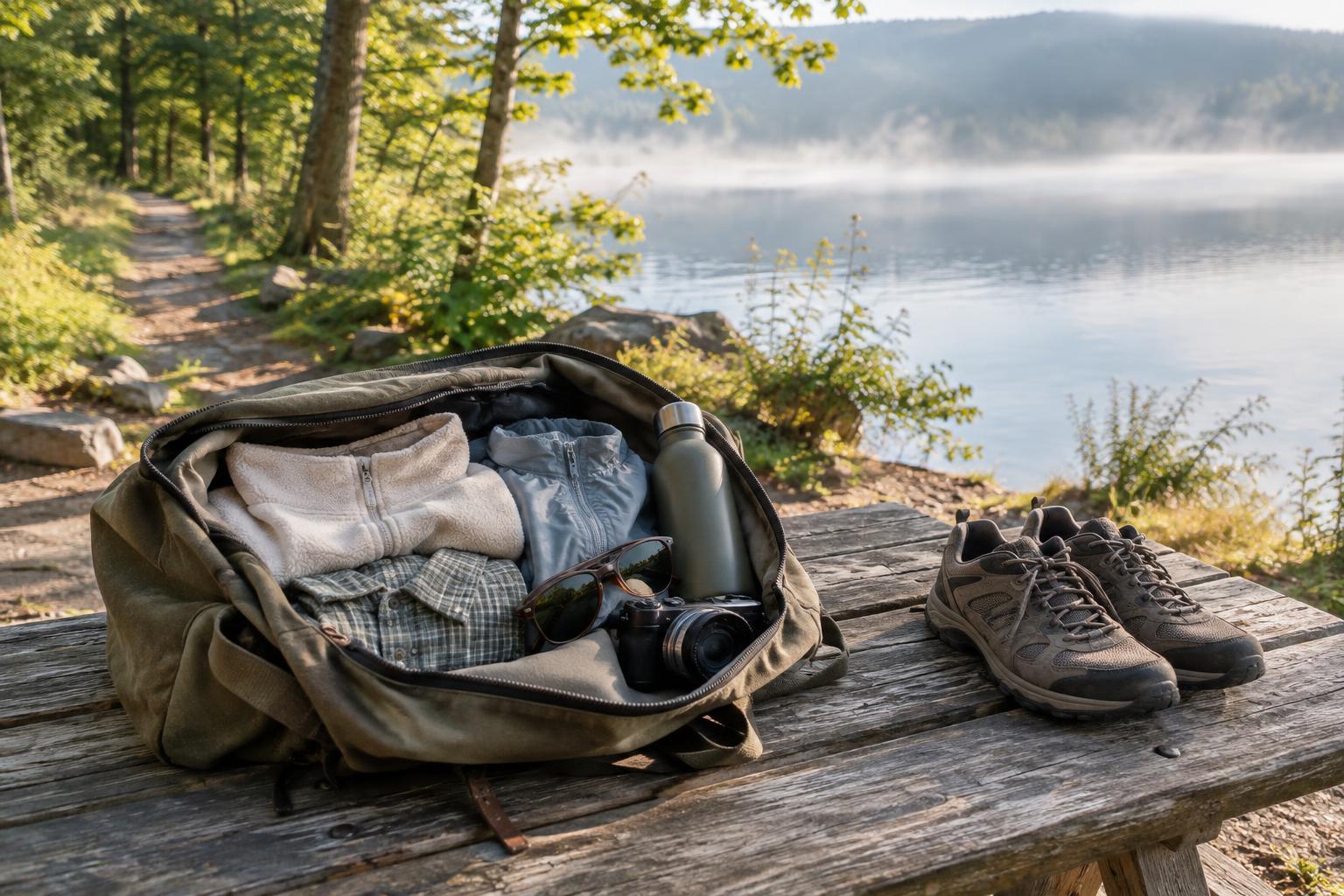
Start with the pair you will wear while traveling, ideally the bulkiest and most versatile. Add a second pair only when it has a clear job, such as getting wet at the shoreline. Lightweight slip-ons can be pleasant around an accommodation, but they are optional if your other shoes are comfortable for short, dry outings. Avoid bringing new shoes that have never been tested on a walk; a weekend is a poor time to discover a rubbing heel.
A few small extras can make the setup work better: spare socks, a bag for damp or muddy shoes, and enough room to let footwear dry overnight. Keep wet shoes separate from clean clothes and avoid sealing them in a bag longer than necessary. With the main surfaces covered, you can spend less time managing what is on your feet and more time enjoying the lake.