Choosing a route that is too ambitious
A distant island or the far shore can look close from a lakeside launch. On the water, the trip may take longer than expected, especially when a breeze or a tired paddler slows the return. For a first outing, choose a short route that stays near a suitable shore and has an easy place to turn back. An out-and-back paddle is often simpler to manage than a loop because you can shorten it whenever you need to.
Before launching, identify where you will put in, where you could get out, and any areas to avoid. Leave time for a break and for the return journey rather than using all your energy on the way out. If you are renting a kayak, canoe or paddleboard, ask the provider which nearby routes suit beginners and where boats are allowed to land. A modest plan leaves more room to enjoy the water.
Checking the sky but overlooking the wind
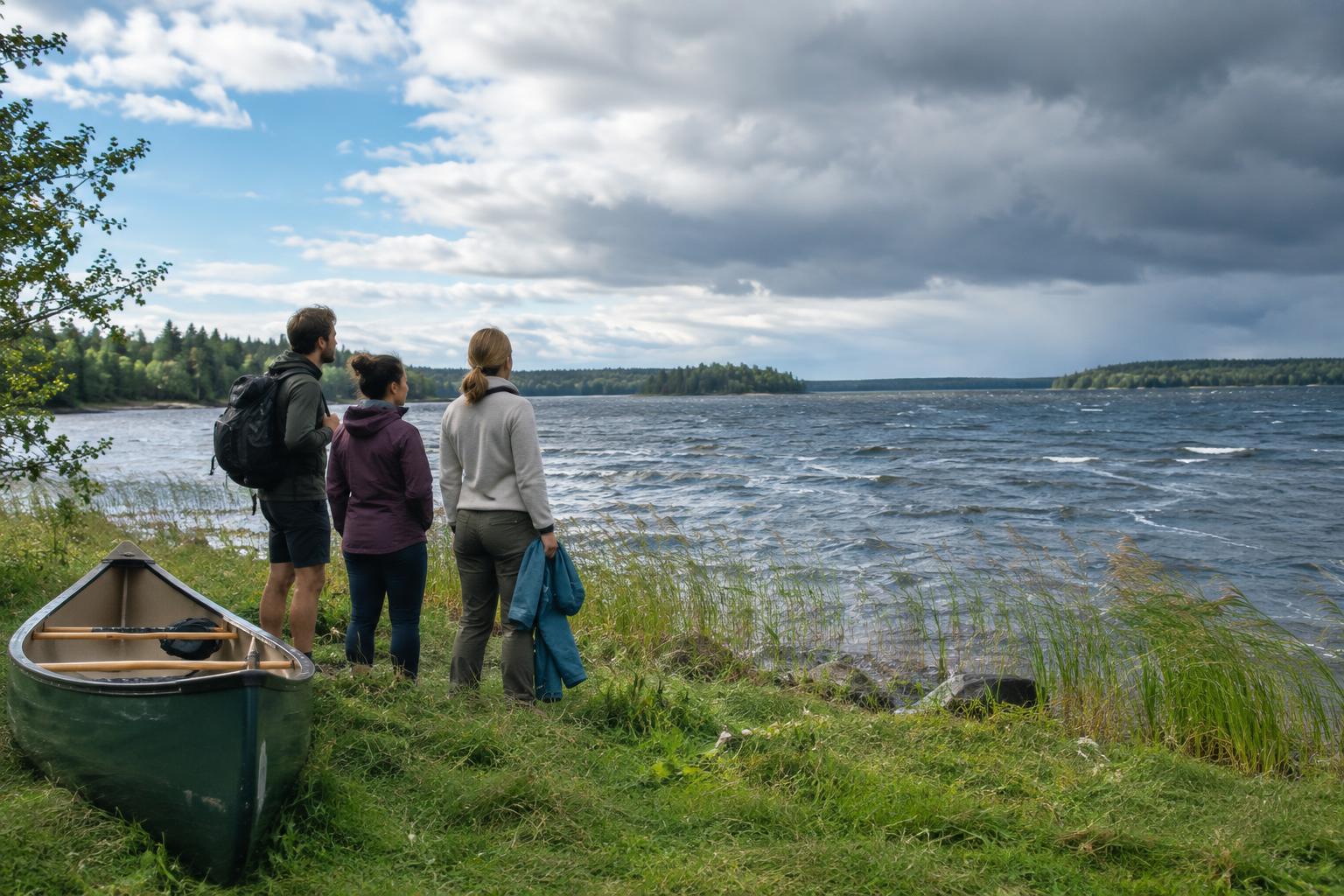
Clear skies do not guarantee an easy paddle. Wind can push a small craft away from shore, make steering harder and turn the return leg into the most demanding part of the trip. Check the forecast before setting out, then look at the water from the launch: ripples, moving branches and the direction other boats are traveling can help you judge what conditions feel like on site.
Do not count on conditions remaining the same throughout the outing. If the wind is stronger than you expected, visibility is poor, or storms appear possible, shorten the route or save the paddle for another time. Beginners can also avoid a common planning trap by paddling into a manageable breeze early, rather than relying on an easy outward drift that leaves a difficult trip back. Local advice matters, particularly on a lake with exposed stretches or boat traffic.
Treating safety gear as optional
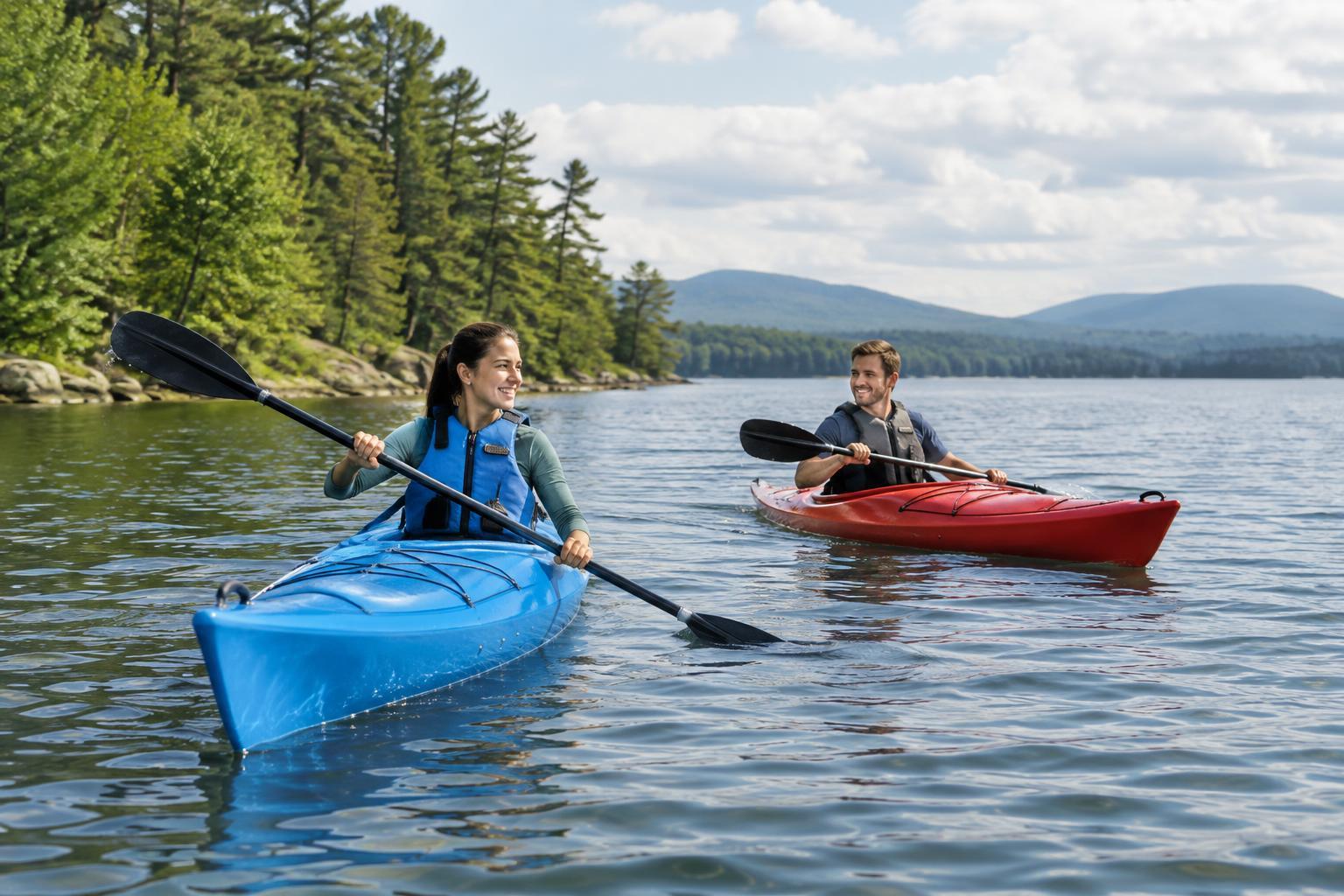
A buoyancy aid or life jacket is not useful if it is left in the boat or fits so loosely that it shifts when needed. Wear an appropriate, properly fitted personal flotation device and follow local requirements and the equipment provider’s instructions. Learn how to adjust it before you launch. Dress for the possibility of getting wet, not just for the air temperature; lake water may feel much colder than the shore.
Keep essentials simple and accessible: water, sun protection, a way to contact someone if service is available, and a dry bag for items that must stay dry. Secure loose belongings so they cannot roll away or sink. Tell someone on land your intended route and when you expect to return. If you are unsure how to get back into your craft or what to do after a capsize, seek instruction or choose a guided beginner outing rather than trying to work it out far from shore.
Fighting the boat instead of learning the basics
First-time paddlers sometimes grip the paddle tightly, use only their arms or make rapid strokes to correct every small wobble. That can be tiring and may make the boat feel less steady. At the launch, take a few minutes to adjust your seat or stance, practice easy forward strokes and turns, and notice how the craft responds. Keep your movements smooth and your attention on where you want to go.
Choose equipment that matches the outing and ask for a brief orientation if one is offered. A canoe, kayak and paddleboard each feel different when entering, balancing and turning. On a paddleboard, for example, it is fine to start kneeling while you get comfortable. There is no need to stand or move fast to have a worthwhile first paddle.
Letting the group drift apart
When friends paddle at different speeds, the most confident person may pull ahead without noticing that someone else needs a rest. Agree on a route and turnaround point before leaving, and keep the group close enough to communicate without shouting. Pause regularly to check how everyone feels. If a paddler is struggling, changing the plan early is easier than waiting until they are exhausted.
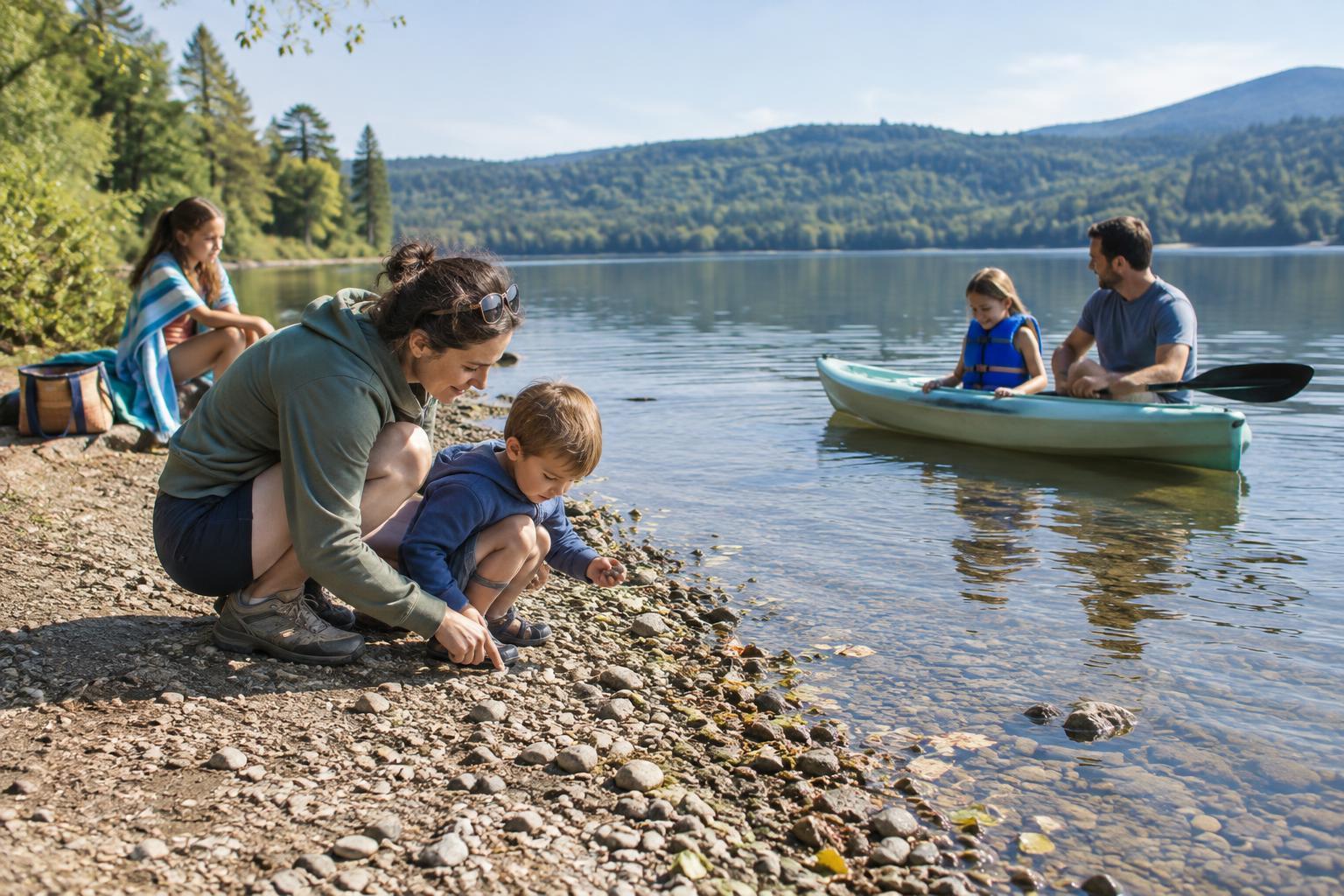
Be considerate of others sharing the lake. Give swimmers plenty of room, watch for motorboats and their wakes, and follow posted guidance around launches, protected areas and private shorelines. Save photos for a stable, unhurried moment rather than reaching for a phone while maneuvering. The best first outing is not the one that covers the most distance; it is the one that brings everyone back comfortably and keen to paddle again.