Choose a short outing in gentle conditions
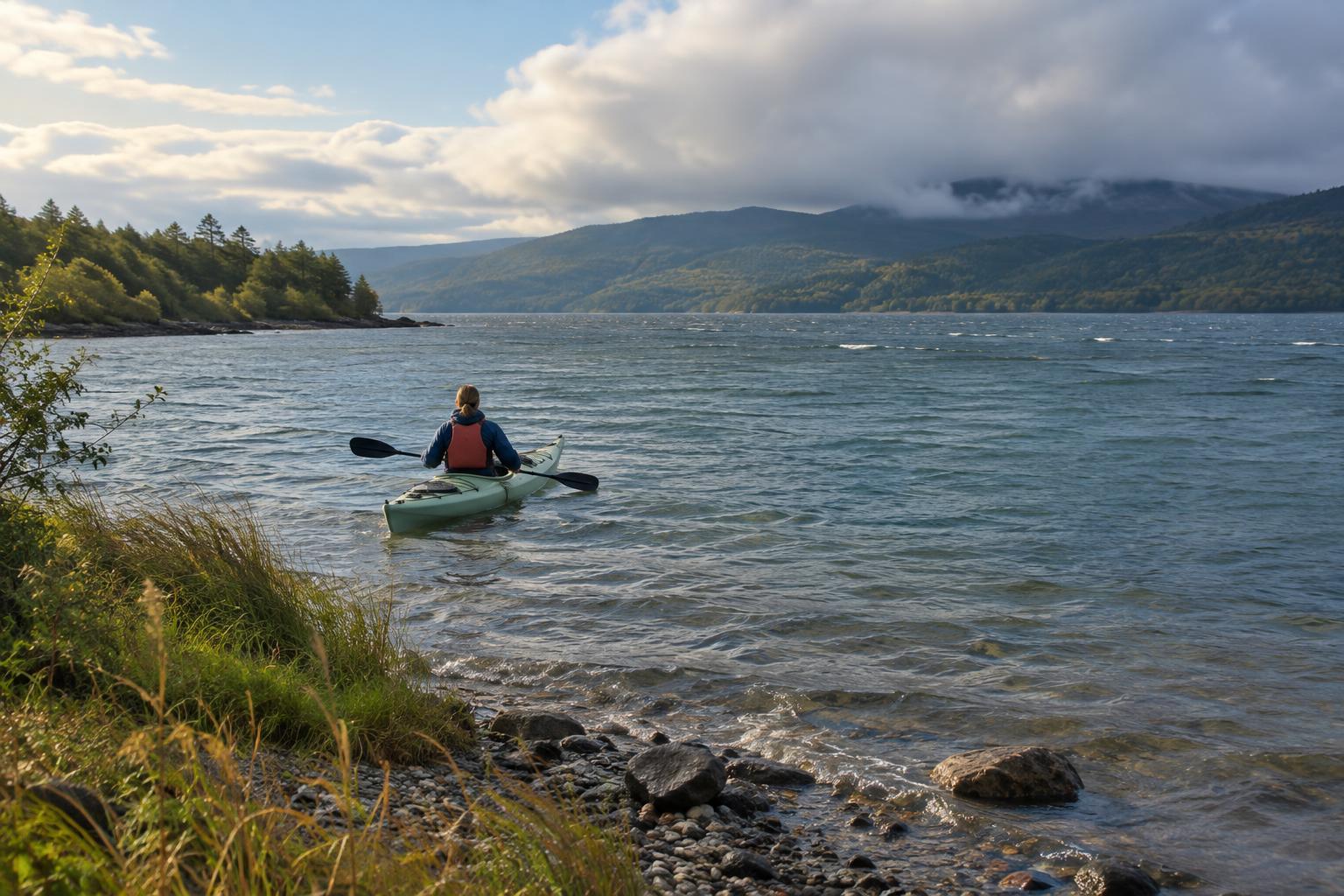
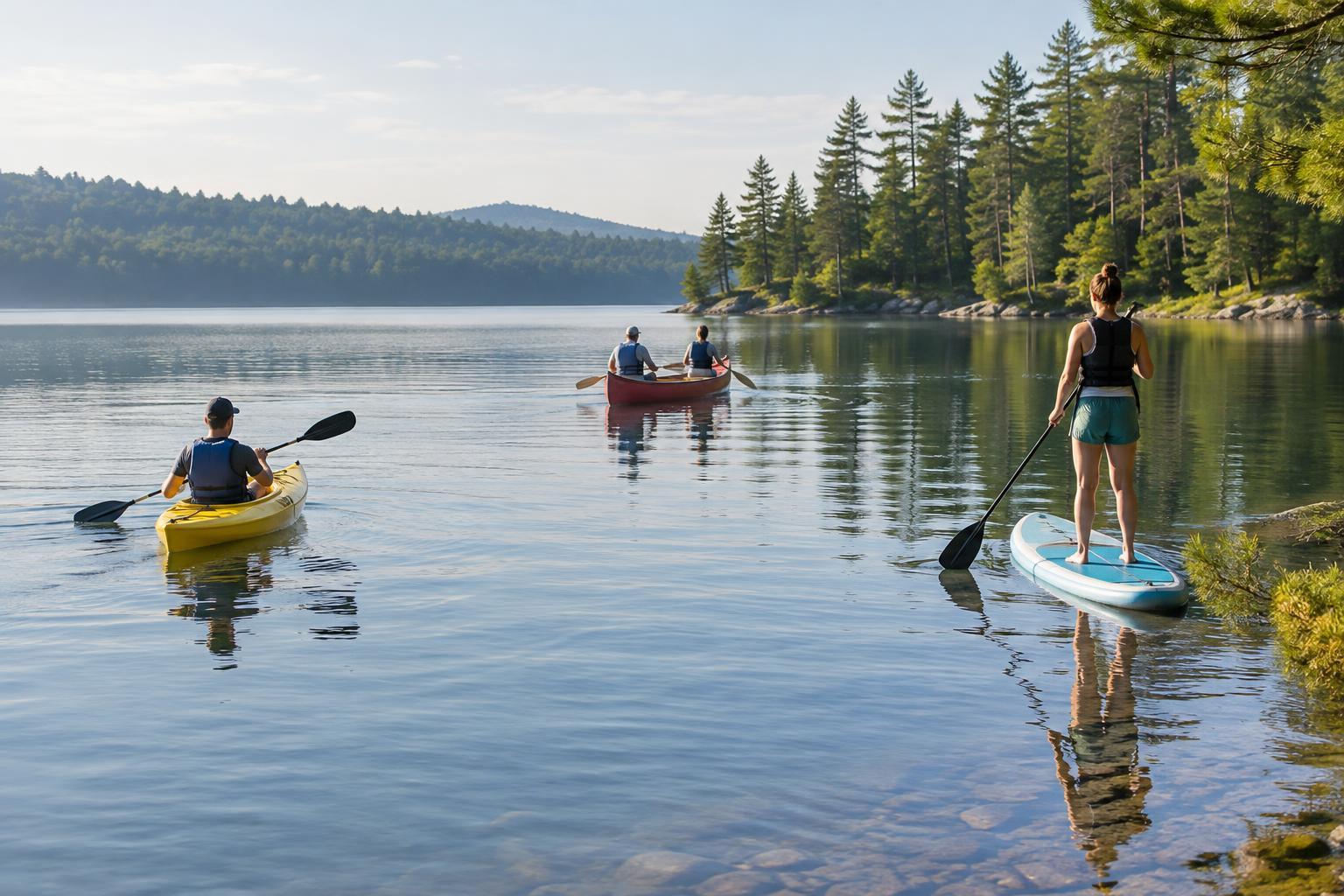
For a first lake paddle, the best plan is usually a modest one. Pick a sheltered launch with easy access to the water and a route that keeps you near shore. A small loop or an out-and-back trip gives you a clear turnaround point without making distance the goal. Ask a rental provider or local park staff which areas are suitable for beginners, and check any posted rules before setting out.
Look at the water as well as the forecast. Wind can make paddling harder, particularly on the return trip, and a lake that looks smooth near a protected bank may be choppier farther out. If conditions seem beyond your comfort level, shorten the route or save the outing for another time. Tell someone on land where you plan to paddle and when you expect to return.
Get comfortable with the kayak before launching
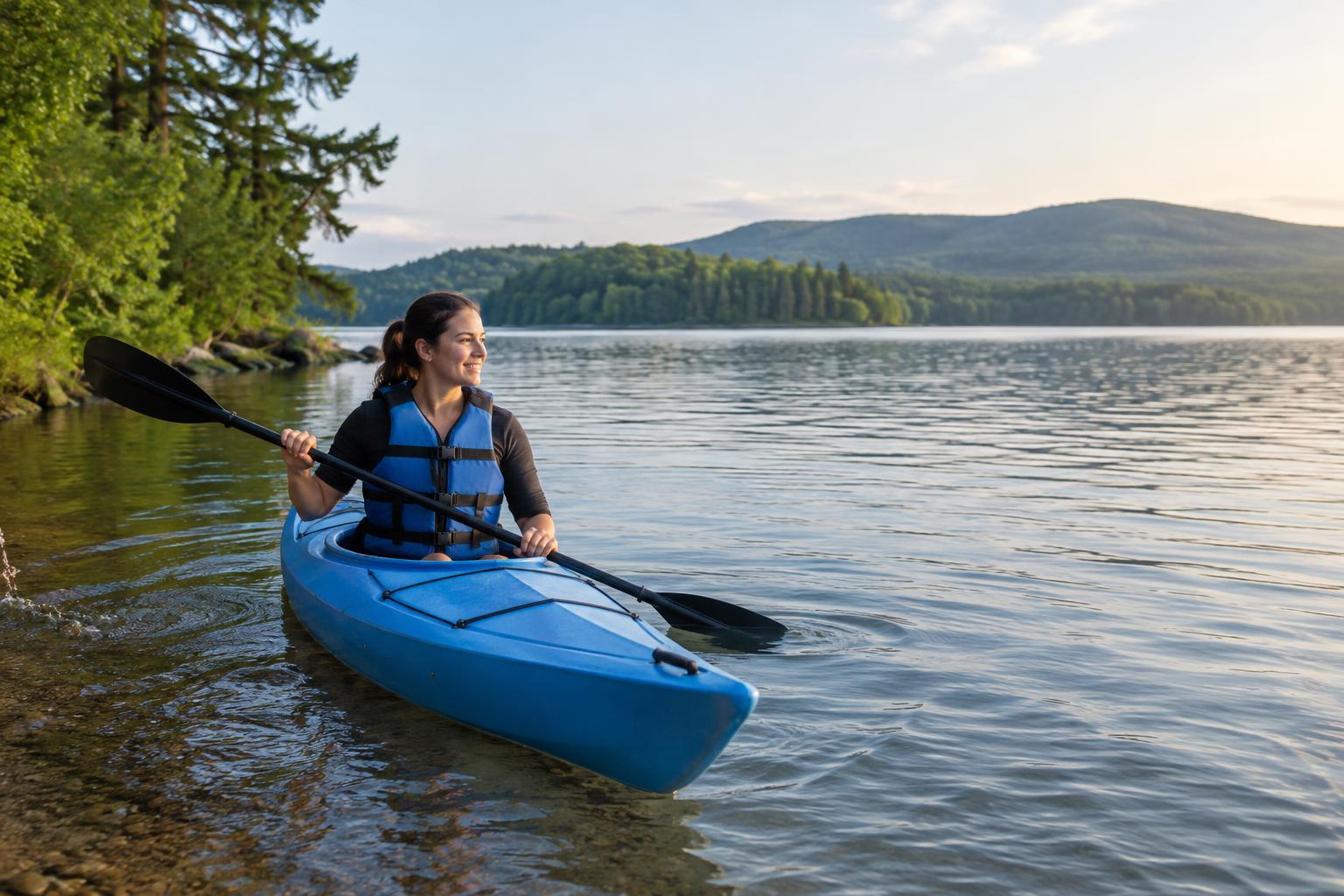
Wear a properly fitted personal flotation device for the entire outing. Keep a way to call for help in a water-resistant pouch, and bring drinking water and sun protection. Dress for the water and weather rather than assuming you will stay dry. Secure loose items so they do not slide around or disappear if the kayak tips.
Before entering, identify the front and back of the kayak, adjust the footrests if the boat has them, and place the paddle within reach. Sit with your back supported and your feet resting comfortably against the footrests. Your knees can stay slightly bent. If you are renting, ask for a brief demonstration of the boat and paddle, including what to do if you capsize. Knowing the plan before you leave shore is much easier than working it out on the water.
Launch slowly and find your balance
Use a designated launch where available. Set the kayak in shallow water with enough depth for it to float, then steady it while you sit down low and near the center. Bringing your weight into the seat before moving your feet helps avoid an awkward step across the boat. If the launch is slippery, steep, or busy, wait for space and ask for a hand rather than hurrying.
Once afloat, pause close to shore. Notice how the kayak responds when you shift your weight gently, and keep your shoulders relaxed. Take a few easy strokes before heading along your planned route. Leave room around swimmers, docks, wildlife, and other boats; you do not need to paddle far out to enjoy the lake.
Use easy strokes to steer and keep moving
Hold the paddle with your hands comfortably apart and your elbows slightly bent. To move forward, place one blade in the water beside your feet, pull it back toward your hip, then repeat on the other side. Try to rotate your torso gently rather than relying only on your arms. Short, even strokes are easier to sustain than forceful ones.
To turn, take a wider stroke on the side opposite the direction you want to go. A stroke on the right helps turn the bow left, while one on the left helps turn it right. Pause occasionally to check where you are, how the wind feels, and whether you still have enough energy for the return. If you are drifting away from your intended route, correct course early while the adjustment is small.
Leave time and energy for the return
Turn back before you feel tired. The way home may require more effort if the wind has changed or you are paddling into it. Aim for the same accessible shore or designated landing you used to launch, and approach slowly so you can see people, rocks, and shallow spots ahead. Keep paddling until the kayak is stable in shallow water rather than trying to stand while it is still floating freely.
At the landing, steady the boat and rise carefully from the seat, keeping your weight low until you can step onto firm ground. Move the kayak clear of the launch so others can use it, then gather your belongings and check that nothing has been left behind. A successful first paddle does not need to cover much distance: getting comfortable with the boat and returning with time to spare is plenty.