Start with a simple plan
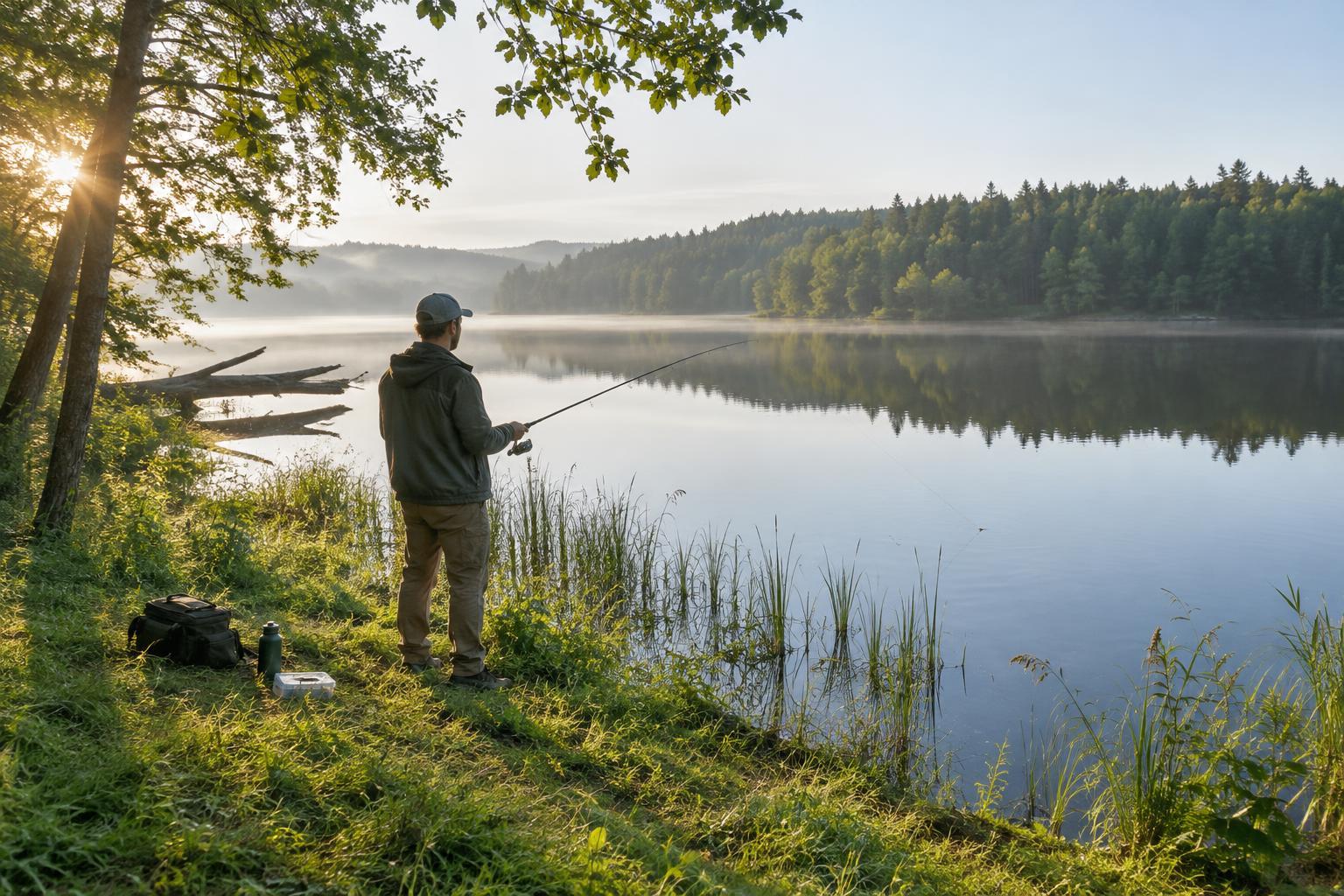
Shore fishing fits naturally into a lakeside weekend: you can spend an hour by the water without arranging a boat or building the whole trip around a catch. For a first outing, choose a public access point where fishing is allowed, the bank is stable, and you have room to cast without reaching over other visitors. An easy place to stand matters more than a spot that looks dramatic in a photograph.
Before you go, check the local fishing rules for the specific water. License requirements, permitted methods, species limits, and access hours can vary. Posted signs can also tell you where fishing is restricted. If you are staying nearby, ask about public access rather than assuming that a path to the lake or a stretch of shoreline is open to visitors.
Choose gear you can manage
A medium-light or medium spinning rod and reel is a versatile starting point for many freshwater settings. Ask a tackle shop to help pair the rod with suitable line and show you how to open the bail, cast, and reel in. A ready-to-use combination can keep the decision simple. You do not need several rods or a large collection of lures to learn the basics.
Pack a small selection of hooks, sinkers, and floats if you plan to fish with bait, or a few simple lures suited to the water you will visit. Bring needle-nose pliers for removing hooks, line clippers, and a small container for used line and packaging. A landing net can help you bring in a fish without dragging it onto rocks. Polarized sunglasses may reduce glare, while a hat, drinking water, and shoes with reliable grip make time on the bank more comfortable.
Keep everything in one small bag that leaves your hands free while walking. Before casting, check that your line is threaded through the rod guides and that the area behind you is clear. Practicing that routine is more useful than carrying extra equipment you have not learned to use.
Look for fish-friendly features from shore
Rather than choosing the first open patch of bank, look for places that offer fish some shelter or a change in depth. Examples include the edge of aquatic plants, a point that extends into the lake, shade beside a permitted dock, or water near a fallen tree. These features do not guarantee a bite, but they give you a sensible place to start. Avoid casting into dense branches or weeds until you are comfortable handling snags.
Accessible piers and maintained shoreline paths can be especially helpful for beginners because they offer firm footing and space to organize gear. Visit with an eye on the whole setting: Is the bank slippery? Is there enough room to cast without crossing another person’s line? Is the water reachable without stepping into it? If a spot feels awkward or unsafe, move on. A quieter, less promising-looking place may make for a better first session.
Make your first casts and adjust slowly
Begin with short, controlled casts. With a float and bait, watch for a clear movement of the float rather than reacting to every ripple. With a lure, retrieve at a steady pace, then try a slower or slightly faster retrieve if nothing happens. Give a spot some time, but do not feel obliged to stay there all afternoon. Moving a short distance along an accessible bank can help you explore different depths and cover.
If your line tangles or the hook catches, pause instead of pulling hard. Keep your face and bystanders clear of the line while you work. If you cannot free a snag safely, cut the line as close to it as you can and take away any loose pieces. Getting comfortable with casting, retrieving, and tidying your gear is a worthwhile result even if you do not catch a fish.
Handle the catch and the shoreline with care
Decide before you cast whether you intend to release any fish you catch, and make sure you understand the local rules. If releasing a fish, wet your hands, handle it gently, and have your pliers ready so you can minimize the time it spends out of the water. If a hook is deeply embedded or you are unsure what to do, seek locally appropriate guidance rather than pulling forcefully. Never leave discarded hooks or line where wildlife or other visitors might encounter them.
Leave room for walkers, paddlers, and other anglers, and carry out bait containers and all other rubbish. A beginner-friendly fishing trip need not end with a full cooler. A comfortable place to stand, a few careful casts, and a shoreline left as you found it can be enough to make fishing a welcome part of a relaxed weekend.