Start with the whole trip, not just the room
Accessibility is personal. A feature that works well for one guest may not work for someone else, so begin by listing what you need for a comfortable weekend. Think through arrival, sleeping, bathing, meals, getting outdoors, and leaving again. Separate essentials from preferences: a step-free route to the room may be essential, while a lake view from the bed may be a welcome extra.
Lakeside properties can have an unusual layout. A room may be easy to enter, yet the parking area, breakfast room, dock, or shoreline may be down a steep slope. Treat each part of the stay as a separate route to check. If you are traveling with others, consider whether everyone can reach the places where you plan to spend time together.
Check arrival and indoor spaces
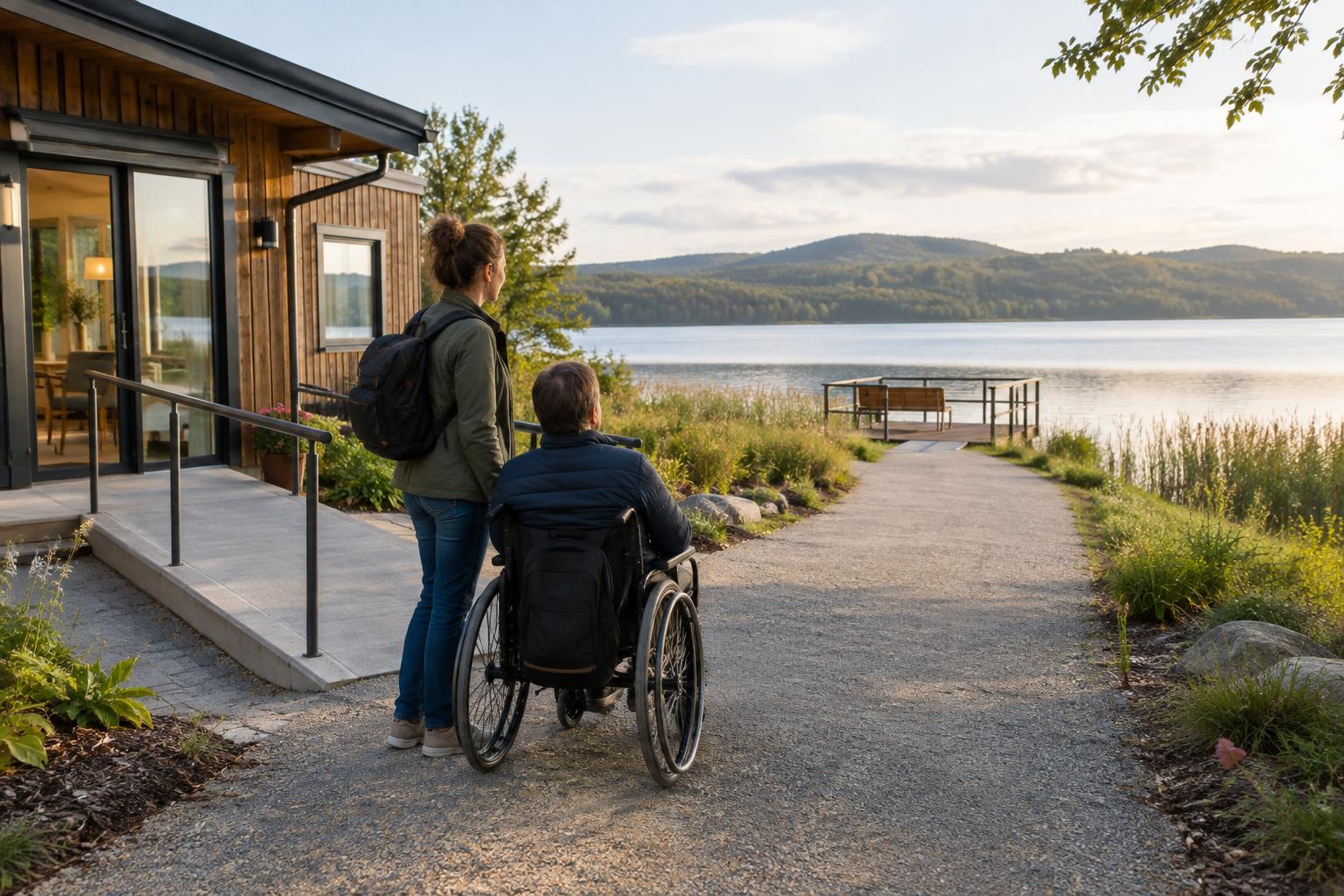
Start with the journey from your vehicle to the room. Ask where guests can park or be dropped off, how far the entrance is, and whether the route has steps, gravel, uneven paving, or a slope. Confirm whether there is a step-free entrance and whether it is the entrance you would normally use. At a small inn or cabin property, accessible features may vary from room to room; ask about the specific unit available for your dates.
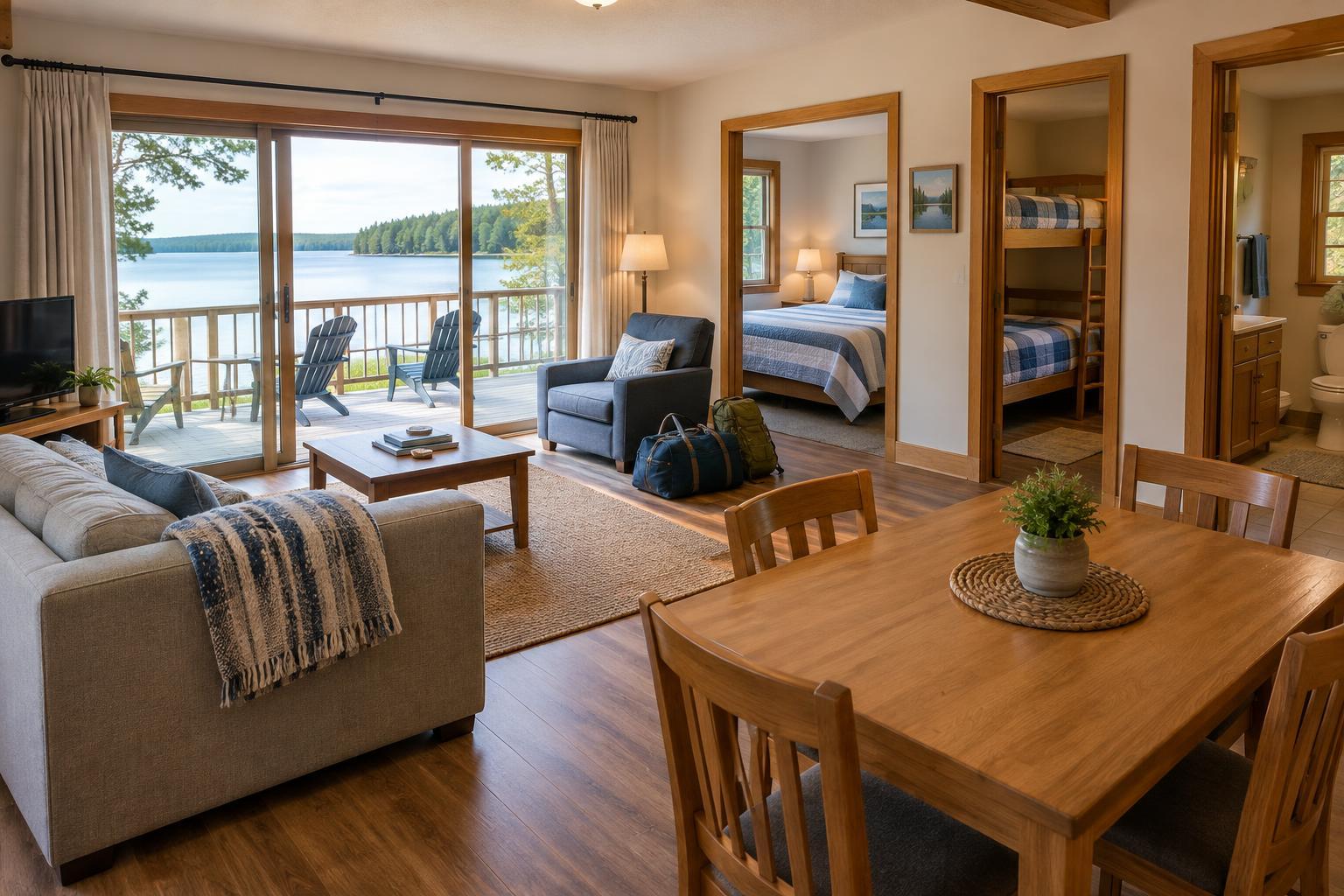
Inside, focus on the details that affect daily routines. Useful questions include whether there are thresholds or stairs, how wide the doorways are, and whether there is enough clear space to move around the bed and furniture. For the bathroom, ask about the shower or tub entrance, grab bars, toilet access, and space beside the sink. If you need particular measurements, request them rather than relying on a broad label such as “accessible.”
Also check shared spaces you expect to use. A dining room, lounge, patio, or communal kitchen may be in another building or on another level. If quiet, lighting, or a particular sleeping setup matters to you, ask about those features too. Accessibility includes being able to rest and use the space comfortably, not simply getting through the front door.
Trace the route to the lake
The waterfront is often the reason for the trip, so find out what “lake access” actually means. It could be a level path to a viewing area, a grassy bank, stairs to a beach, or a narrow dock. Ask about the surface, slope, distance, resting places, and any gates or steps between the accommodation and the water. A path that is manageable when dry may feel different after rain, so it helps to know what it is made of.
If you hope to swim, fish, paddle, or board a boat, check that activity separately. Reaching a dock does not necessarily mean boarding a boat will be practical. Ask the activity provider about the route to the launch point, the boarding arrangement, and any assistance or equipment they offer. If direct water access will not suit your needs, a comfortable lakeside viewpoint or an accessible nearby outing may still make for a satisfying break.
Look for specific evidence, then ask
Property descriptions and photos are useful starting points, but they rarely show an entire route. Look for images of entrances, parking, bathrooms, paths, and shared areas—not only styled room shots. A floor plan or short walkthrough can help you understand how spaces connect. If a listing says “ground floor,” do not assume it is step-free; there may still be a threshold or steps outside.
When contacting a property, explain the features you need and ask focused questions. For example: “Is there a step-free route from parking to this room, and what surface is it?” or “Can you describe the route from the room to the lake viewpoint?” Ask for recent photos of any area that remains unclear. Written confirmation of important details gives you something to refer back to and makes it easier to compare options.
Build a flexible plan before booking
Once you have the practical details, consider how the stay will feel as a weekend rather than a checklist. Check travel time between the accommodation and the activities you want to do, and leave room for weather or energy levels to change. Identify a few enjoyable alternatives, such as a scenic drive, a relaxed meal, or time on an easy-to-reach terrace.
Before paying, review the booking and cancellation terms, especially if access details are still being confirmed. Keep your key questions and the property’s answers together with your reservation information. The goal is not to find a place with every possible feature; it is to understand the actual spaces and routes well enough to choose a lakeside stay that works for you.