Start with the visit you want
Before comparing lakeside stays, picture what you actually want to do beside the water. A quiet morning with coffee on the shore needs a different setup from launching a kayak or taking children for a swim. Write down your priorities, then check whether each property’s access supports them. A water view can be lovely even when there is no place for guests to enter the lake.
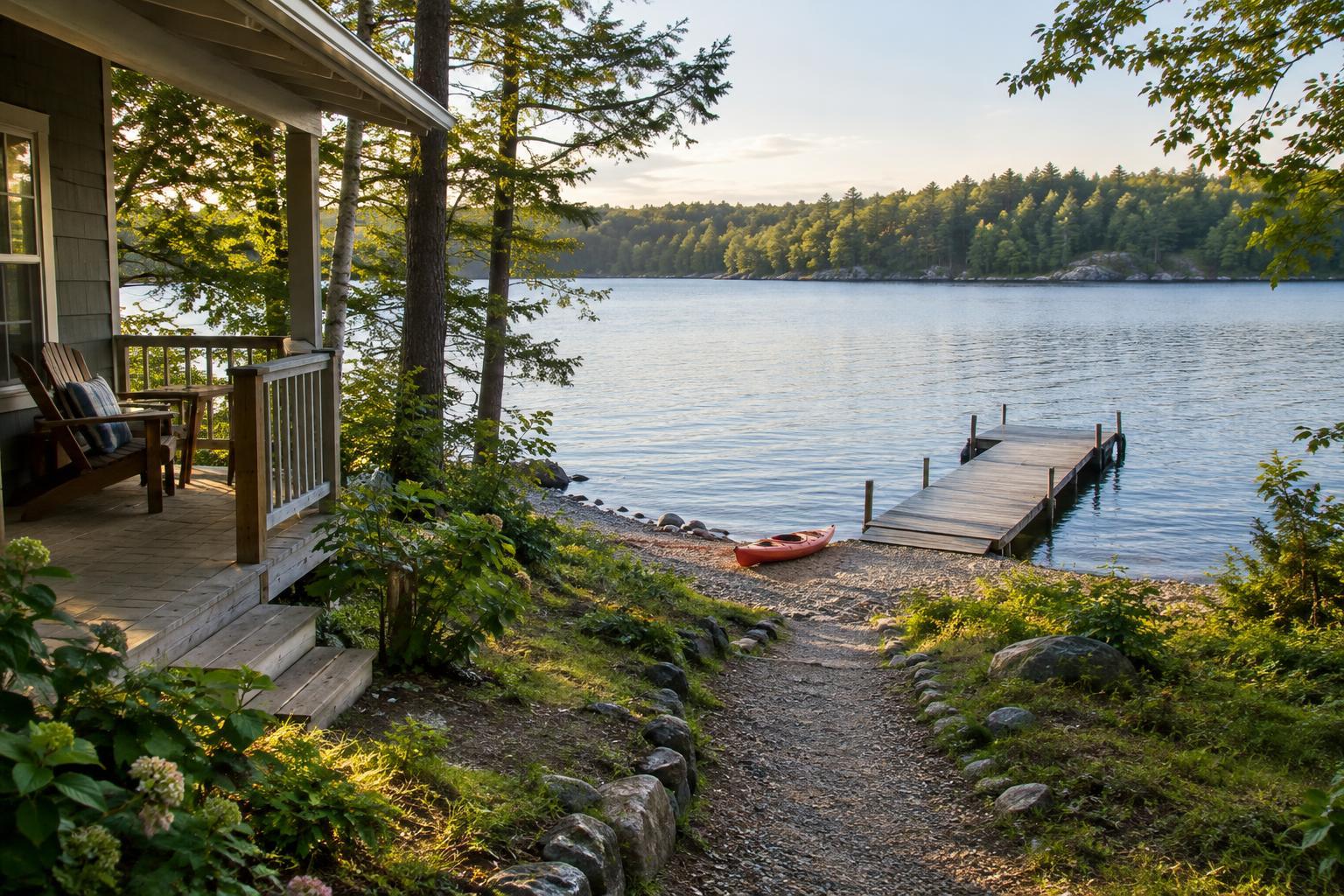
Look beyond broad phrases such as “lake access” or “private waterfront.” They may describe a dock, a narrow path to the shore, a shared beach, or access at a separate location. If the listing is unclear, ask where guests may go and whether the water access is on the property. The useful question is not just “Is it lakeside?” but “What can we do there?”
Understand what guests can use
A dock is not necessarily a swimming platform, and a shoreline is not necessarily suitable for launching a boat. Ask which parts of the waterfront are open to guests and whether any areas are reserved for the owner, other guests, or boat users. If you hope to fish, swim, paddle, or tie up a boat, confirm that activity individually rather than treating access as permission for everything.
Shared facilities also affect the feel of a stay. A small dock may be pleasant for a brief sit but busy when several rooms or rentals use it. Find out whether chairs, launch space, or a beach area are shared, and whether there are hours or other house rules. These details matter most when time at the water is the main reason for your trip.
Check the route from the stay to the shore
The distance on a listing can tell only part of the story. A short walk may include stairs, a slope, an uneven path, or a road crossing. Ask about the route if you will carry a cooler or paddling gear, use a stroller, or want to avoid a difficult walk. Recent, clearly labeled photos of the path and waterfront can help you form better questions, but they may not show every change in level or surface.
Think about the return trip as well. Wet towels and equipment are easier to manage when there is a practical place to rinse, dry, or store them. If the stay has shared entrances or indoor spaces, ask where damp items should go. A convenient route to the water is less helpful if getting back to your room with gear becomes a daily puzzle.
Ask about conditions and equipment
Waterfront conditions can vary with weather, water level, and the season. Rather than relying on a photo to judge swimming depth or shore footing, ask what the host can tell you about the usual setup and what guests should check on arrival. Follow posted rules and use your own judgment before entering the water. If swimming is important to your plans, have another activity in mind in case conditions are unsuitable.
If you plan to bring a kayak or other equipment, confirm where you may unload it, whether a launch area is available, and where it can be kept when not in use. Do not assume that a pictured canoe, life jacket, or paddle is included with the stay. Ask what, if anything, guests may borrow and whether there are instructions or restrictions for its use.
Choose the stay that fits your priorities
A few specific questions can prevent disappointment: Where is the guest access point? Is it shared? Which activities are permitted? What is the path like? Where can equipment be stored? You do not need every possible amenity; you need clear answers about the ones that shape your weekend.
Compare the answers against your original plans. If you mainly want a peaceful view, a comfortable room with a good place to sit may matter more than a dock. If your weekend revolves around paddling, a usable launch and an easy route for carrying gear may be worth prioritizing over a closer-looking waterfront. Choosing by how you will use the lake makes the stay easier to enjoy.