Think about the room, not just the view
A lake view can make a weekend feel restful, but the view alone tells you little about how well you will sleep. A room facing the water might also face a shared deck or a busy walkway. A cabin tucked among trees might offer more privacy but sit near a road. Before falling for the photographs, picture the room at bedtime: where are the windows, who might pass outside, and what spaces share a wall?
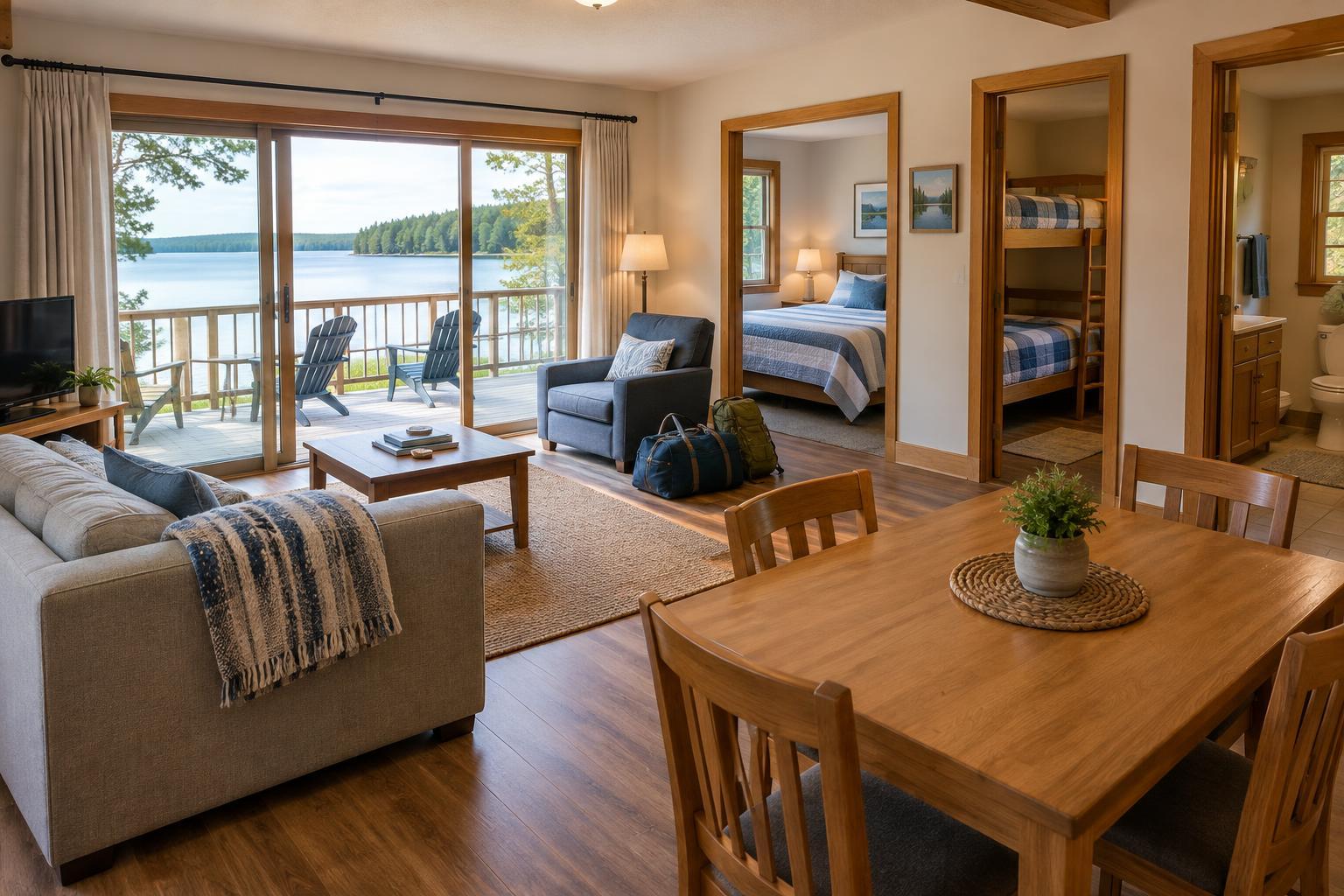
Look closely at the property layout if one is available. Note the distance between the sleeping area and entrances, gathering spaces, parking, docks, or outdoor seating. In a small inn, a room beside the breakfast area may feel different from one at the end of a hallway. In a rental, an open loft may be charming but less suitable for anyone who wants darkness and quiet while others stay up. If the listing leaves the layout unclear, ask which room or unit would best suit a light sleeper.
Look for useful clues about noise
Noise is personal: some travelers welcome birdsong and lapping water but struggle with voices through a wall. Scan the listing for shared spaces, posted quiet hours, nearby roads, and any mention of events or group accommodations. Guest comments can add context, especially when several describe the same feature. Read them for specifics rather than treating a single remark about a “quiet stay” as a promise.
Ask a focused question if sleep is a priority: “Is this room near a shared patio, stairway, or common area?” or “Can evening activity near the room usually be heard indoors?” A host may not be able to predict neighboring guests, weather, or outdoor recreation, but they can often explain the layout and typical use of shared areas. If you are choosing between rooms, that information may be more valuable than a broad assurance that the property is peaceful.
Check the basics of a comfortable bed
A listing may say “cozy” without telling you much about the sleep setup. Confirm the bed size and the number of actual beds, particularly if your group includes people who do not want to share. Check whether a sofa bed, bunk, or loft is part of the arrangement. Photographs can help you judge access around the bed, but they rarely reveal mattress firmness or pillow height.
If bedding matters to you, ask what pillows and extra blankets are available. Also check whether the sleeping space has a door, especially when traveling with someone on a different schedule. For a short stay, you may be willing to compromise on mattress preferences; knowing the arrangement in advance at least lets you make that choice deliberately.
Plan for light and temperature
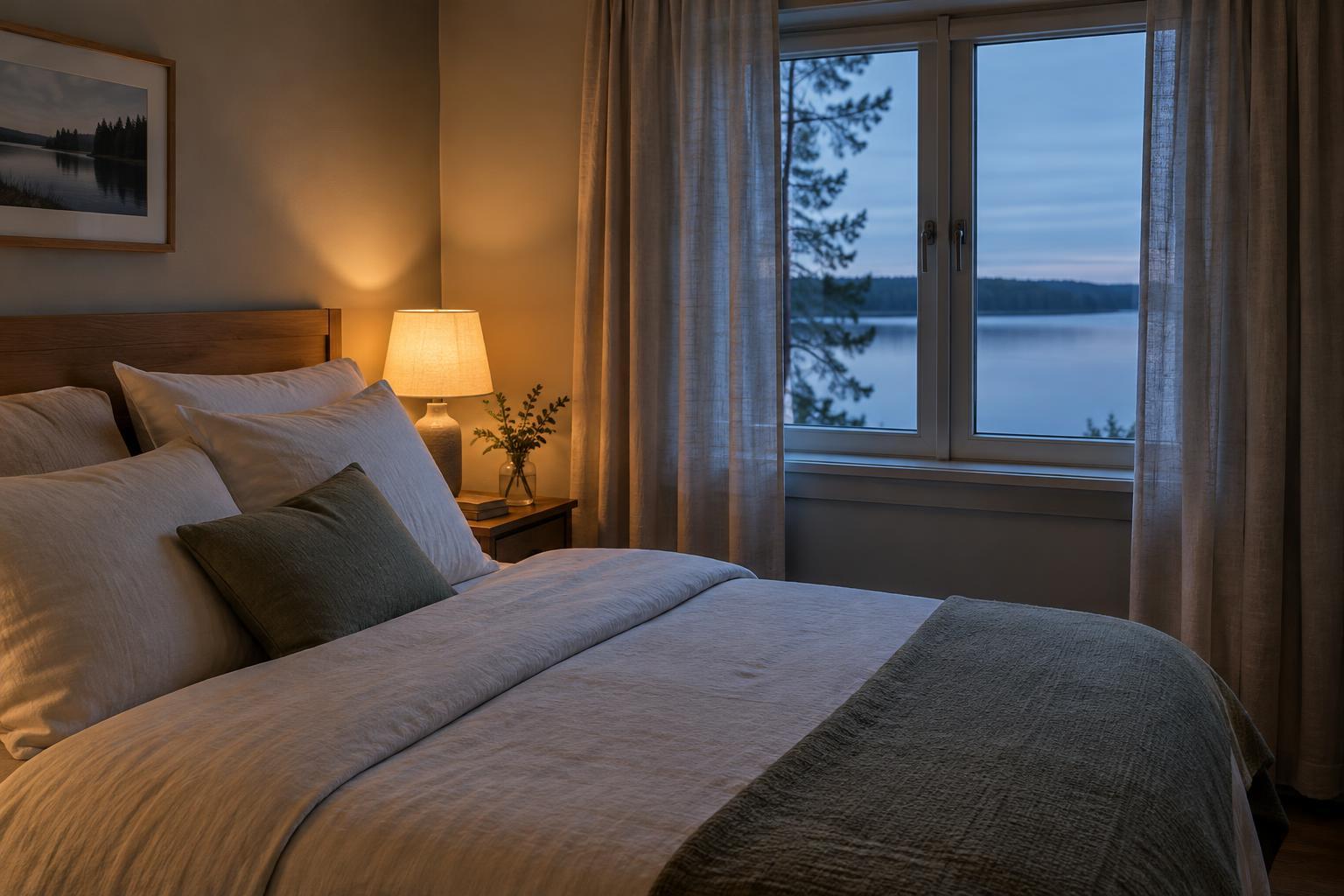
Lakeside rooms can get morning light, and an inviting wall of windows may be less appealing to someone who hopes to sleep in. Look for photographs of window coverings in the bedroom rather than assuming curtains in a living area extend throughout the unit. Outdoor lights, hallway lighting, and screens visible from the bed can also affect the room after dark. Ask about blackout shades if they are important to you, or plan to pack an eye mask.
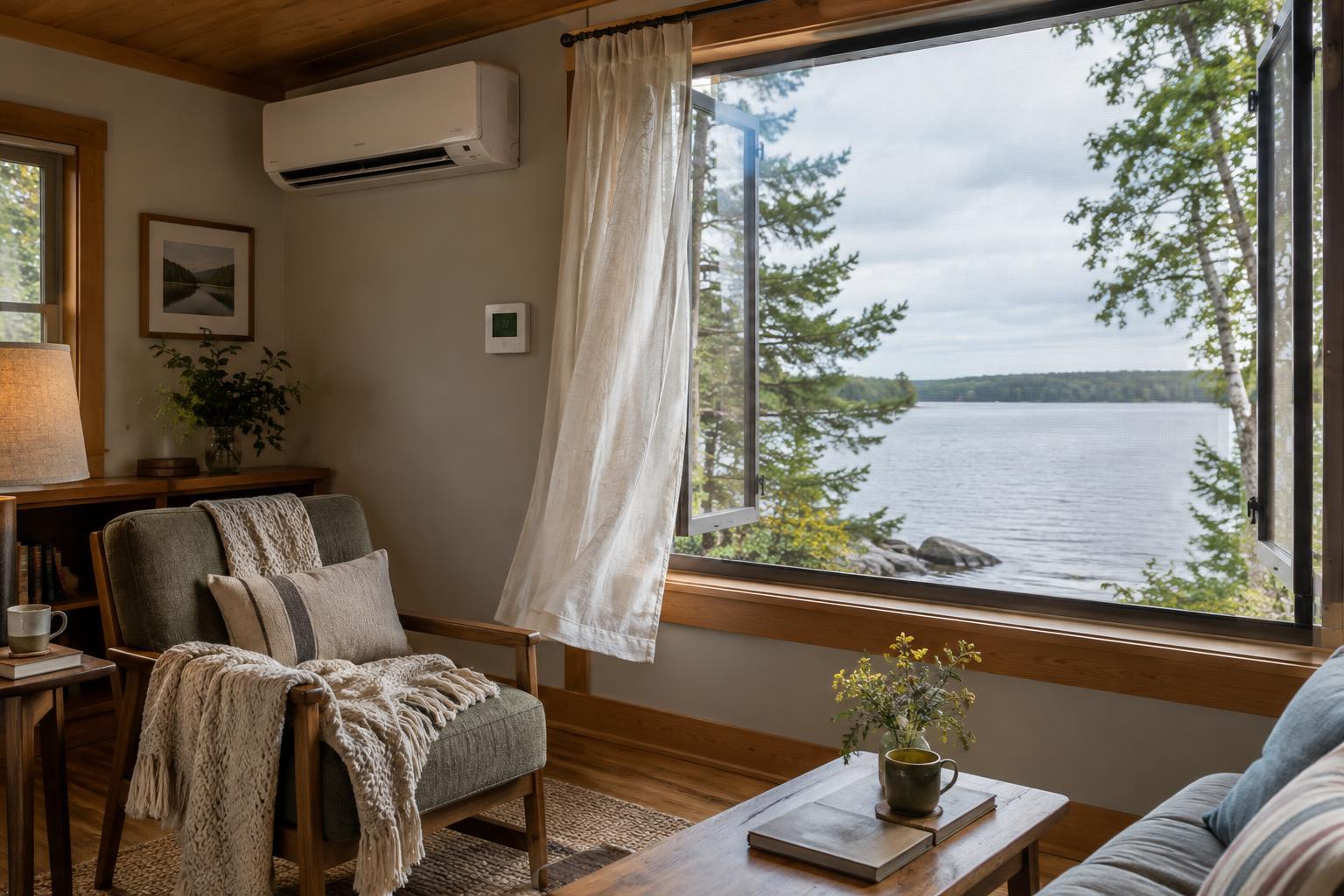
Temperature deserves a similarly specific check. Find out what heating or cooling is provided in the sleeping area and whether you can adjust it from your room. A ceiling fan, portable fan, or opening window may offer flexibility, but none is a substitute for knowing the setup before you arrive. If you plan to sleep with a window open, consider that outdoor sounds and insects may change the experience.
Make the final choice with your priorities in mind
No listing can guarantee an uninterrupted night. Before booking, decide which factors you can work around and which are essential. A waterside room might be worth some early-morning activity if you love waking to the view. If you are arriving after a long drive and need an early night, a less scenic room away from shared areas may be the better fit.
Compare your shortlist using the same few questions: Where is the room? What is nearby? What is the bed arrangement? Can you control light and temperature? Then review the cancellation terms in case a key detail remains uncertain. A short, polite message to the host can resolve many questions before you commit. Pack simple backups, such as earplugs and an eye mask, but let clear room information—not hopeful packing—guide the booking.