Start with how your family uses a room
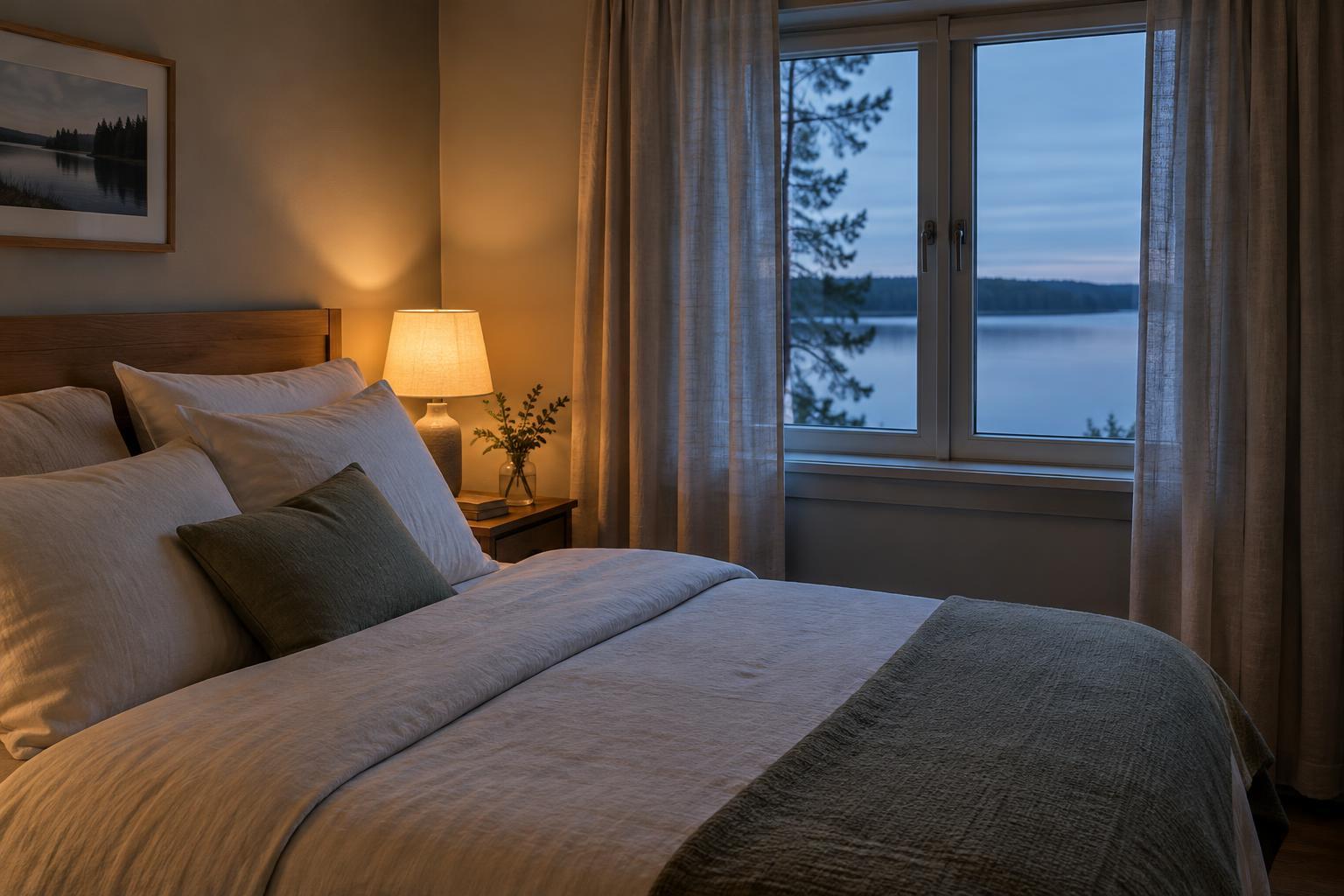
Before comparing listings, picture an ordinary evening and morning on your trip. Will everyone go to sleep at roughly the same time, or will adults want a place to talk after children settle? Does someone need a quiet corner for an early start? A room that sleeps four may meet its stated capacity while leaving little space to read, eat or move around once bags are open. Think of the bed count as a starting point, not a complete description of the layout.
Make a short list of nonnegotiables and preferences. These might include a separate bedroom, two usable sleeping surfaces, a table for breakfast, or a bathroom that can be reached without crossing another person’s sleeping area. If you are choosing between a compact inn room and a larger rental, this list helps you weigh the space you will actually use rather than assuming that more square footage is always better.
Check the sleeping arrangement in detail
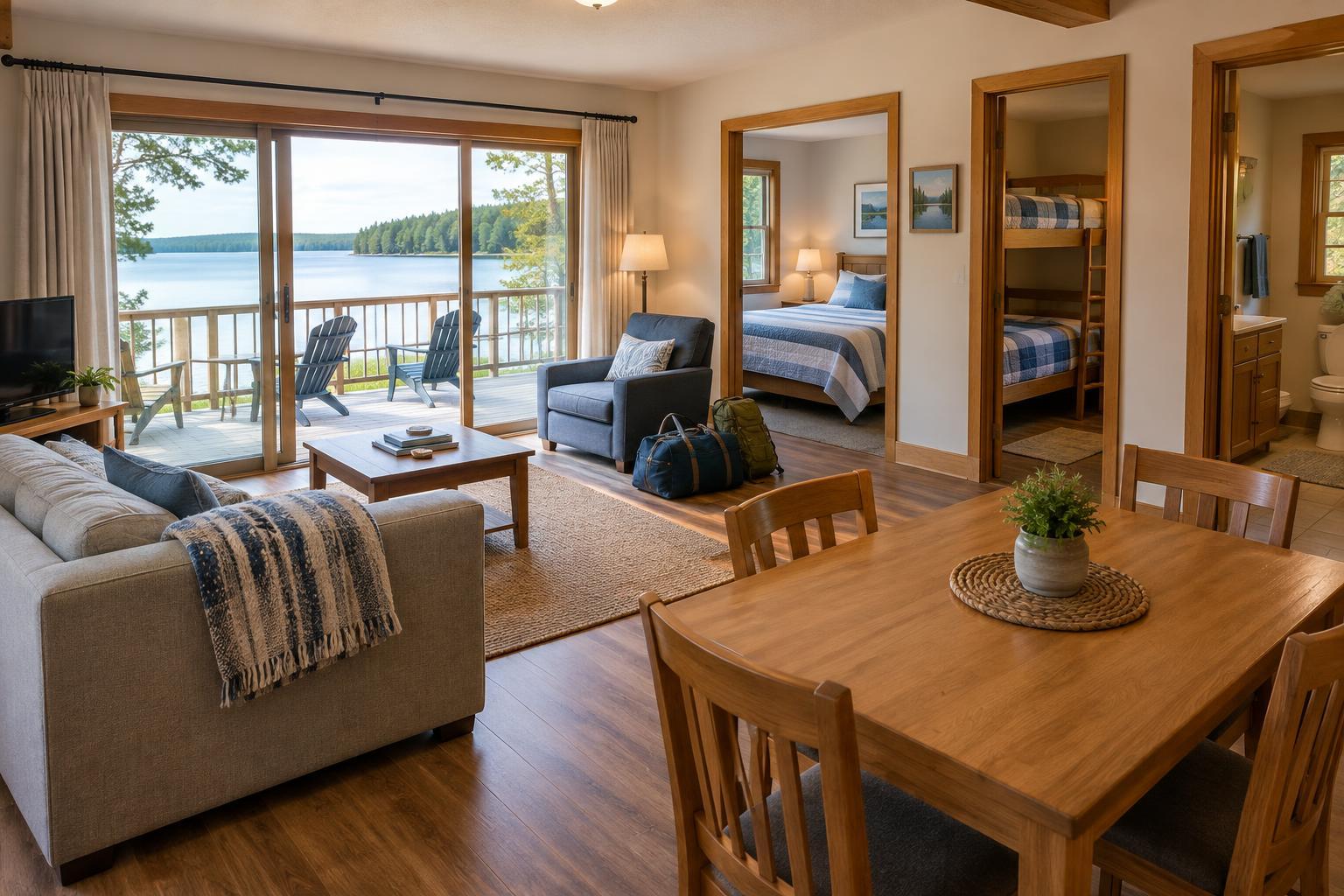
Look closely at where each person will sleep. A sofa bed in the only living area changes how the family can use that area at night and early in the morning. Bunk beds may suit some children, but others may be uncomfortable climbing to an upper bunk or sharing a small room. If a listing uses terms such as “sleeps six,” check the stated bed types and locations so you know whether that number depends on a sofa bed, daybed or other convertible space.
Doors and sightlines matter as much as bed sizes. A separate bedroom can give light sleepers some distance from late-night conversation, while an open-plan space may make it easier to keep an eye on younger children. Neither is automatically the better choice. Match the arrangement to your family’s ages and routines, and ask the host or property for clarification if photos do not show how the rooms connect.
Plan for the busy parts of the day
Bathrooms, entrances and places to put damp gear often have the greatest effect on a lakeside weekend. If several people will be getting ready for the same outing, check how many bathrooms there are and whether they are private or shared. A bathroom reached through a bedroom can be awkward when someone is asleep. Similarly, an entrance with room for shoes, towels and daypacks can make a small stay feel easier to manage.
Consider meals even if you plan to eat out. A small table can be useful for snacks, games or sorting the day’s supplies. If you expect to prepare food, check what the kitchen or kitchenette actually includes instead of relying on the label alone. For a short stay, a simple setup may be enough; for a family that prefers unhurried breakfasts, counter space and seating may matter more than extra lounge furniture.
Look carefully at lake-facing spaces
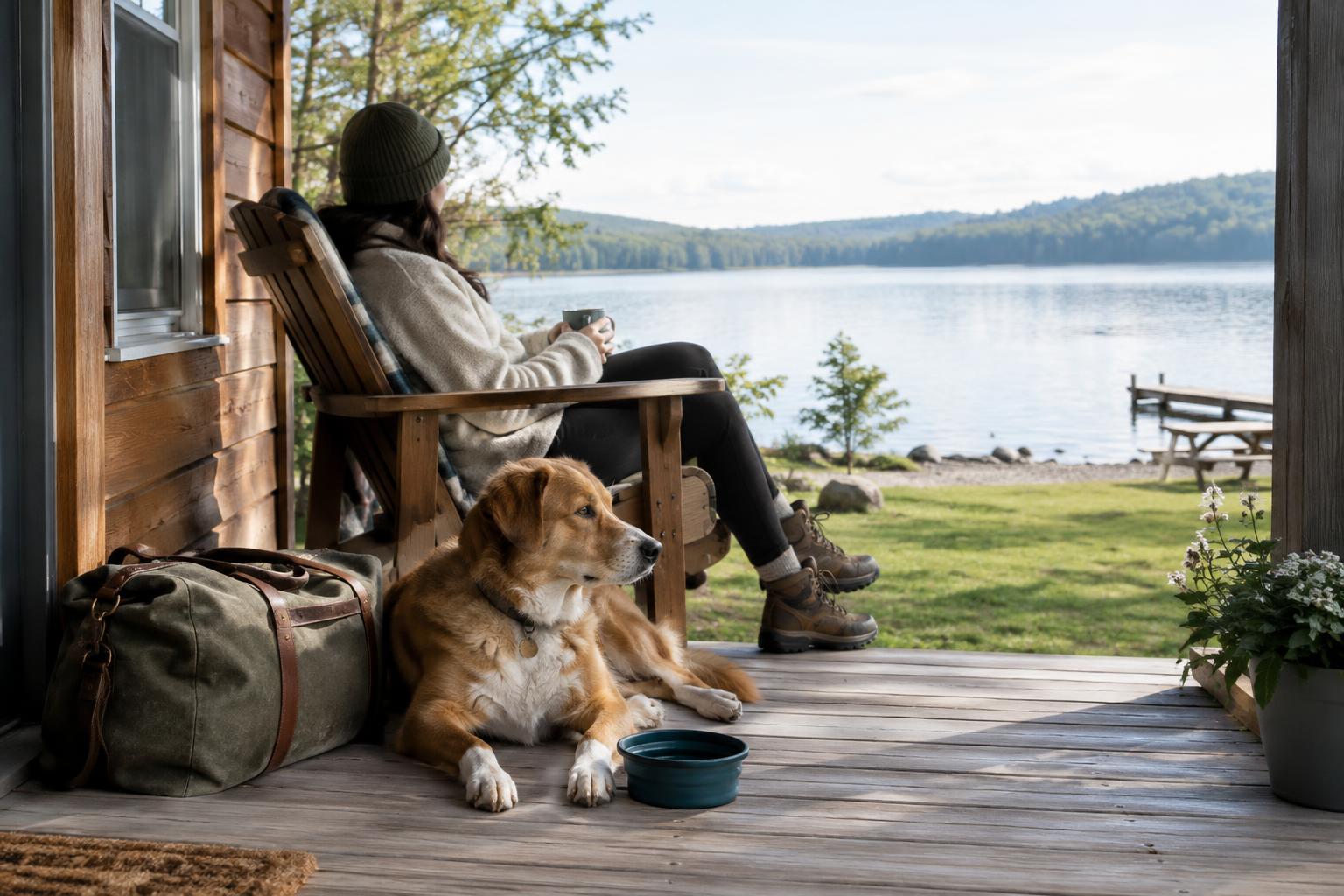
A lake view can be lovely, but it should not distract from how the property is arranged. Review photos and descriptions for the route between the room, parking area and waterfront. Are outdoor seating areas private or shared? Is the path to the shore clearly described? If you are traveling with young children, ask about doors, balconies, decks and any direct access to the water rather than assuming that a scenic location has a particular setup.
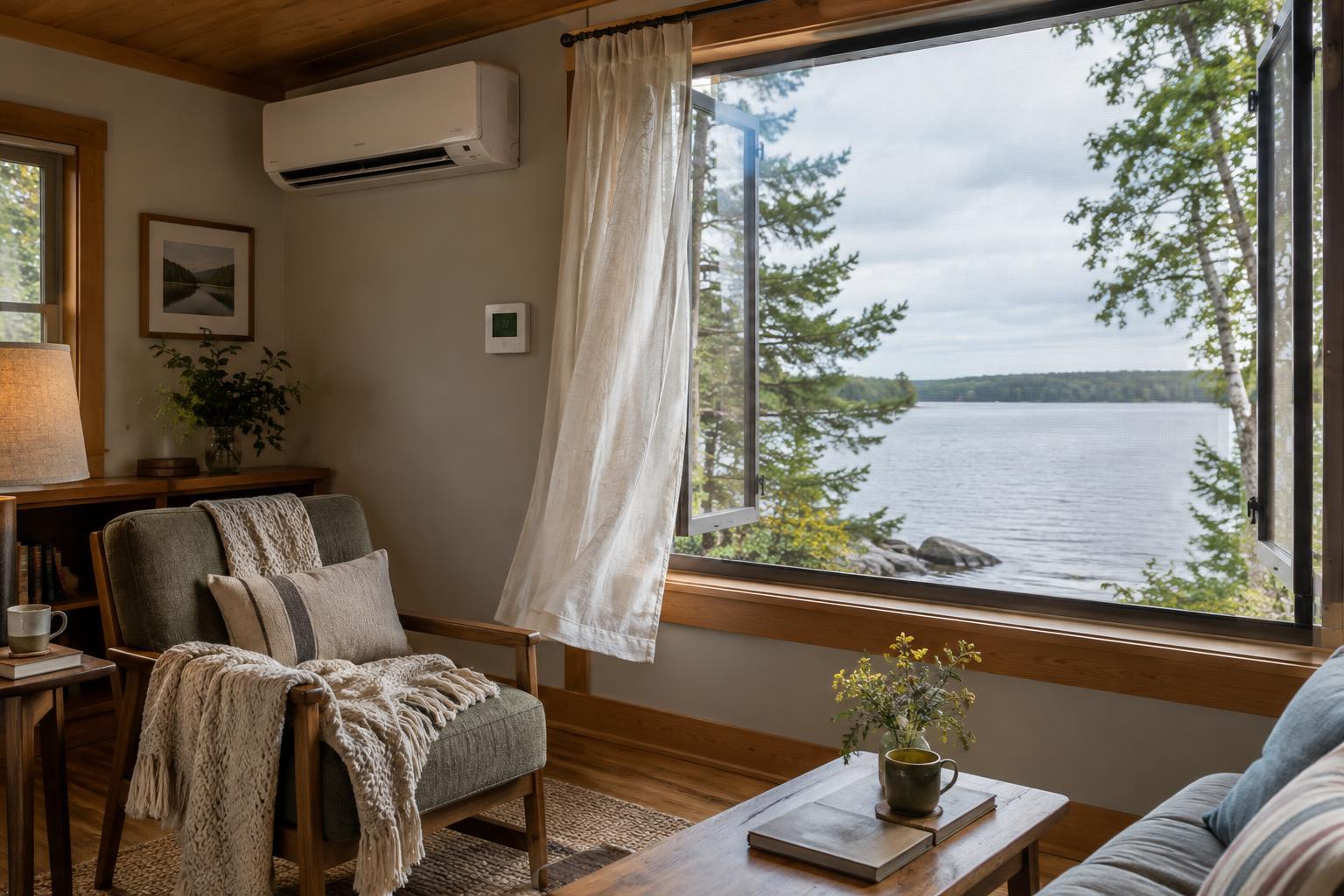
Also think about where the family can spend time when the weather changes. A covered porch may extend your options, while a comfortable indoor sitting area can be more valuable if everyone needs a break from sun or rain. The best layout offers a workable alternative to the waterfront, so the stay still feels pleasant when you are not outside.
Use a simple comparison before booking
Narrow your choices to two or three stays and compare them using the same questions: Who sleeps where? Where can someone sit while others sleep? How easy are bathroom trips and meal times? Where will wet towels and outdoor gear go? What parts of the outdoor space are actually included? This approach makes it easier to spot a layout that fits your routines, even if another option has a more striking first photo.
When a floor plan is unavailable, use listing photos to piece together the space, then confirm any important details directly before booking. Pay particular attention to bed configuration, stairs, room access and shared facilities if they affect your decision. A family-friendly lakeside stay is not one specific type of room or rental. It is a place where the layout supports the way your family wants to rest, gather and head out for the day.