Start with an established swimming area
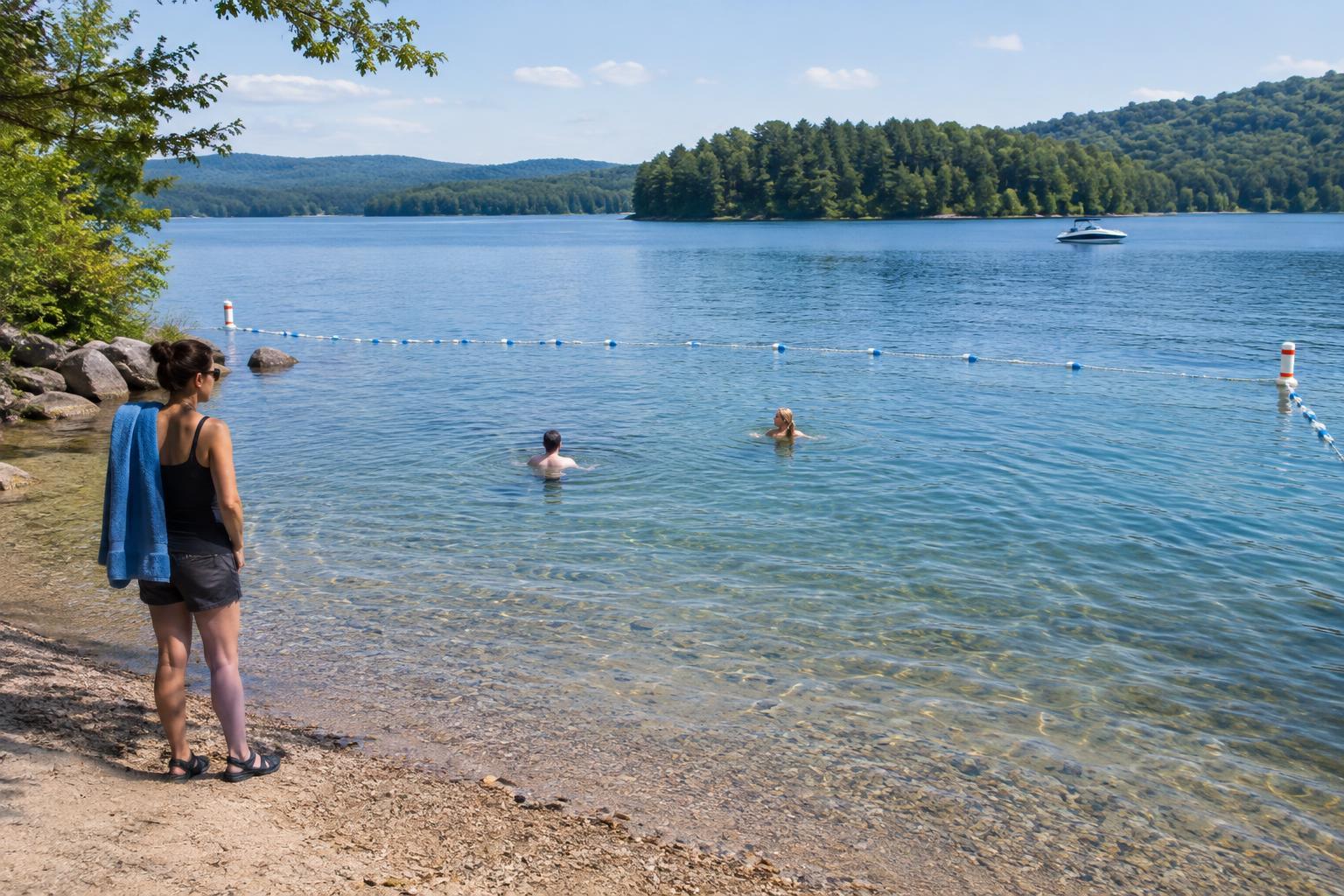
A designated swimming area is usually the best place to begin your search. Look for a marked beach or swim zone with a clear route into and out of the water. Read posted rules, warnings and notices before unpacking. If a lifeguard is on duty, swim within the supervised area and follow their directions. A marked area is not a guarantee of safety, but it gives you more information than an unmarked stretch of shoreline.
Check that the spot suits everyone in your group. A shallow entry may be more comfortable for hesitant swimmers, but lake bottoms can change abruptly even close to shore. If there is no designated area, be more cautious about choosing a place you do not know. Avoid private property, restricted areas, boat launches and places where swimming is prohibited.
Inspect the water and shoreline before entering
Pause at the edge and look for hazards you can see: submerged branches, rocks, fishing lines, broken glass or a slippery bank. Clear water is helpful, but it may not reveal a steep drop-off or an obstacle beneath the surface. Enter feet first and take time to feel out the bottom rather than diving. Choose a spot where you can leave the water easily, including if you become tired.
Pay attention to the water itself. If local notices report a water-quality concern, follow them. Avoid water with an unusual scum, paint-like streaks, strong odor or other signs that make you unsure about swimming. Keep pets away from suspect water too. Conditions can vary around a lake, so do not assume that a pleasant-looking view from the shore tells you everything you need to know.
Allow for depth, temperature and moving water
Lake water may be much colder below the surface than it feels at the edge. Wade in gradually, especially early in the swimming season, and turn back if the cold affects your breathing or ability to move comfortably. Stay within a distance you know you can swim back without relying on a dock, float or another person to pull you in. If you are unsure of the depth, do not jump or dive.
Not every lake is still. Water can move near dams, spillways, inlets, outlets and narrow channels, sometimes without an obvious surface current. Give these areas a wide berth and respect barriers and warning signs. Wind can also make the return swim harder than the trip out. When judging a spot, think about the full swim back to shore, not just how inviting the water looks at the start.
Keep swimmers separate from boats
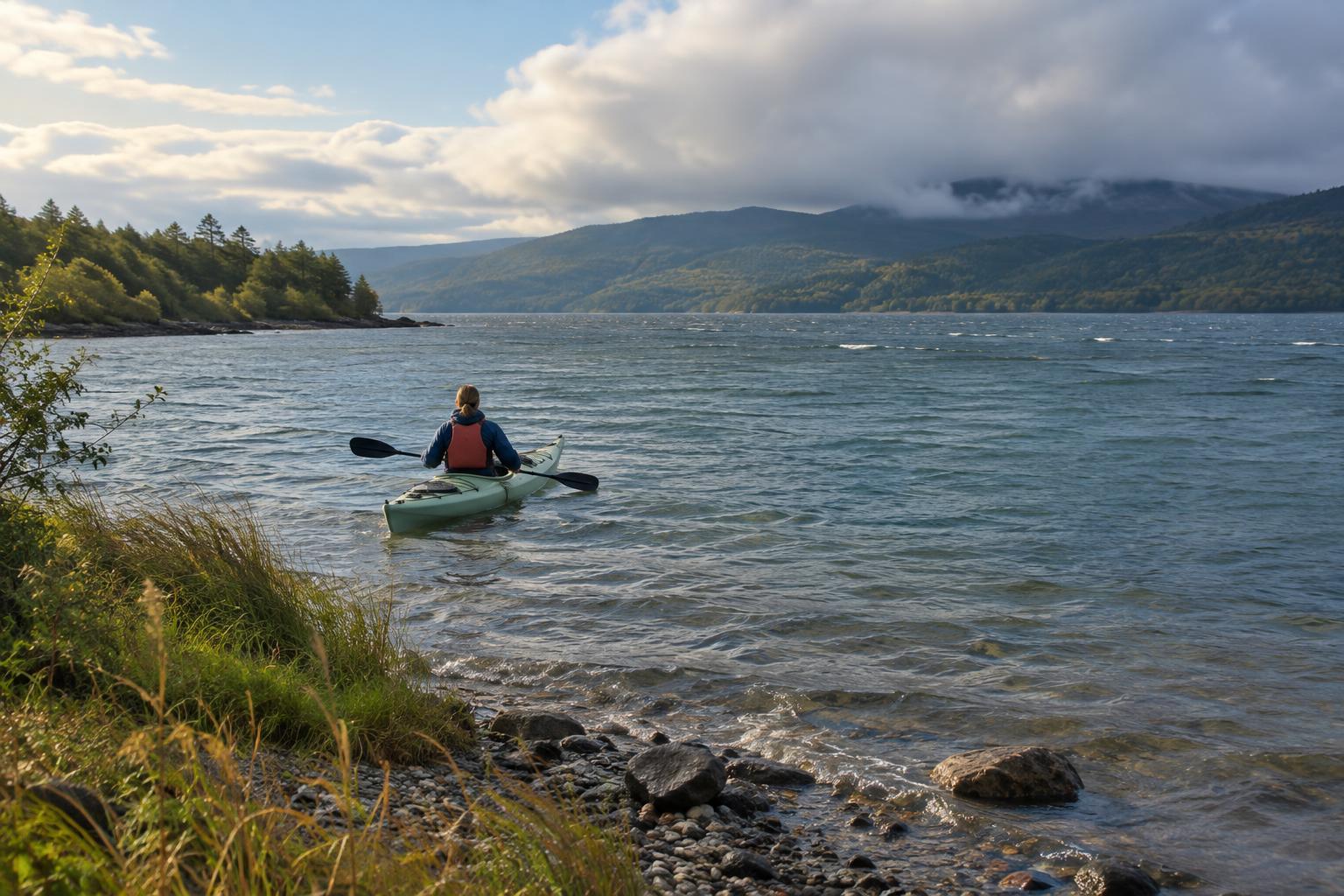
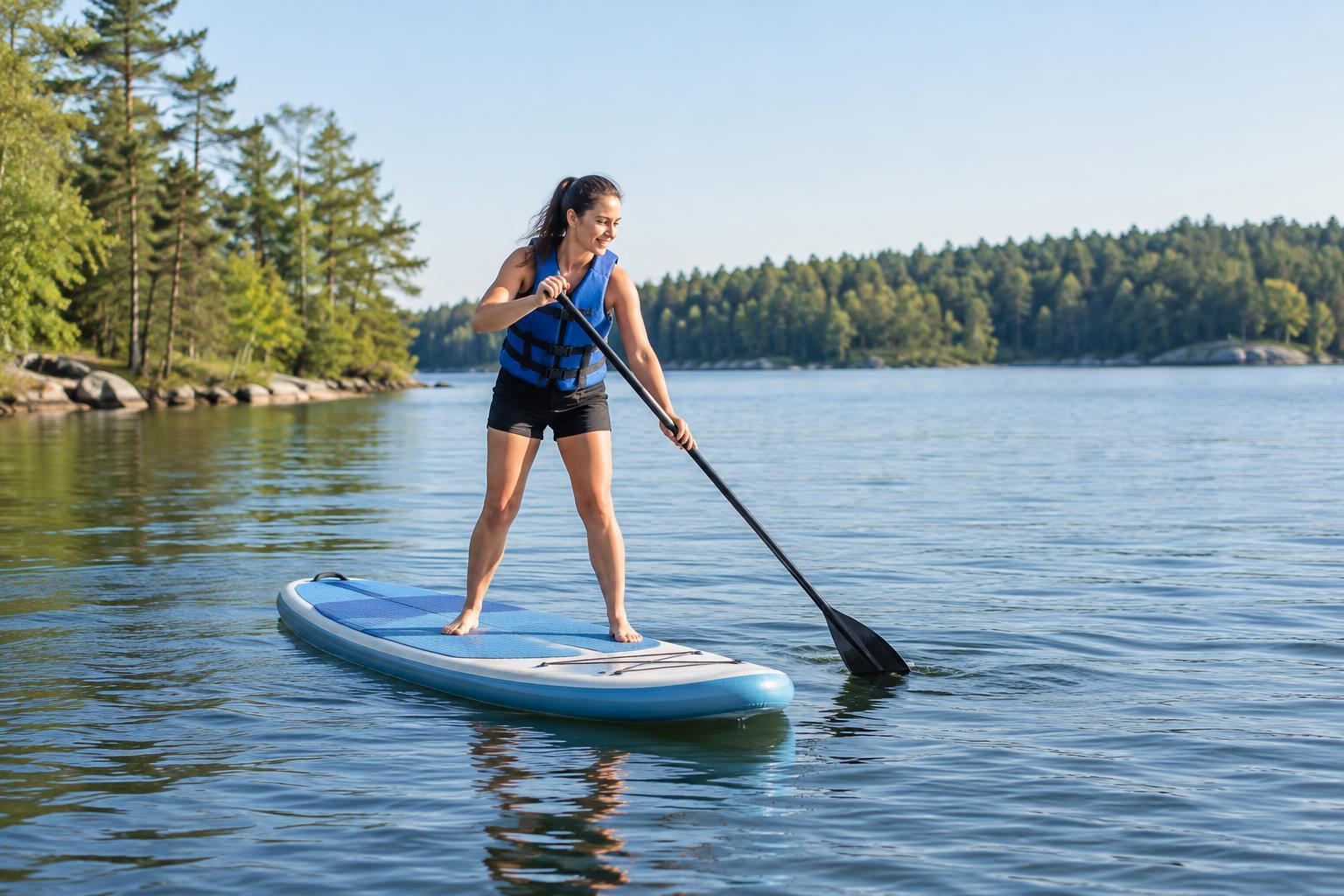
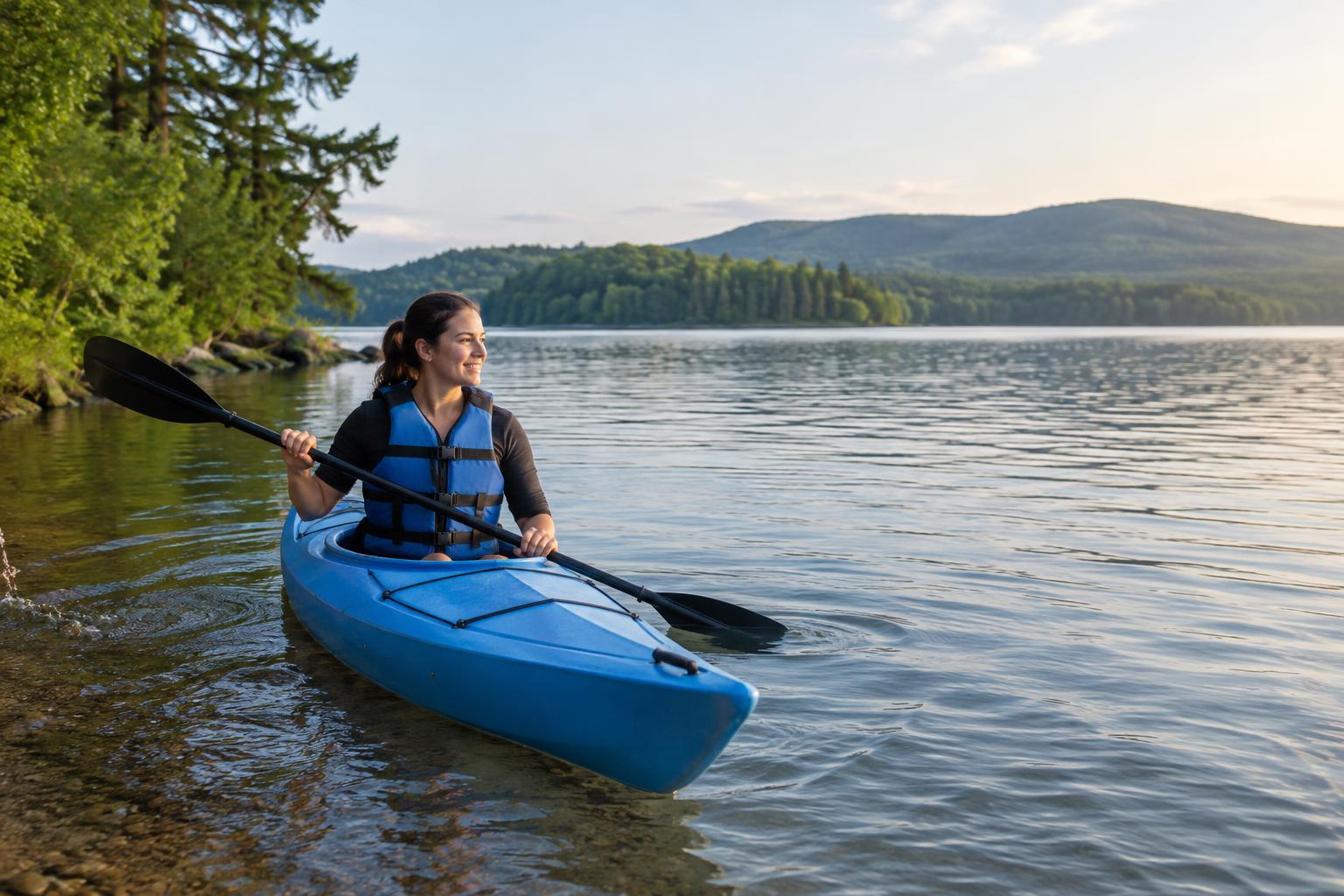
Choose a place away from boat lanes, marinas, launch ramps and areas where watercraft regularly approach shore. A swimmer’s head can be difficult to spot from a boat, particularly in glare or choppy water. Swim inside marked boundaries when they are provided, and do not follow an attractive shoreline route into an area used by boats.
Before anyone enters, agree on where the group will swim and where to meet afterward. Swim with a companion rather than alone. Keep children close enough for an adult to respond immediately, even in shallow water; flotation toys are not a substitute for close attention. A properly fitted life jacket is a sensible choice for inexperienced swimmers and for activities farther from shore.
Make a final check, and be willing to change plans
Look at the sky and listen for thunder before getting in. If a storm approaches, leave the water and seek appropriate shelter. Strong wind, fading light or reduced visibility can also make a familiar spot harder to navigate. Check that you have a practical way to call for help, and tell someone on shore when you expect to be back if you are swimming in an area without supervision.
The safest decision may be to skip a swim. If you cannot confirm that access is allowed, cannot identify a safe exit or feel uncertain about water conditions, choose another spot or enjoy the lake from shore. A relaxed lakeside day does not depend on getting in the water; it depends on making a choice that fits the conditions and the people with you.