Decide what the water should do in the picture
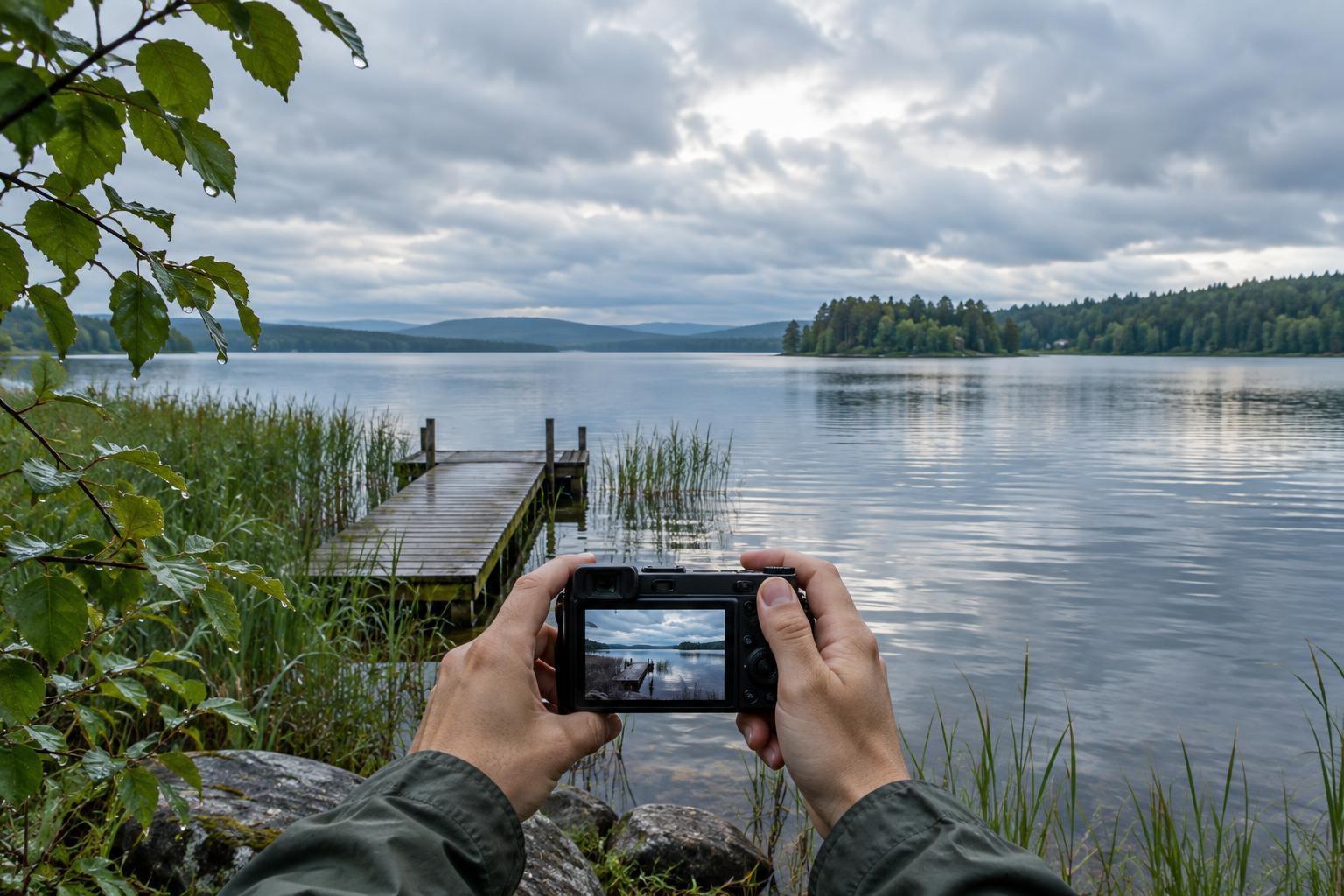
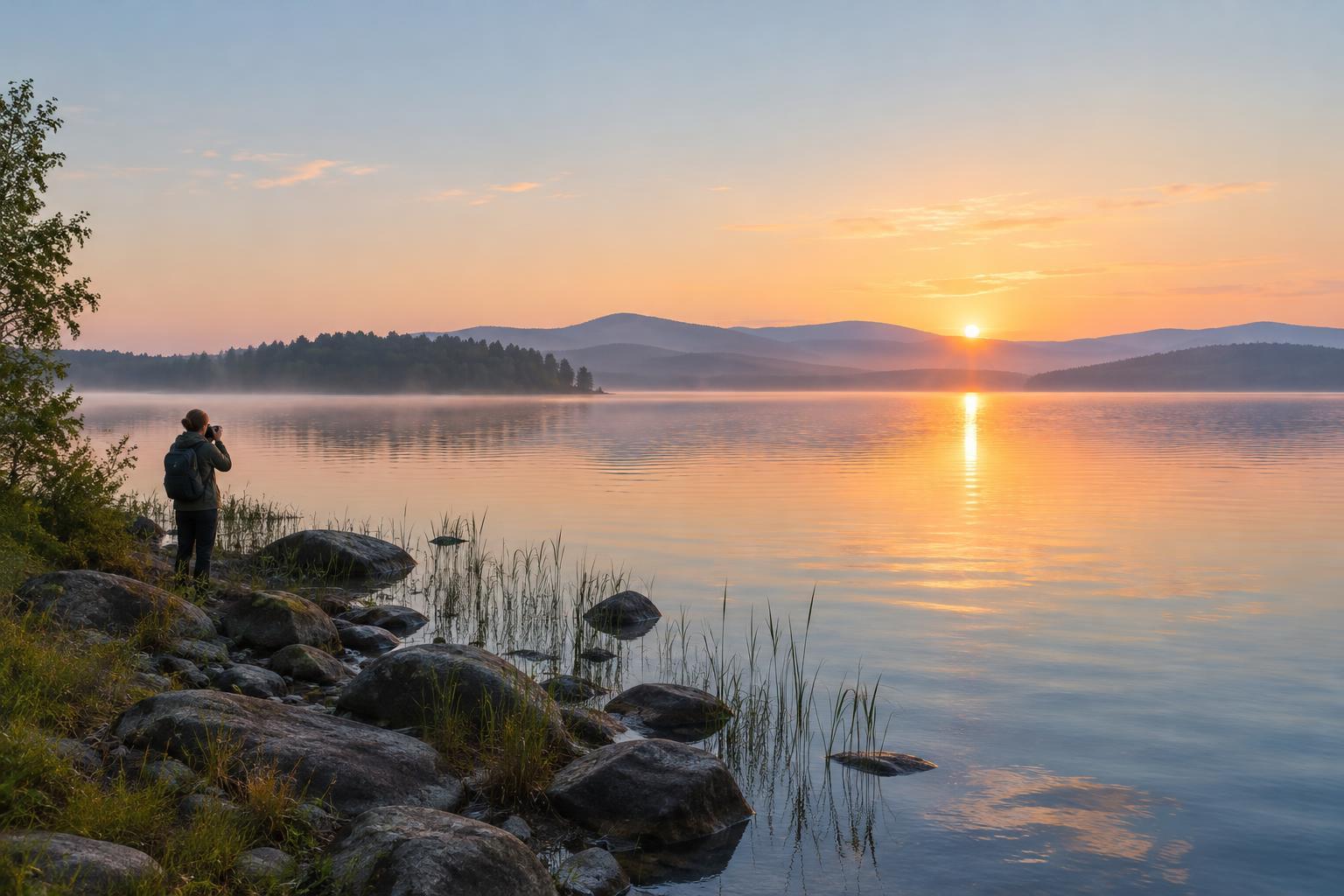
Before trying to remove glare, decide whether the water’s shine is part of the scene. A bright trail of light can lead the eye toward a dock or distant shoreline. A reflection of trees, cabins or clouds can make a quiet lake photo feel complete. The goal is not always to make the surface darker; it is to keep the bright areas from distracting from the subject.
Start by looking at the water rather than the camera screen. Move a few steps along the shore and notice how quickly the reflection changes. From one position, the sky may appear as a broad pale patch. From another, a darker hillside may fill the same part of the frame. This small change in viewpoint often does more than a camera setting can.
Change your angle before changing your gear
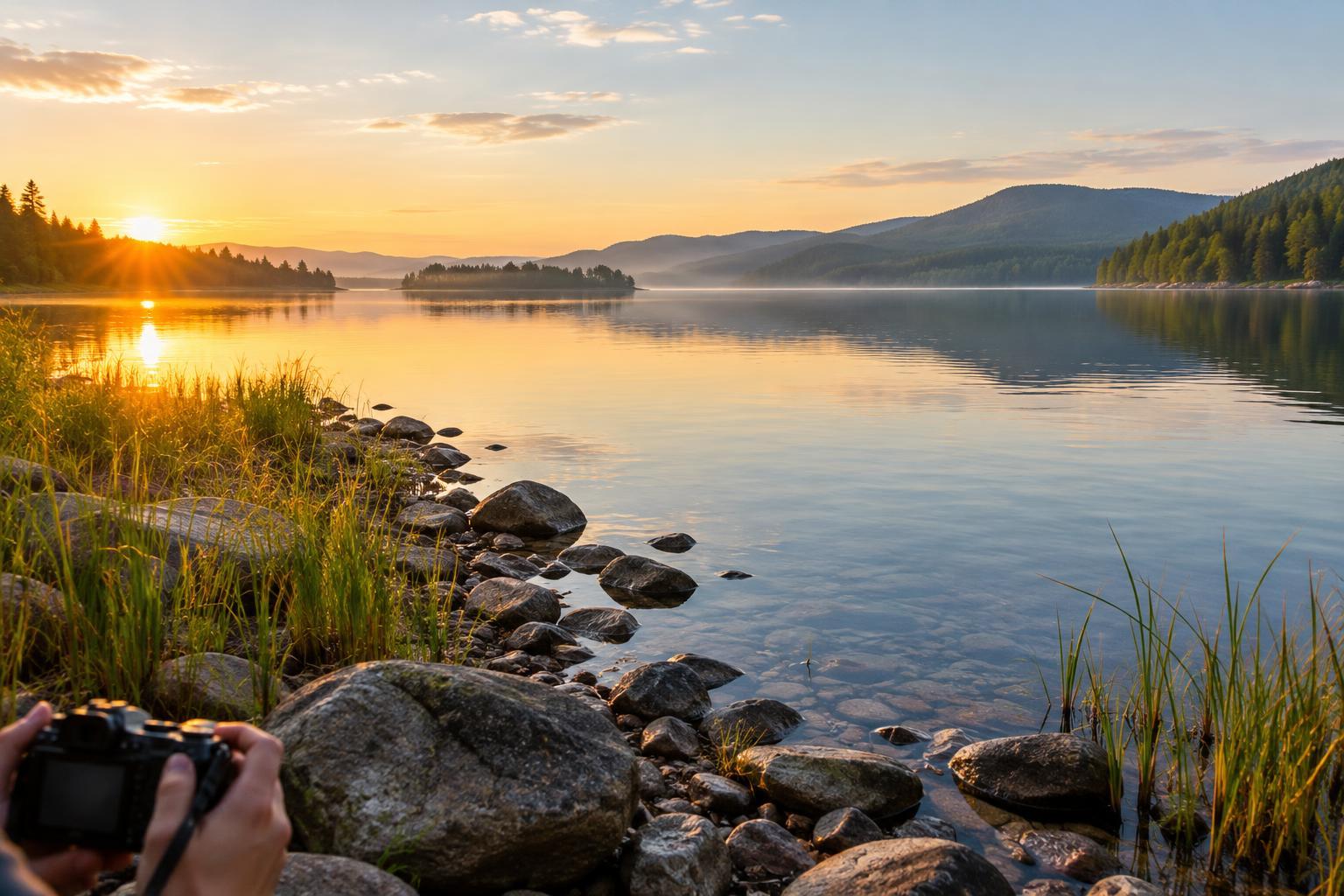
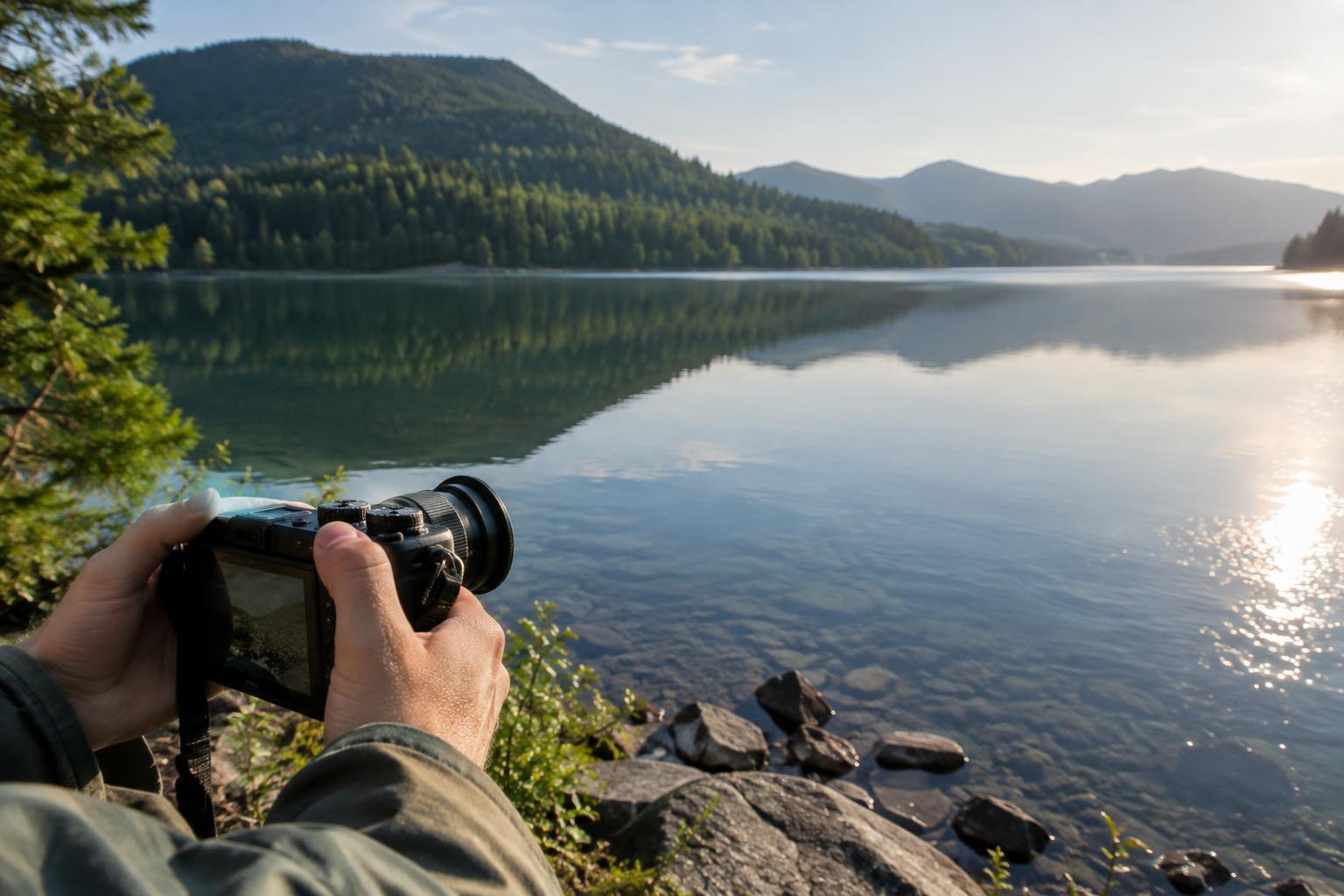
Glare is strongest when sunlight bounces off the water toward your lens. If the surface looks washed out, try pointing the camera away from the sun or photographing from a different stretch of shore. You can also shift the height of the camera: a low viewpoint may emphasize a reflection, while a higher one can reveal more of the lakebed in clear, shallow water. Neither approach works in every spot, so compare a few frames.
Pay attention to the horizon and to what fills the foreground. A patch of reeds, a moored canoe or the edge of a dock can give the picture a subject even when the water is bright. Take those steps only from stable ground or a safe, accessible platform. A photograph is not worth leaning over an edge or stepping into uncertain water.
Use softer light and protect the highlights
The time and conditions of your visit affect what the camera sees. Lower, gentler light can give reflections more shape, while a cloudy sky may reduce harsh sparkle and bring out color along the shore. Midday light can still work well for bold patterns, boats or details in the shallows; it may simply require a composition that gives the brightest water less space.
If the lake turns into a featureless white area on your screen, lower the exposure slightly and take another photo. On many phones, tapping the area you want to expose for brings up an exposure control you can adjust. With a camera, check the preview and reduce exposure if important highlights have lost detail. Darker trees can often be brightened later, but a completely white patch of water may have little detail left to recover. Take a second, brighter frame too if you are unsure which balance you prefer.
Know when a polarizing filter helps
A circular polarizing filter can cut some surface glare and make colors beneath clear water easier to see. It can also deepen parts of a blue sky. Rotate the filter while looking through the viewfinder or at the screen, then stop where the effect suits the picture. The result depends on the angle of the light, so the filter will not remove every reflection.
That selectivity matters. If you want a crisp image of clouds mirrored on the lake, a polarizer may weaken the very reflection you came to photograph. It also reduces the light reaching the camera, which can make a handheld shot harder in dim conditions. For a short lakeside break, treat it as an optional tool rather than essential equipment. A clean lens and a thoughtful position are useful with any camera, including a phone.
Make a quick lakeside shooting routine
When you reach a promising view, take one photo as you found it. Then make three deliberate variations: move left or right, raise or lower the camera, and adjust the exposure if the water is too bright. This gives you a useful comparison without turning a relaxed walk into a long photo session. Check that the horizon is level and that any important reflection has room in the frame.
Finally, wipe spray or fingerprints from the lens with a suitable soft cloth. Smudges can spread bright light across the image and look like glare from the lake itself. Review your photos after you step away from the brightest light, when the screen is easier to judge. Keep the frame that best conveys how the place felt, whether that means clear water, a dark mirrored shoreline or sunlight sparkling across the surface.