Pack for the water you might actually encounter
A lakeside bag may face more than a swim. Spray can reach a boat seat, rain can fall during a walk, and a towel can leave everything around it damp. Before packing, think about where your bag will spend the day. A backpack carried on shore needs a different level of protection from a bag that might sit on a wet dock or ride in a small boat.
It helps to distinguish water-resistant from waterproof. A water-resistant daypack or cover can handle some splashes or light rain, but its zippers, seams and openings may let water in. A properly closed dry bag offers stronger protection for its contents, though closures still need to be used as directed and checked for wear. If a bag could fall into the lake, avoid assuming it will keep valuables dry or afloat.
Build layers around what must stay dry
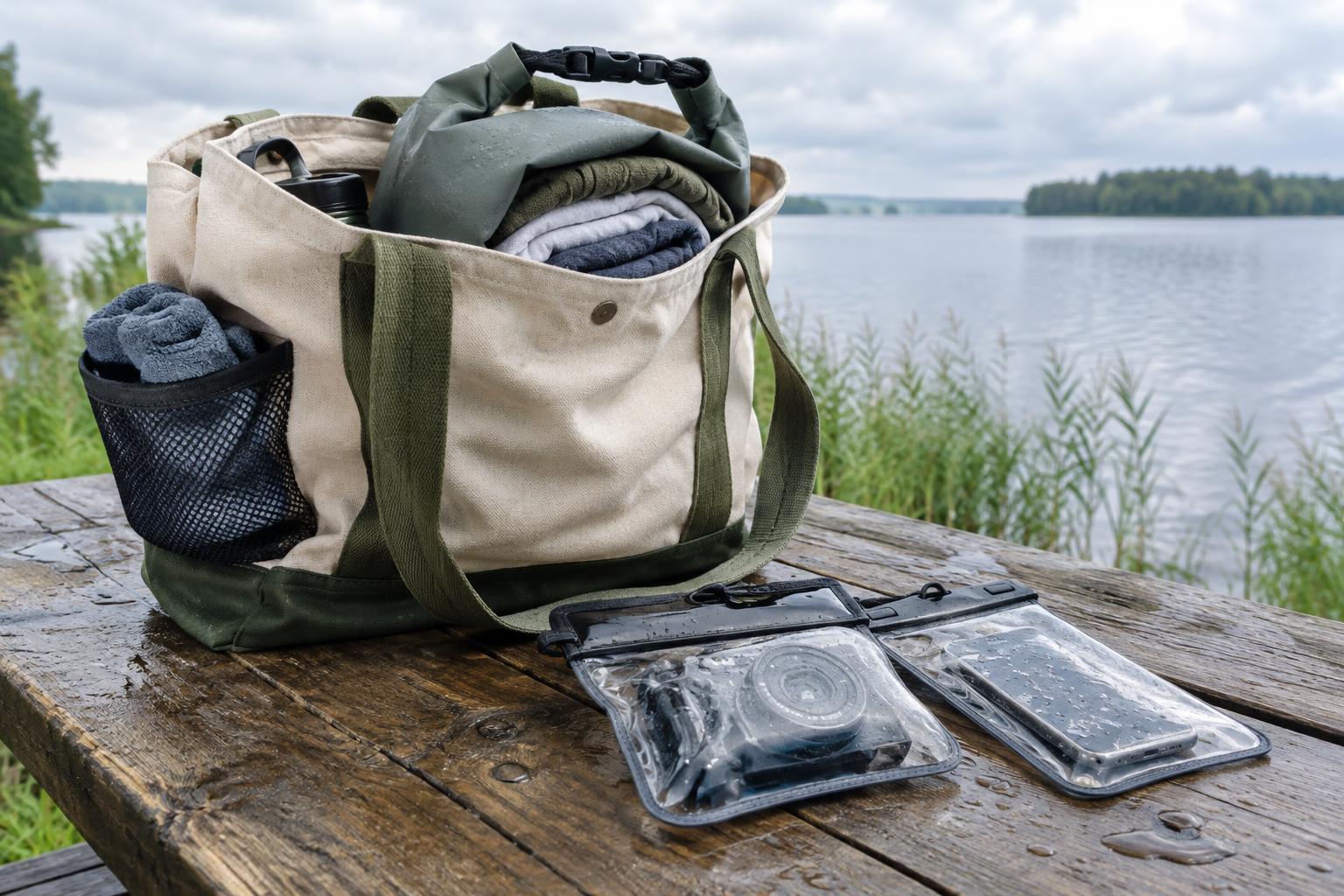
Give your most important items their own inner barrier instead of relying on one large bag. Pack a spare outfit in a small dry bag or a sturdy resealable bag, pressing out excess air before closing it. Keep socks and underwear together so you can find a complete change quickly. For a casual shore day, a rain cover over the main pack and a sealed inner bag for clothes make a useful combination.
Electronics deserve a separate layer. Put a phone, camera or power bank in a pouch suited to its size, and close it before approaching the water. Then place the pouch inside a bag rather than leaving it in an exposed outer pocket. If you plan to use a phone through a protective case, check that the closure is secure and that you can operate it comfortably. Test an unfamiliar case with something expendable inside before trusting it with a device.
Keep wet items from undoing your work
A dry bag is only as helpful as the packing routine around it. Wet swimwear, muddy shoes and used towels belong in a separate bag or compartment, not beside clean clothes. A reusable wet bag can contain drips on the trip back, but open it once you reach your room so the contents can dry. Sealing damp fabric away for the whole weekend can leave it smelling musty.
Organize your main bag by when you will need things. Put a rain layer and the day’s towel where you can reach them without exposing all your clean clothes. Store the dry change lower down or in its own packing cube inside a sealed liner. Before you leave a dock or beach, check the outside of wet pouches: wiping them down before opening helps keep water from running onto the items you worked to protect.
Make photography easy without leaving gear exposed
The best camera protection is the kind you will use every time. If taking pictures is a casual part of your walk, a small protective pouch near the top of your bag may be more practical than a complicated setup. Find a stable, dry spot before taking a camera out, and put it away before boarding a boat or moving through heavy spray. A strap can help prevent a drop, but it does not make a camera water-safe.
Be mindful of moisture after a cool morning or a change in temperature. If a device seems damp, keep its ports closed and let it dry according to the manufacturer’s guidance before connecting a charger. Carry a clean, soft cloth for water spots on the outside of a lens or case; avoid rubbing grit across glass. These small habits matter as much as choosing the bag.
Do a quick dry-bag check before heading out
Before each outing, look for punctures, damaged seams and grit in closures. Roll a roll-top bag the number of times its maker recommends, then secure the buckle without trapping fabric in the seal. Give zip pouches a similar check. Even good equipment can fail if it is overfilled or closed in a hurry.
Finally, decide what can stay at your accommodation. Bringing fewer electronics and only the spare clothes you are likely to use makes the bag easier to organize and easier to keep dry. For the items that come along, use a simple rule: clean and dry together, wet and sandy separately, and valuables inside a second protective layer.