Build your bag around layers
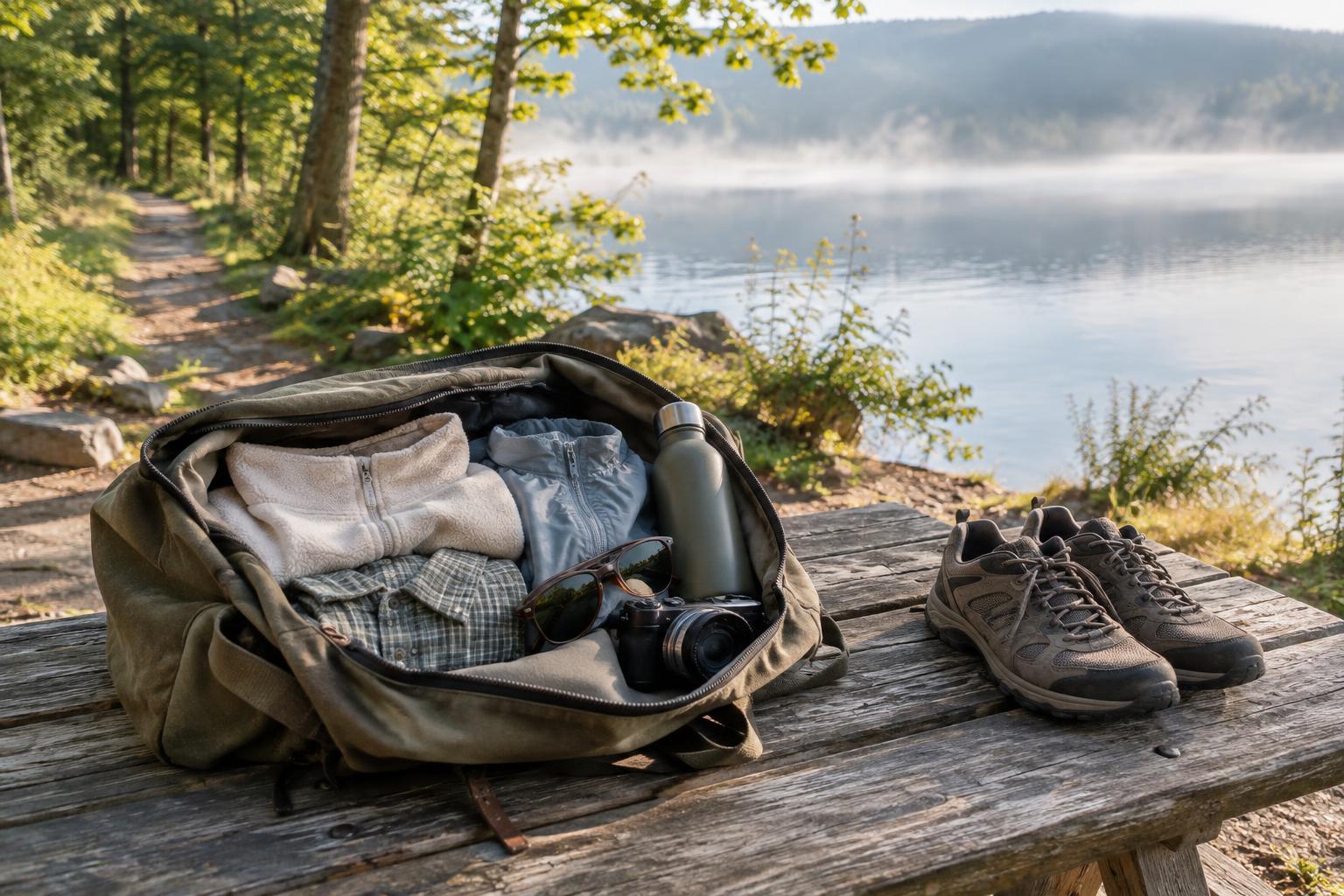
Lakeside temperatures can feel different from one hour to the next, especially when a morning breeze gives way to afternoon sun. Instead of packing one outfit for cold weather and another for warm weather, choose pieces you can add or remove. A breathable T-shirt or lightweight long-sleeved top makes a useful base. Add a sweater or fleece for breakfast outside, an early walk, or an evening by the water.
Bring an outer layer that suits the forecast and your plans. A light wind-resistant jacket can make a breezy dock or boat ride more comfortable, while a packable rain shell is useful if showers are possible. Choose layers that work together without feeling tight. That way, the clothes you take for a cool morning can be carried in a small day bag once the afternoon warms up.
Choose clothes that can handle the day
For a short break, pack a few comfortable outfits you can mix rather than a separate look for every activity. Quick-drying or easy-care fabrics are handy when a shoreline path is damp or a picnic bench is still wet. Include a change of socks, particularly if you expect to walk near the water. If swimming is part of the plan, bring swimwear and a separate bag for anything that has not dried before you leave.
Think through the activities you are likely to do, not every possibility. Casual trousers or shorts may cover most daytime plans, while one clean, comfortable outfit can be set aside for dinner. A hat and sunglasses help when you move from shaded paths into open sun. Sunscreen is worth keeping in the day bag so it is available after you have left your accommodation.
Match footwear to the shoreline
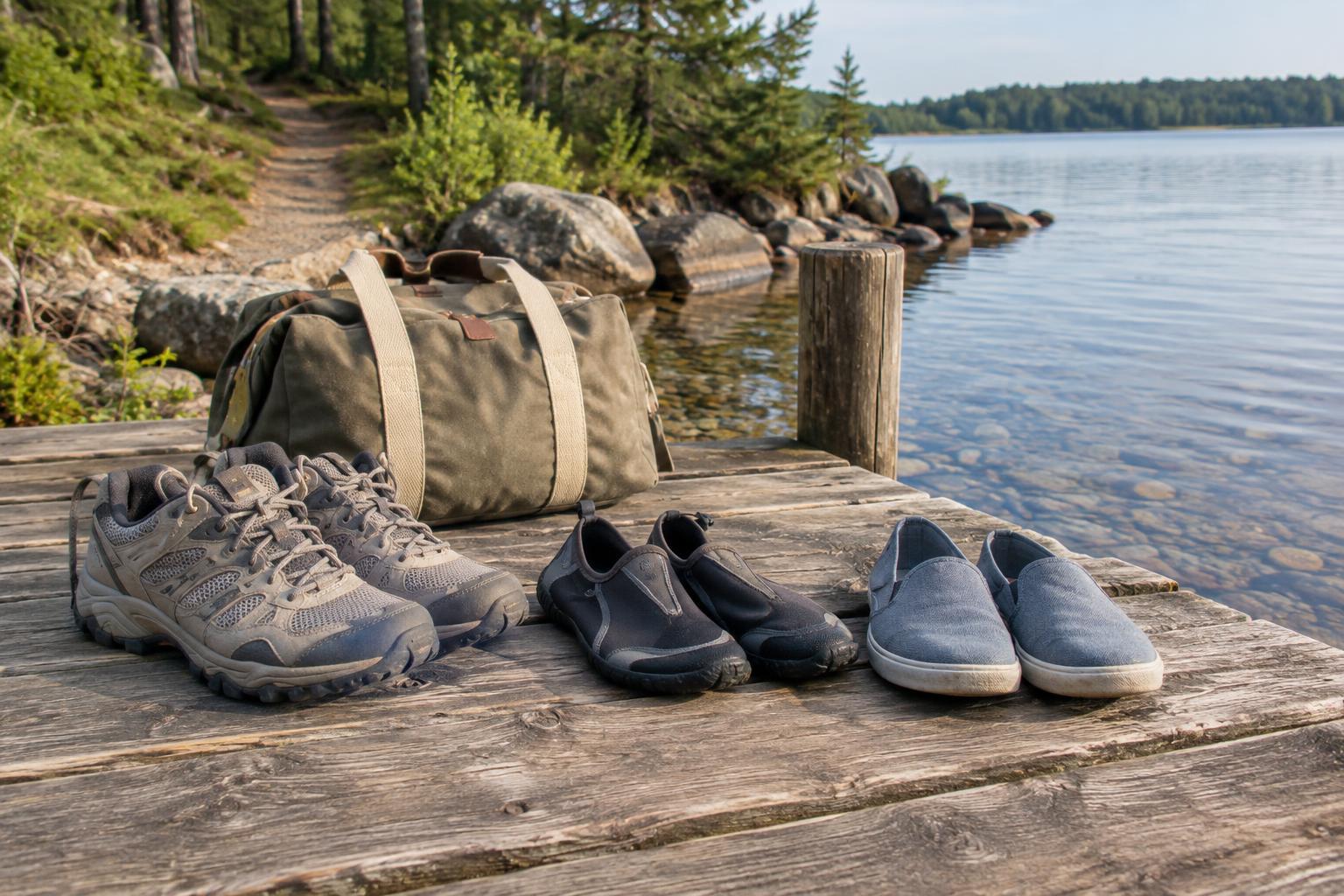
The right shoes depend on where you will spend your time. Supportive walking shoes are a sensible choice for trails, uneven paths, or a long wander around a lakeside town. Sandals may be convenient for a beach or an easy afternoon, but check whether they offer enough grip for wet steps and docks. If you expect rocky shallows, consider footwear that protects your feet and can get wet.
Limit the number of pairs by giving each one a clear job. For many relaxed weekends, walking shoes plus lightweight sandals are enough. Pack shoes in a separate bag or tuck them along the edge of your luggage so dirt and moisture stay away from clean clothes. If a pair gets wet, give it room to dry rather than sealing it in your bag overnight.
Keep a small day bag ready
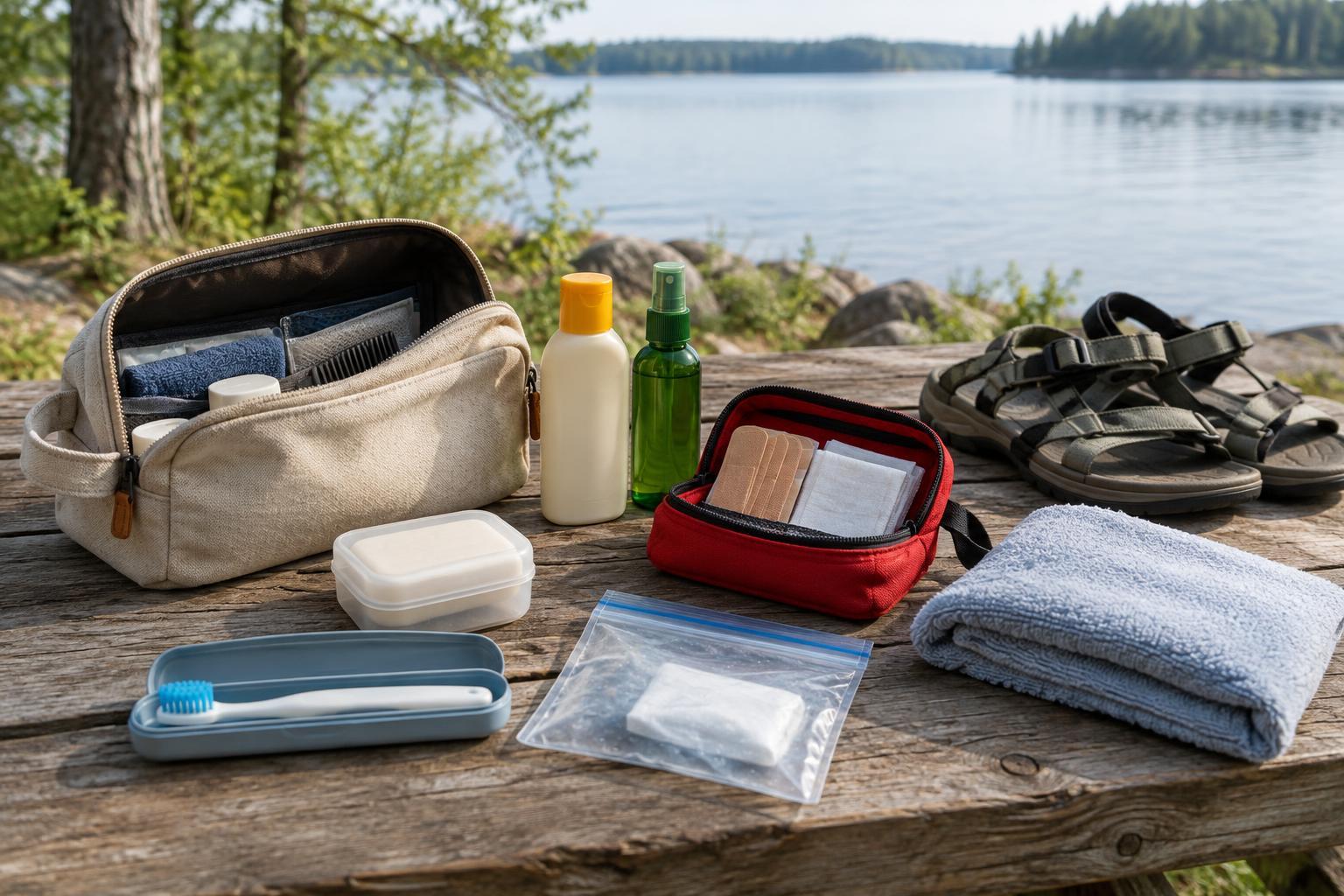
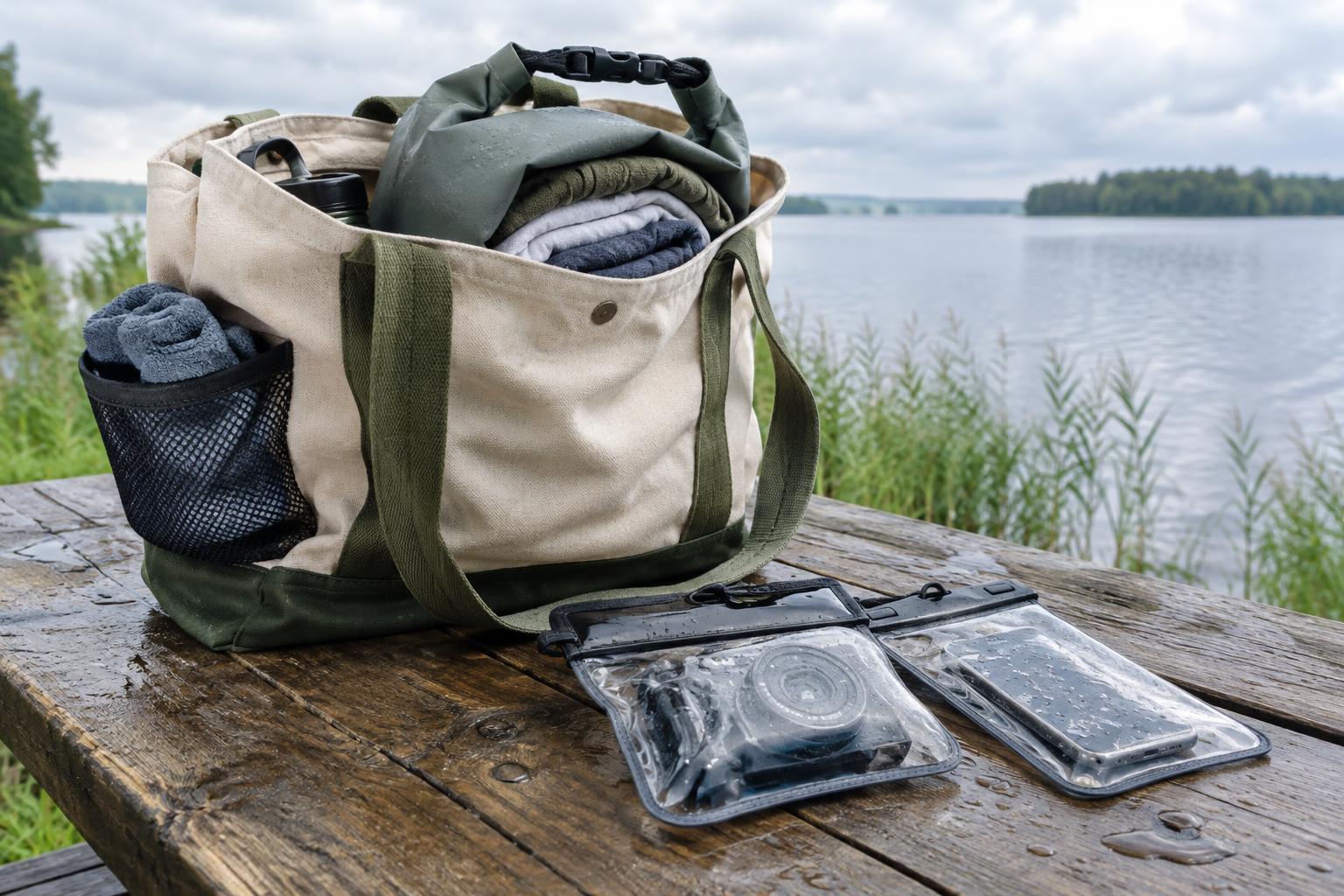
A day bag saves repeated trips back to your room when the weather changes. Start with your removable layer, a water bottle, sun protection, and any personal essentials you normally carry. Add a compact towel or spare dry socks if your plans involve the shore. A reusable bag can hold a damp layer or keep a snack wrapper separate from the rest of your things.
Before heading out, check the local forecast and your route, then adjust what you carry. A short stroll near your stay calls for less than a full day outdoors. If you will be away for hours, make sure the bag remains comfortable to carry; packing every just-in-case item can make a relaxed outing feel cumbersome.
Leave room for simple photography
Cool mornings and warm afternoons offer different ways to photograph the same lake. If you enjoy taking pictures, pack the camera or phone you will actually use, along with a charging cable or charged spare battery. A small cloth is useful for wiping fingerprints or moisture from a lens. Keep equipment in a protective pouch when it is not in use, especially near sand or splashing water.
You do not need a large kit to bring home a varied set of images. Try a wide view of the shore, then look for smaller details such as a trail, a picnic spot, or light falling across the water. Put the device away now and then, too. A bag that is easy to carry and clothing that keeps you comfortable will leave more attention for the lake itself.