Arrive with time to look around
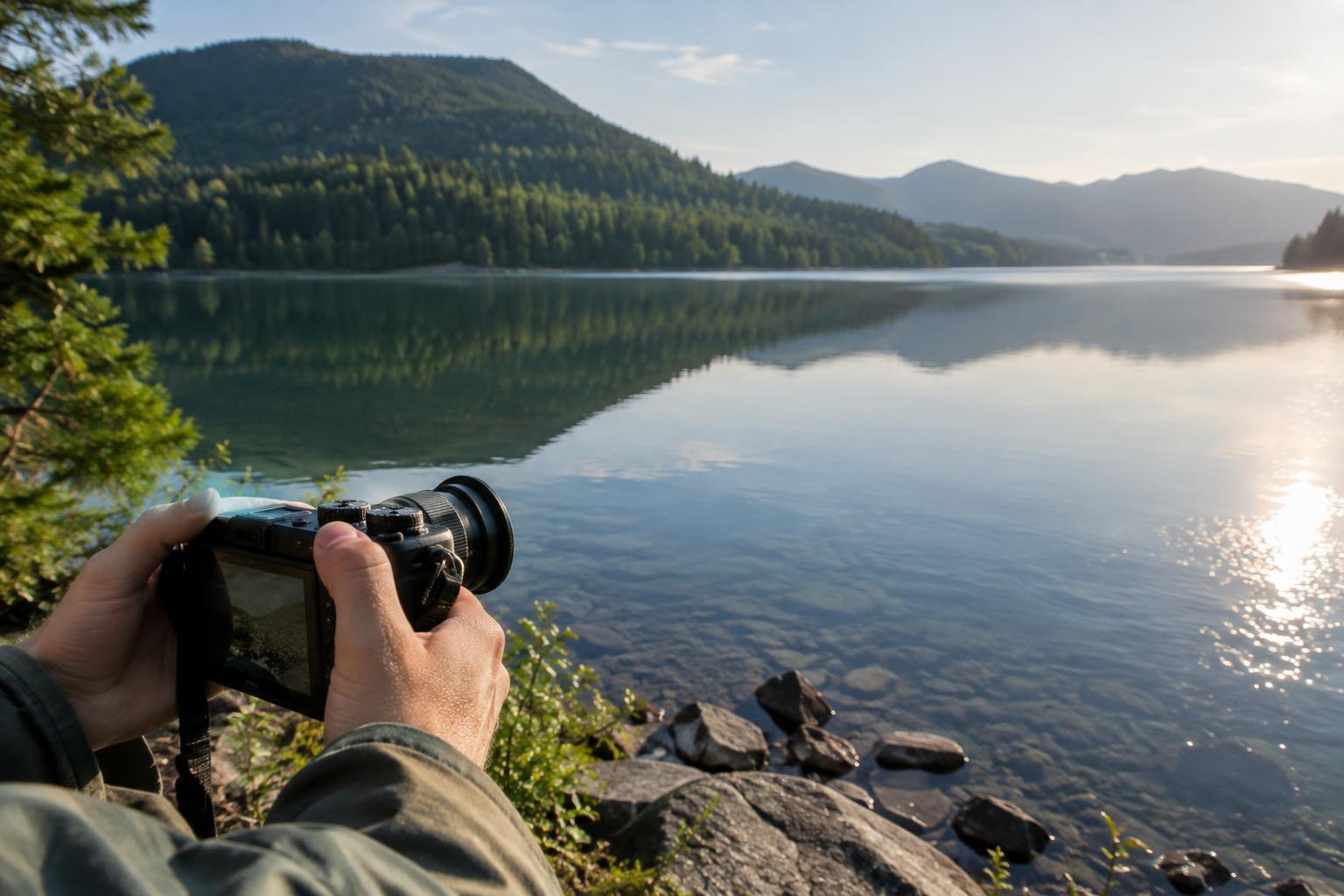
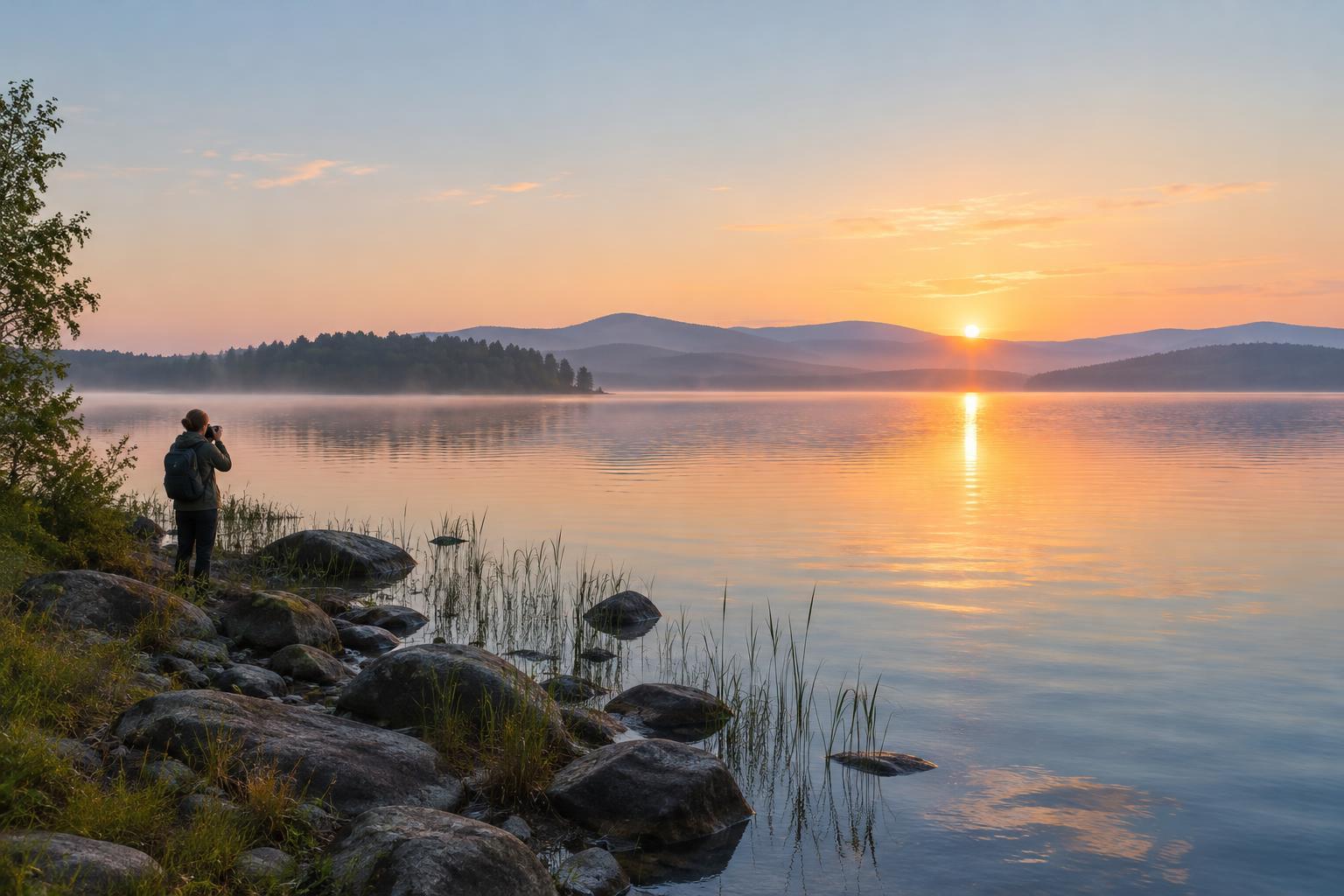
A memorable lake photograph often begins before the color appears in the sky. Arriving early for sunrise, or well ahead of sunset, gives you time to find a safe place to stand and notice how the shoreline shapes the view. Look for a clear sightline across the water, then turn around: the best light may fall on trees, cabins, reeds, or a path behind you rather than on the horizon.
Think about the walk back as well as the photograph. Shoreline paths, docks, and rocks can be harder to navigate in low light, so bring a small light and keep to areas where access is permitted. You do not need to travel far from your accommodation to find a compelling scene. A familiar bend in the shore can be more useful than a distant viewpoint you reach just as the light fades.
Build a composition around the water
Before taking a picture, decide what the photograph is about. A wide view can show the relationship between sky, water, and shoreline. For a quieter image, choose one subject, such as a boat, a single tree, or a strip of sunlit reeds, and leave space around it. Moving a few steps to either side can separate that subject from a busy background.
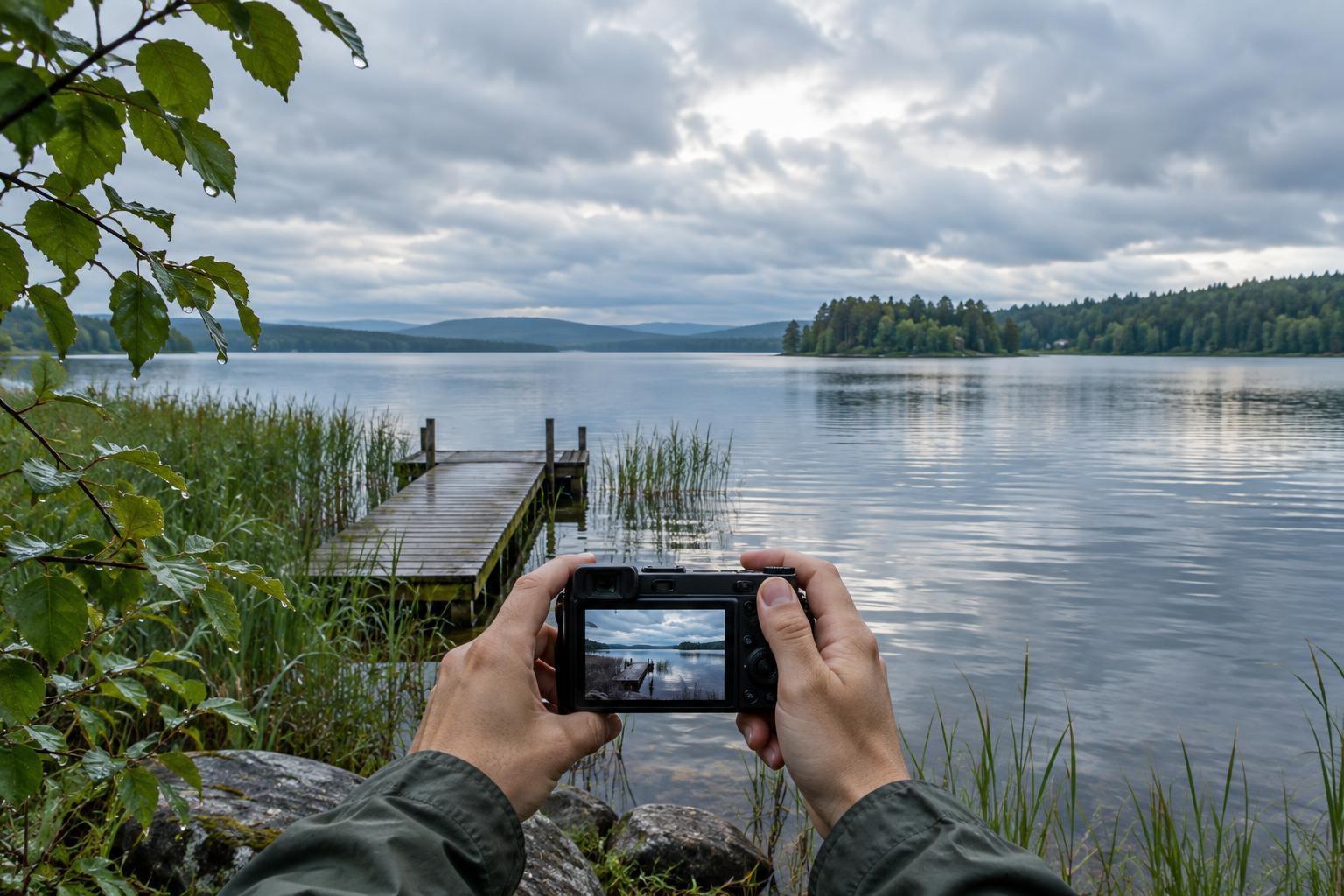
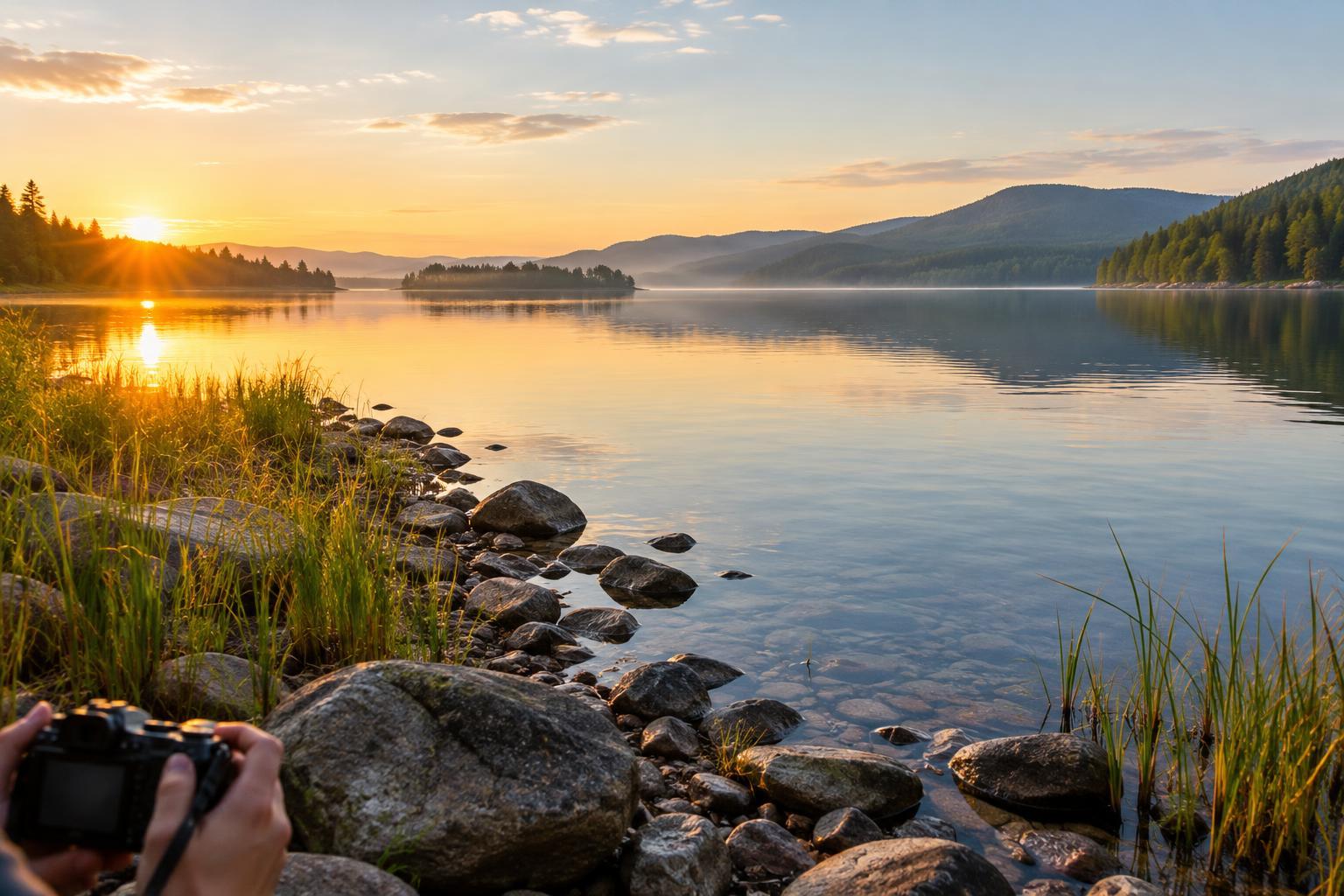
Reflections are tempting, but they do not have to fill the frame. When the water is still and the reflected sky is interesting, try placing the shoreline near the middle for a balanced image. When ripples break up the reflection, give more room to the stronger half of the scene. Include a nearby rock, branch, or patch of grasses if it adds depth, but check the edges of the frame for distracting objects before you shoot.
Adjust as the light changes
Sunrise and sunset light changes quickly, and the bright sky can be much lighter than the shore. On a phone, tap the part of the scene you want to emphasize and adjust the brightness if your camera app allows it. If the sky looks washed out, make the image a little darker and let foreground shapes become silhouettes. If the shoreline is the subject, you may prefer a brighter exposure even if some sky detail is lost.
With a camera, check the image after a few frames rather than relying only on how the scene looks to your eyes. A lower ISO can help keep detail clean when there is enough light; as it gets darker, a tripod or other stable surface can help prevent blur from a slower shutter speed. If you are photographing moving water or reeds, remember that a long exposure will soften their motion. Neither a sharp nor a blurred result is automatically better: choose the effect that suits the scene.
Try small variations instead of rushing
Take a few frames from one position, then change one thing at a time. Shoot a wide view, a closer detail, and a vertical frame. Lower your viewpoint to bring shoreline textures into the foreground, or raise it to simplify the water’s surface. These modest changes often produce more variety than taking many nearly identical photographs while the light changes.
Keep watching after the sun reaches the horizon. Softer color may remain in the sky, and the contrast between water and land can become gentler. If you are photographing toward the sun, try placing a tree or other shape partly in front of it to reduce its dominance in the frame. Give yourself permission to stop shooting, too. A relaxed lakeside break is still worth enjoying without a screen or viewfinder in front of you.
Pack lightly and leave the shoreline as you found it
For a simple outing, a charged phone or camera, a lens cloth, and a layer for cooler air may be enough. A small tripod is useful if you expect to photograph in very low light, but it is not essential for every visit. Keep gear in a bag you can close easily, especially near sand, spray, or damp grass. Wipe moisture from the lens before assuming a hazy photograph is caused by the weather.
Stay on established paths where possible, respect private property, and avoid moving plants or disturbing wildlife to improve a composition. When you review your pictures later, choose a few that convey different parts of the experience rather than keeping only the most colorful sky. A reflection, a shoreline detail, and a wider view can tell a fuller story of your time at the lake.