Start with the room, not the camera
A small room does not need to look larger to make a good photograph. Its appeal may be a chair beside the window, a neat place to set down a bag or a glimpse of water beyond the glass. Before taking out your camera, decide what you want someone to notice first. That choice will guide where you stand and what you leave out of the frame.
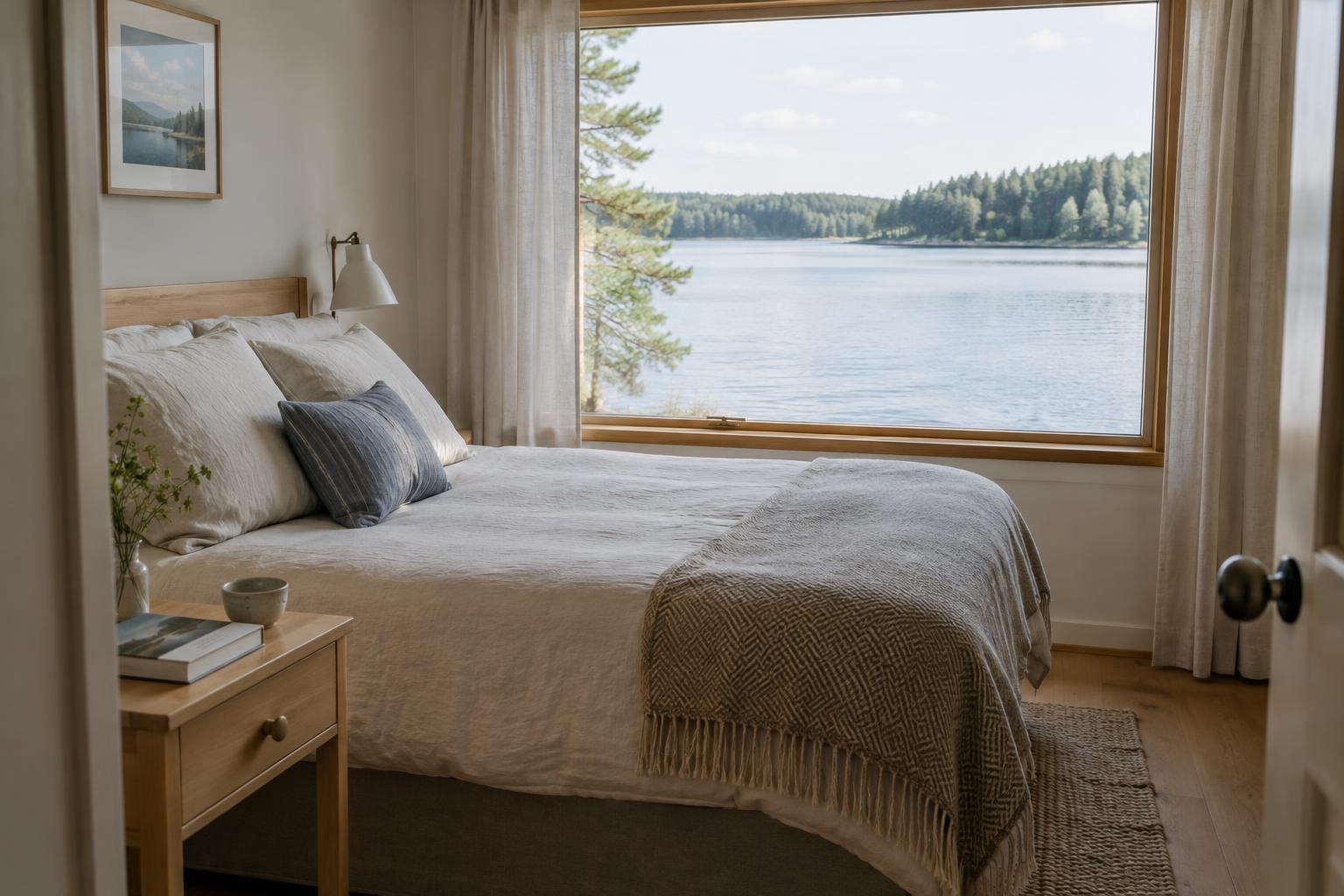
Tidy only what distracts from that idea. Smooth the bedding, straighten a lamp shade and move loose cables or empty cups. Keep a few useful, lived-in details, such as a book on the bedside table or a folded blanket. If you are staying in someone else’s accommodation, avoid moving heavy furniture or handling personal items. An honest, comfortable-looking room is more useful to a viewer than one rearranged beyond recognition.
Find the gentlest window light
Turn off lamps first and look at how daylight falls across the room. Mixing window light with warm bulbs can give walls and bedding uneven colors. A softly lit room, even if it seems a little dim to your eyes, often photographs better than one with a bright window and several competing light sources. Open curtains or blinds enough to let light reach the main subject, then step back and check for harsh patches.
The best moment depends on which way the window faces and what sits outside it. Direct sun can bring lively shapes and shadows, but it can also wash out white bedding or turn a corner very dark. If that happens, try a different time of day, partly close a sheer curtain or photograph from an angle where the sunlit area is smaller. On an overcast day, the window may provide soft, even light that makes a compact room easier to photograph.
Make a small space feel clear, not stretched
Begin with one photograph that explains the layout. Stand near a doorway or in a corner and show the bed, window and any seating in a single, readable view. Hold your phone or camera level so door frames and walls remain upright. A low position can make furniture loom; a very high one can make the room feel flattened. Start around chest height, then adjust until the important surfaces are visible.
If you use an ultra-wide phone lens, inspect the edges of the image. Furniture near them may look bent or unusually large. Try the standard lens instead and take a few steps back when possible. You do not need to fit every wall into one shot: a second image can show the corner the first one missed. Leave some breathing room around the main subject, but crop out blank ceiling or floor that adds little information.
Include the lake without losing the room
A view can be the reason a lakeside room feels special, yet photographing a bright lake through a window is tricky. If you expose for the room, the scene outside may turn pale; if you expose for the view, the furniture may become a silhouette. Decide which matters most in each frame. For a room photograph, let the window suggest the setting while keeping the interior easy to see. Then take a separate image from closer to the glass to show the view.
For a balanced composition, place a recognizable piece of the room beside the window: the edge of a bed, a reading chair or a breakfast table. This gives the viewer a sense of what it is like to spend time there. Check the glass for reflections and shift a little to one side if your own outline appears. Before pointing a camera toward a shared dock or neighboring property, consider other guests’ privacy.
Capture useful details and edit lightly
After the wider views, make a short set of detail photographs. Show the texture of the bedding, a bedside reading light, hooks for damp jackets or the spot where a morning cup can rest. Move close enough that each photograph has one clear subject. These images add warmth and can answer practical questions about the space, but they work best alongside a wider image that shows where everything sits.
Review the photographs before the light changes. Remove near-duplicates and keep the frames that feel both welcoming and accurate. In editing, straighten tilted lines, adjust brightness gently and bring colors back toward what you remember seeing. Avoid pushing shadows so far that a dim room appears sun-filled, or making the lake unnaturally vivid. A small collection of truthful images will tell a fuller story than one dramatic photograph.