Start with a sense of place
The first photograph many people take at a lake is a wide shot from the shore. It is worth making: the curve of the water, the trees and the open sky give context to everything that follows. But if every frame is wide, your pictures may miss what it felt like to be there. The chipped paint on a rowboat, a towel drying over a porch rail or a path worn through grass can make a weekend more recognizable than another horizon.
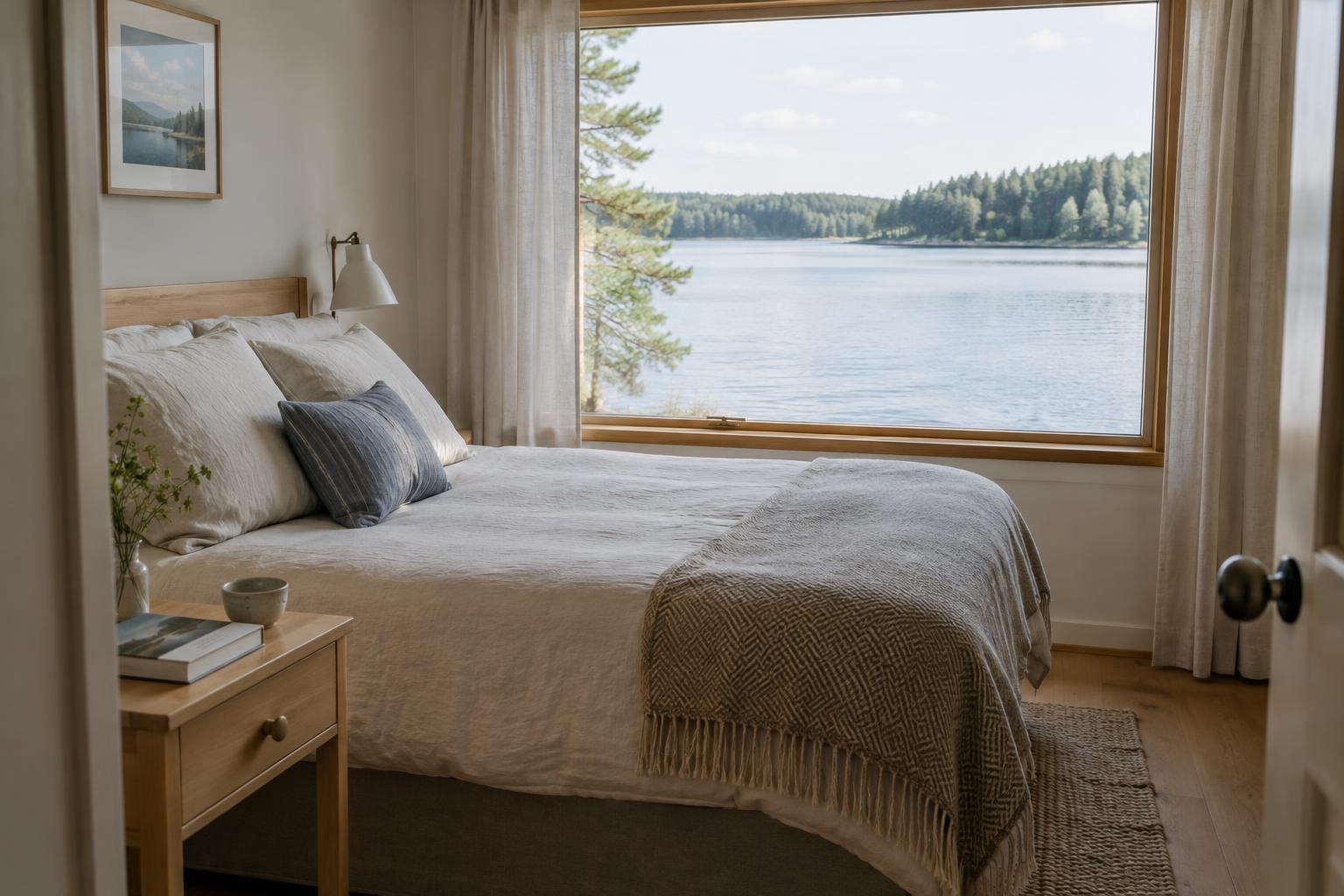
Before taking out your camera, pause and look for details you would mention when describing the trip to a friend. What did you notice while walking to the water? What was on the table after breakfast? Which corner of your room felt especially welcoming? Use those answers as a loose guide rather than a shot list you must complete. The aim is to pay attention, not to turn a quiet break into an assignment.
Follow light instead of chasing landmarks
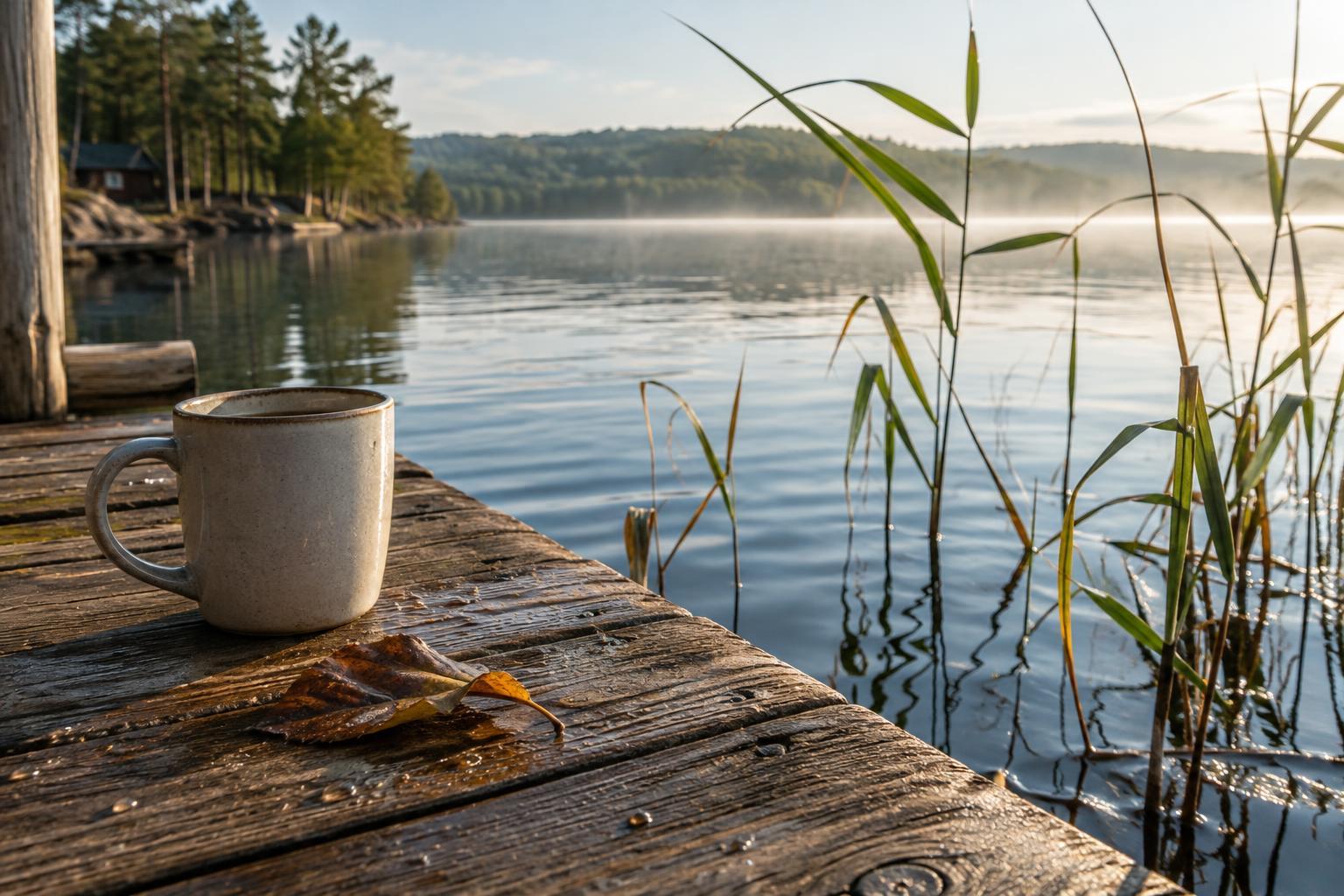
Lakeside light changes the appearance of ordinary things. Low light can skim across dock boards and reveal their texture; a cloudy sky can soften reflections and make subtle colors easier to see. If midday glare leaves the water looking flat in a photo, turn your attention toward shaded objects nearby: folded chairs, leaves against a cabin window or ripples beneath a pier.
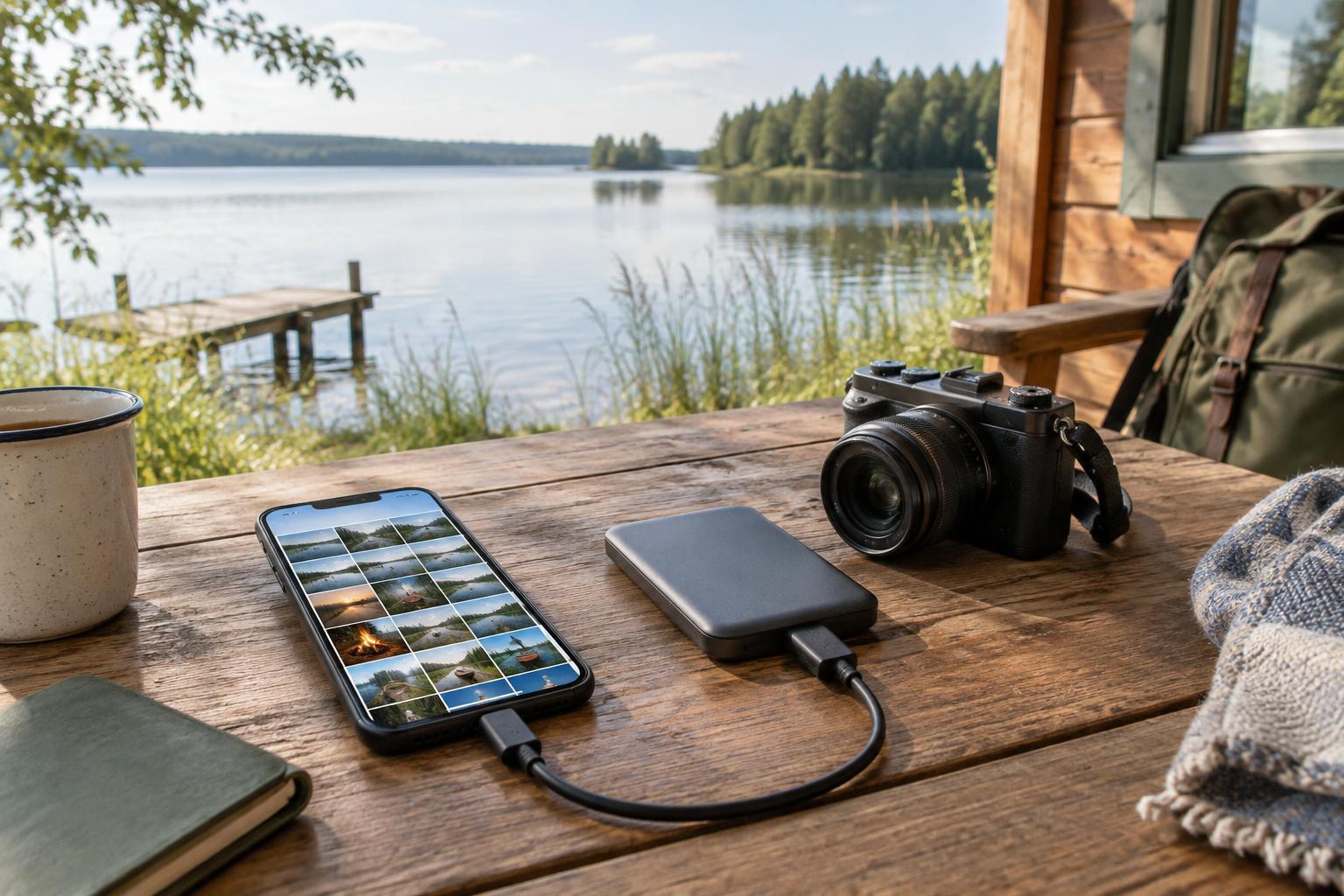
Try photographing the same small subject from more than one position. Move a little to one side to separate it from a busy background, or lower the camera so a cup, stone or oar sits against the water. You do not need elaborate equipment for this. On a phone, tapping the subject to set focus and adjusting brightness can help keep pale skies from overwhelming darker foreground details. Take a moment to check the edges of the frame for stray bags, signs or other distractions before you press the shutter.
Look for textures, traces and gentle movement
Details do not have to be tiny. A line of wet footprints on a path, the shadow of a railing across a deck or wind patterns on the lake can each fill a frame. Look for contrasts that suggest the setting: rough bark beside smooth water, a bright paddle against a weathered dock, or a warm lamp reflected in a window at dusk. These pairings help a viewer understand the place without showing the whole shoreline.
Movement is part of the experience, too. Rather than trying to freeze every wave or leaf, make a few images of their changing shapes. Watch where a ripple meets a rock or where a breeze lifts the edge of a picnic cloth. Take several frames if the moment is unpredictable, then put the camera down and enjoy it. Photographing details works best when it fits around the trip, not when it interrupts every activity.
Build a small story from ordinary moments
A useful way to vary your photographs is to think in three scales: a view that establishes the setting, a scene that shows an activity, and a detail that brings the viewer close. For a morning by the lake, those might be the shoreline, someone preparing to launch a canoe, and a life jacket resting on the dock. You can use the same approach for a rainy afternoon indoors or an evening meal near the water.
People can add warmth to a set of images, but a face is not always necessary. Hands holding a mug, shoes left by a door or silhouettes walking a path may say enough. Ask before making close photographs of other guests or staff, and be mindful of private spaces. If you are photographing a stay, concentrate on the features and moments you are welcome to share rather than treating the accommodation as a staged photo set.
Keep the process light and edit for memory
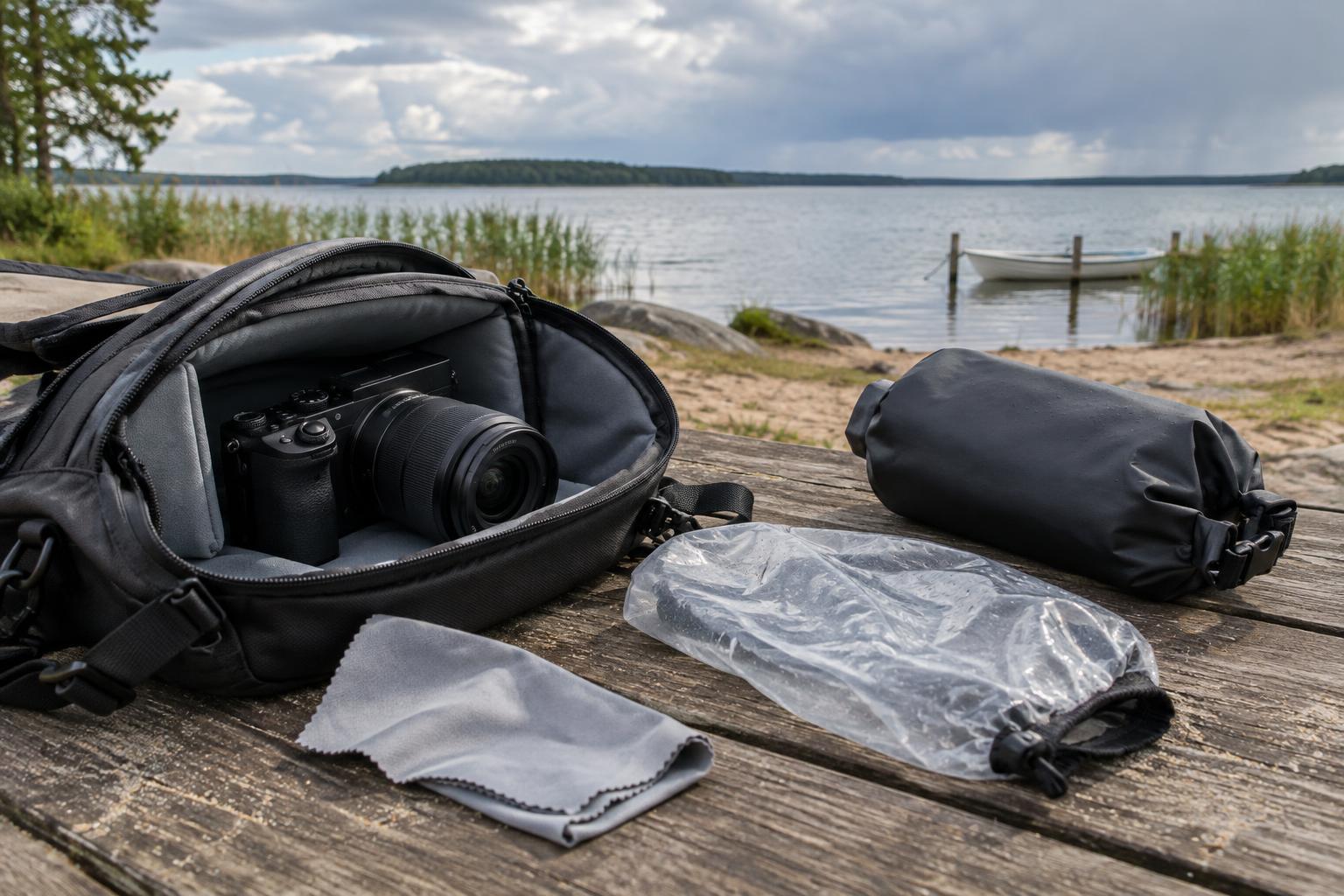
Pack for the kind of weekend you want. A phone or one familiar camera is often easier to carry than a bag of options. A soft cloth helps with mist or fingerprints, while a small protective pouch can keep gear away from splashes. Stay back from slippery edges and secure your footing before composing a shot; no photograph is worth a fall or a damaged camera.
After the trip, choose a modest mix of images instead of keeping every variation. Include the wide view that locates you, then select details that add something different: a color, a texture, a quiet moment or a sign of the weather. Simple adjustments to brightness and cropping can make a set feel coherent, but leave room for the lake to look as you remember it. The best collection may be the one that lets you recall both the scenery and the small pauses between plans.