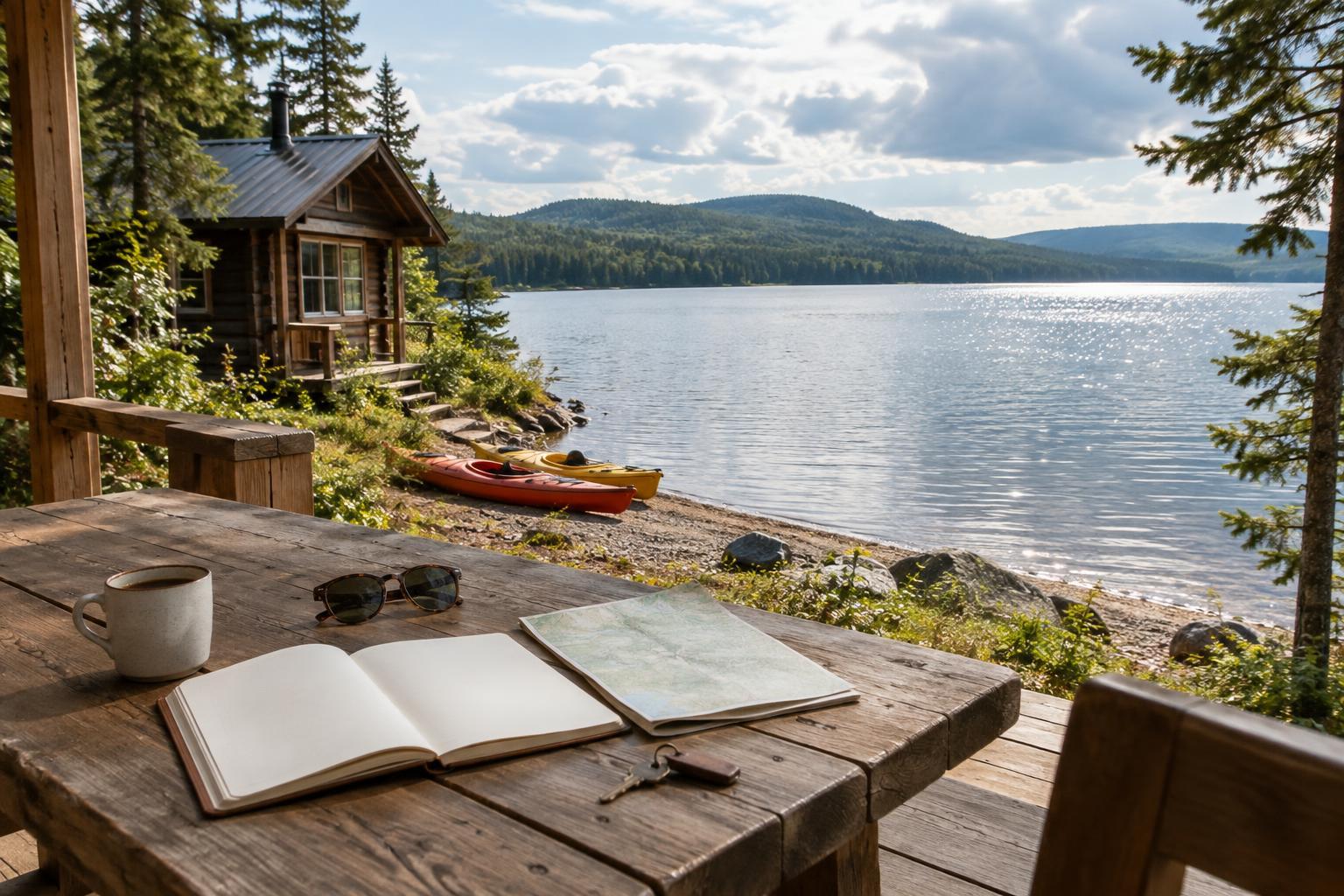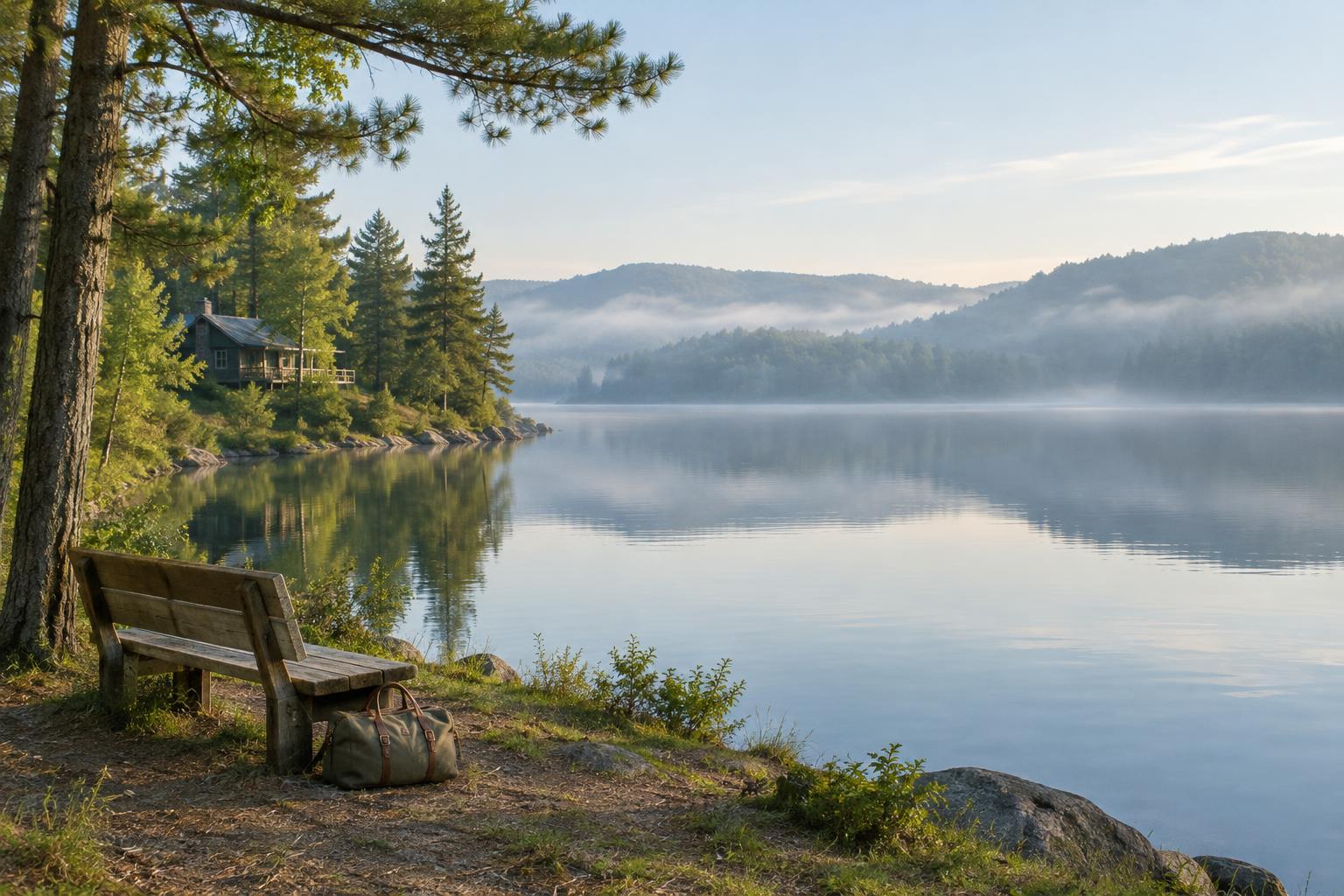
Let daylight shape the itinerary
A winter lake weekend does not need a packed schedule to feel worthwhile. With fewer daylight hours, the most useful planning decision is to choose one outdoor priority for each day. That might be a shoreline walk, a short trail, a scenic drive with a lakeside stop, or an unhurried hour taking photographs. Put it in the brightest part of the day, then let meals, travel, and indoor activities fit around it.
Before you leave, check the sunrise and sunset times for your destination and allow more time than you think you need for getting ready, reaching a trailhead, or finding parking. If you are arriving on Friday evening, treat that night as a chance to settle in rather than the start of a full itinerary. Unpacking, making a simple dinner, and looking over the next day’s route can make Saturday morning feel pleasantly open.
Choose a base that makes quiet hours enjoyable
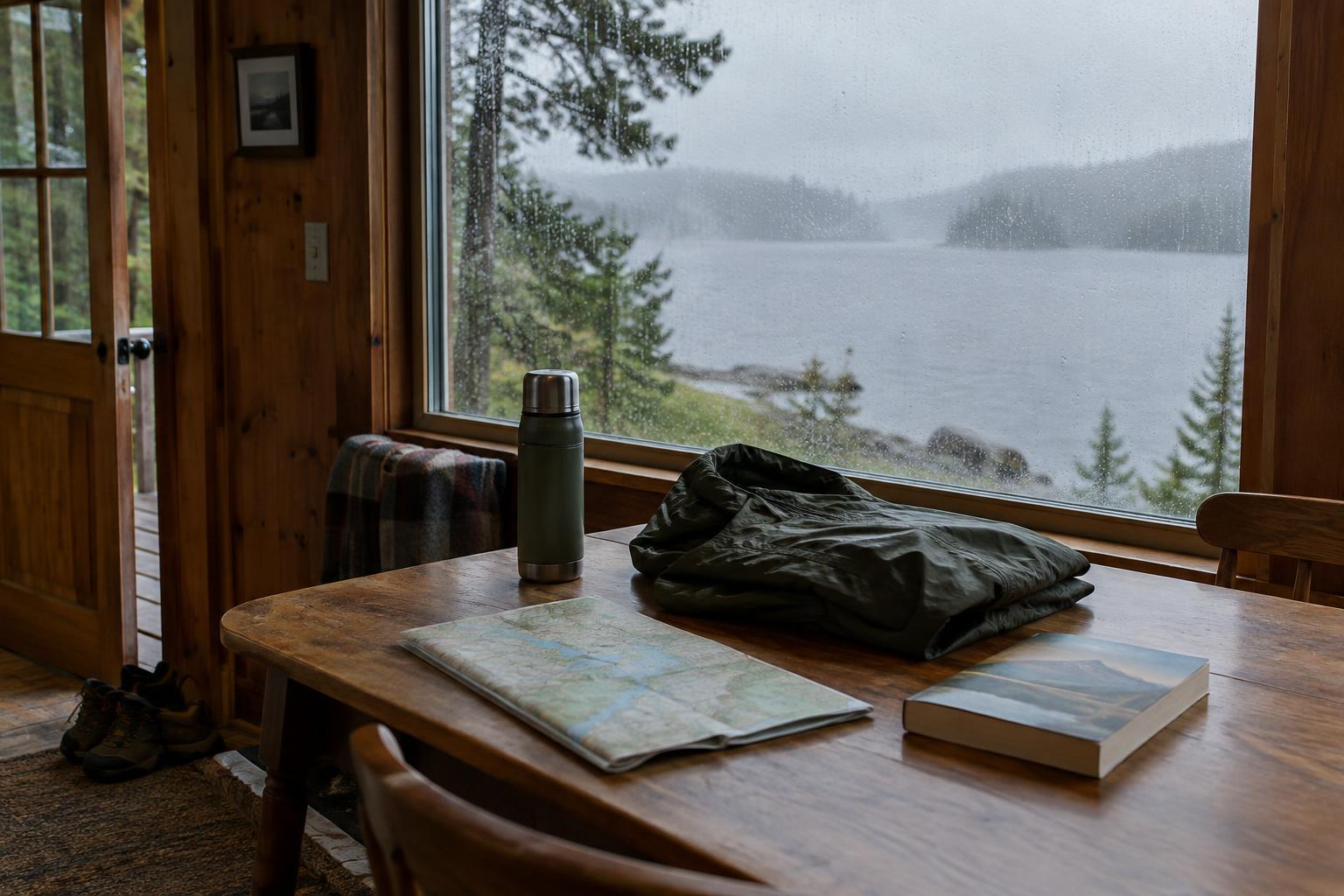
Shorter days mean you may spend more of the weekend at your accommodation, so consider it part of the experience rather than just a place to sleep. When comparing small stays, look for details that matter to you after dark: a comfortable place to sit, a practical way to prepare or reheat food, and enough space to dry damp coats and shoes. Check the listing or ask the host about any feature you are counting on instead of assuming it will be available.
Location matters too. A stay close to the lake may make a brief morning outing easy, while one near a village or town could give you more options for an early dinner. Think about how much driving you want to do on dark roads. A convenient base can be worth more than an ambitious plan that keeps you in the car when you would rather be relaxing.
Build a flexible outdoor plan
Pick an outing that suits the season and your group’s energy, then identify a shorter version of it. A loop walk can become an out-and-back stroll; a long drive can become one viewpoint and a warm drink. This gives you room to adjust if conditions are wet, windy, or simply less inviting than expected. Check local access information before heading out, since facilities and routes can vary by season.
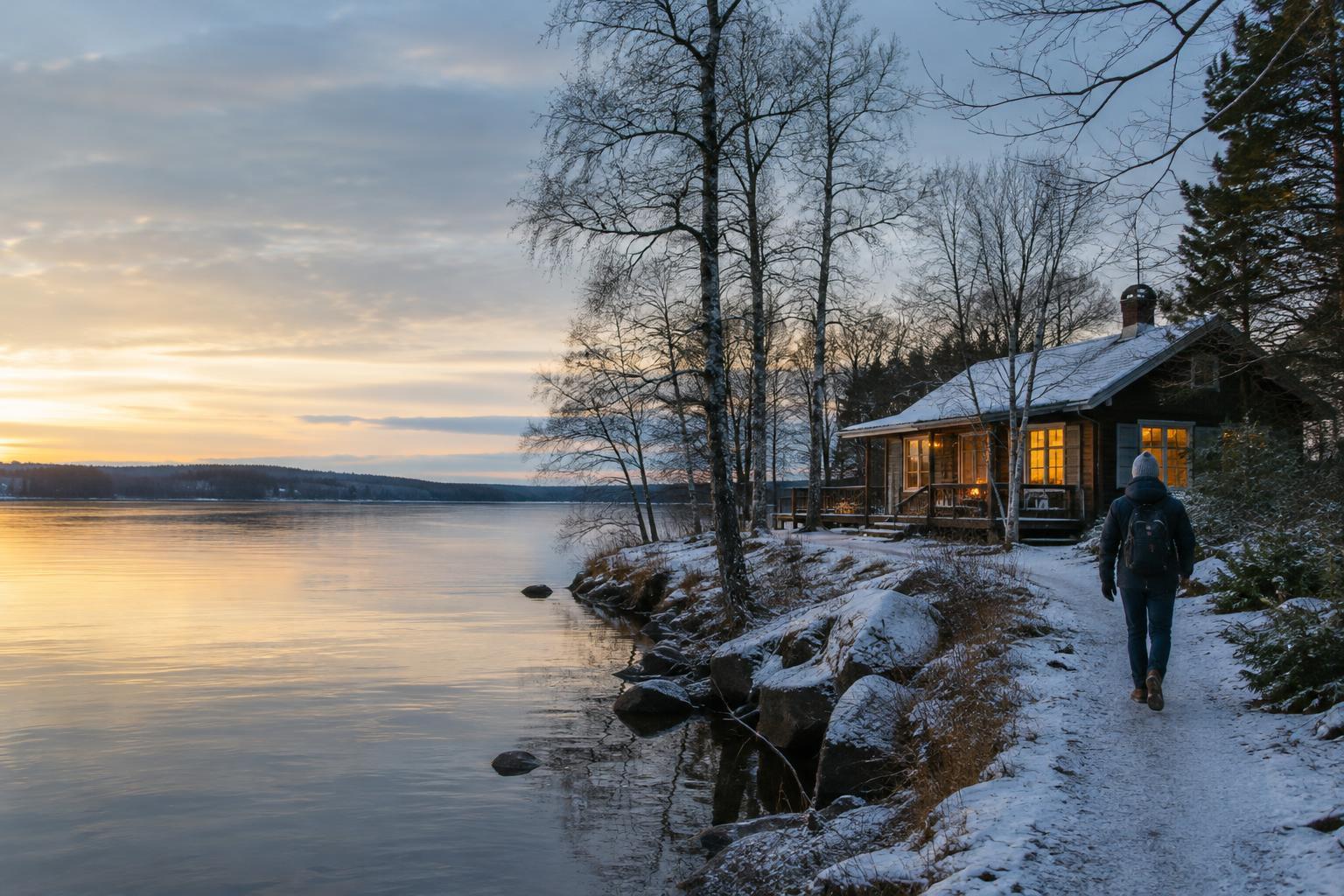
Aim to finish unfamiliar outdoor activities well before sunset. Winter light can fade quickly around wooded paths and sheltered shorelines, and a route may take longer if the ground is muddy or slippery. Bring a light even for a daytime walk, along with suitable footwear and an extra warm layer. Keep a clear boundary around water: cold water and uncertain ice are not worth treating as shortcuts or casual photo spots.
If the weather makes your first choice unappealing, the weekend is not lost. A short walk between showers, time at an indoor attraction, or a view from a sheltered public spot can still give the trip a sense of place. Flexibility works best when you decide on a few appealing alternatives before you arrive.
Make evenings part of the break
An early return indoors can feel like a reward when you plan for it. Bring a book, a game, or a small project that is easy to enjoy without a screen. If you hope to eat out, check opening hours ahead of time and make a backup plan for dinner. For a simple night in, think through what your accommodation actually provides before packing groceries.
Leave some unscheduled time on Saturday evening and Sunday morning. You might watch the last color leave the lake from a safe, accessible spot, linger over breakfast, or take one final short walk before checking out. These moments often suit a winter trip better than trying to fit in another major stop. A relaxed pace also leaves room for ordinary delays without making the weekend feel rushed.
Pack for transitions, not just the forecast
Winter lake days can move between a warm car or café and a cold, exposed shoreline. Layers make those changes easier: start with comfortable clothing, add insulation, and carry an outer layer suited to the expected conditions. Pack dry socks, gloves, and a bag for wet items. For the car, keep the address of your stay and any planned stops available offline in case reception is unreliable.
If you want photographs, use the limited daylight deliberately rather than carrying camera gear everywhere. Choose one or two places you would enjoy visiting even without a camera, and give yourself time to notice reflections, bare trees, or the shape of the shoreline. Then put the camera away. The best winter weekend plan is one that helps you enjoy the lake while still getting back to warmth with time to spare.