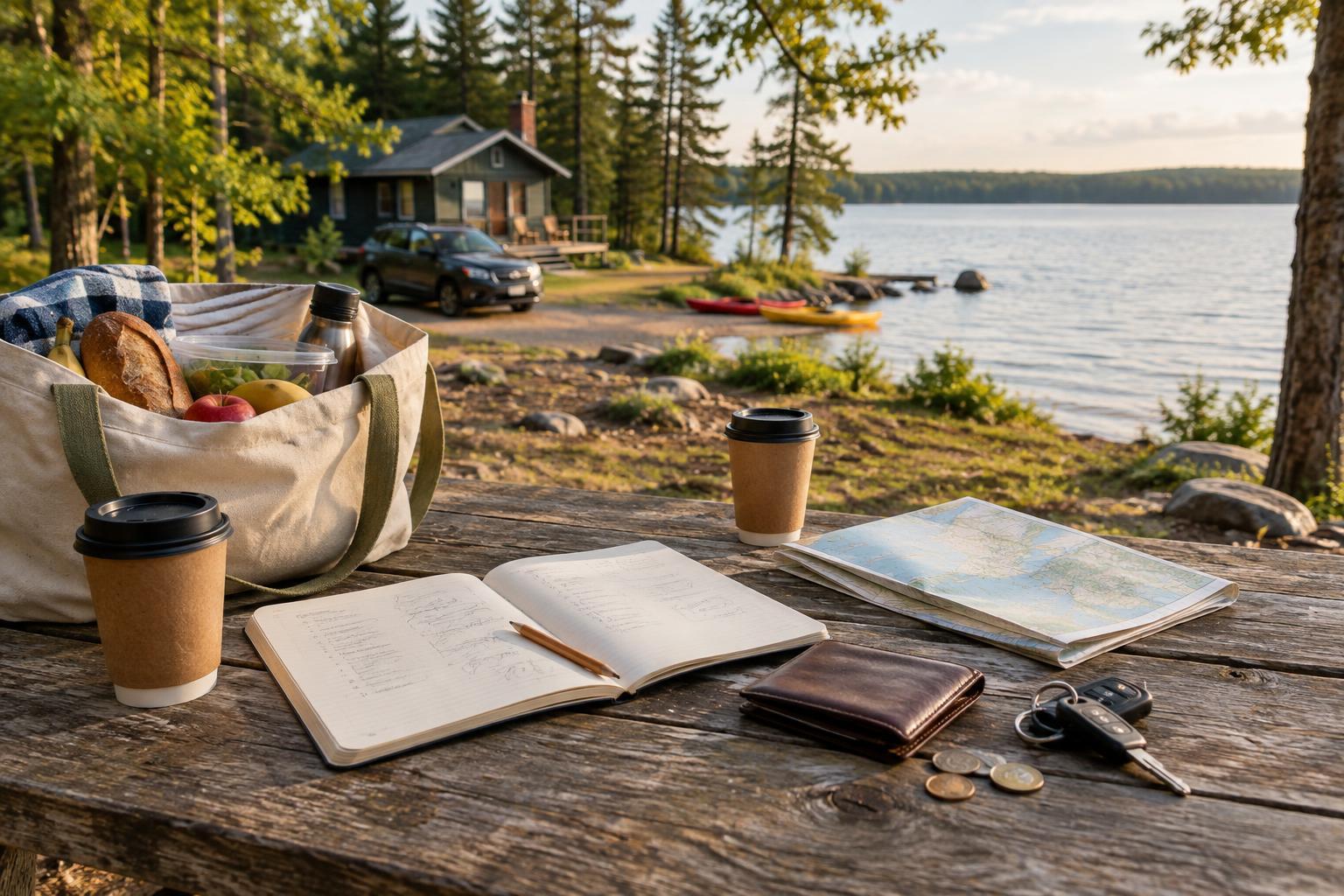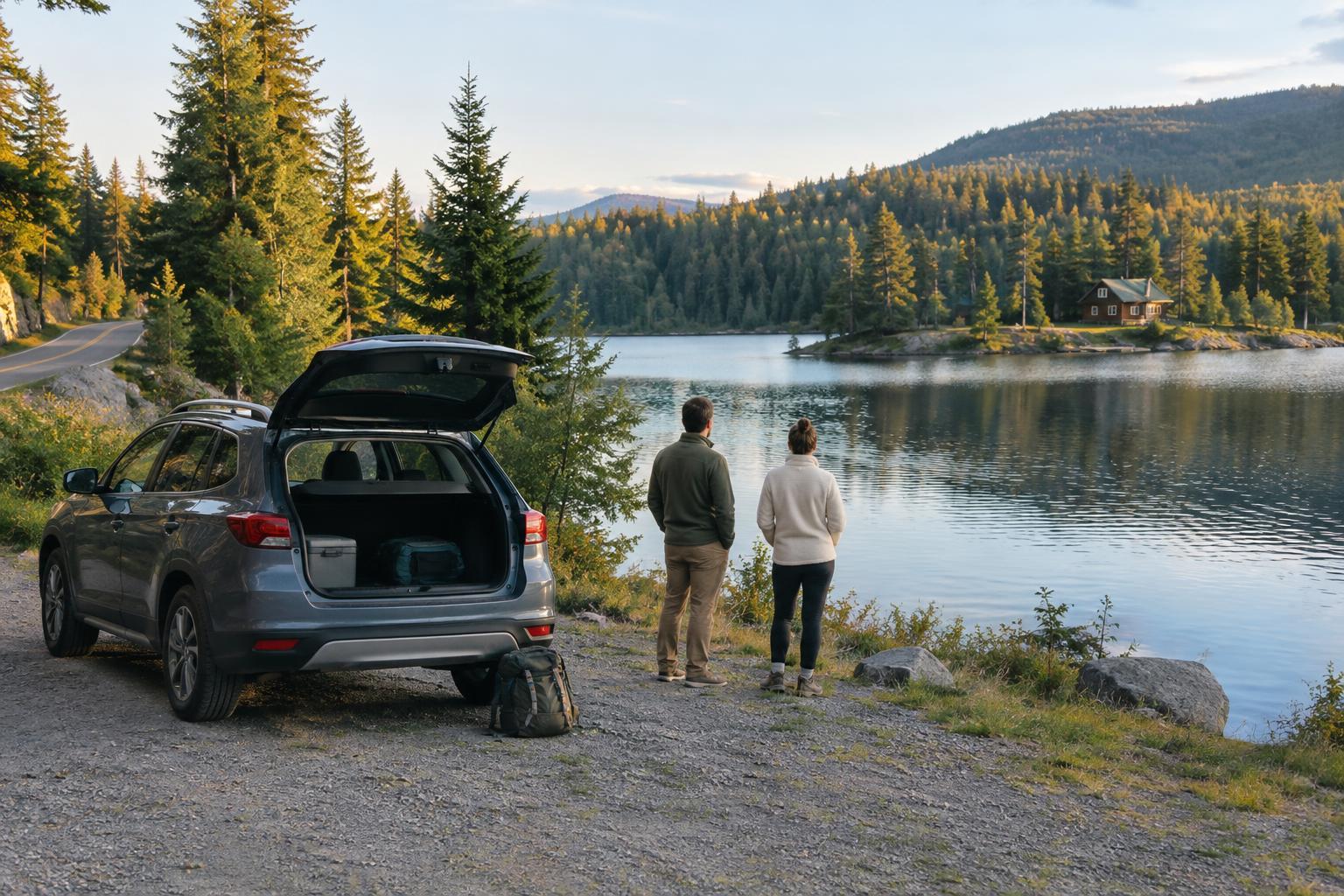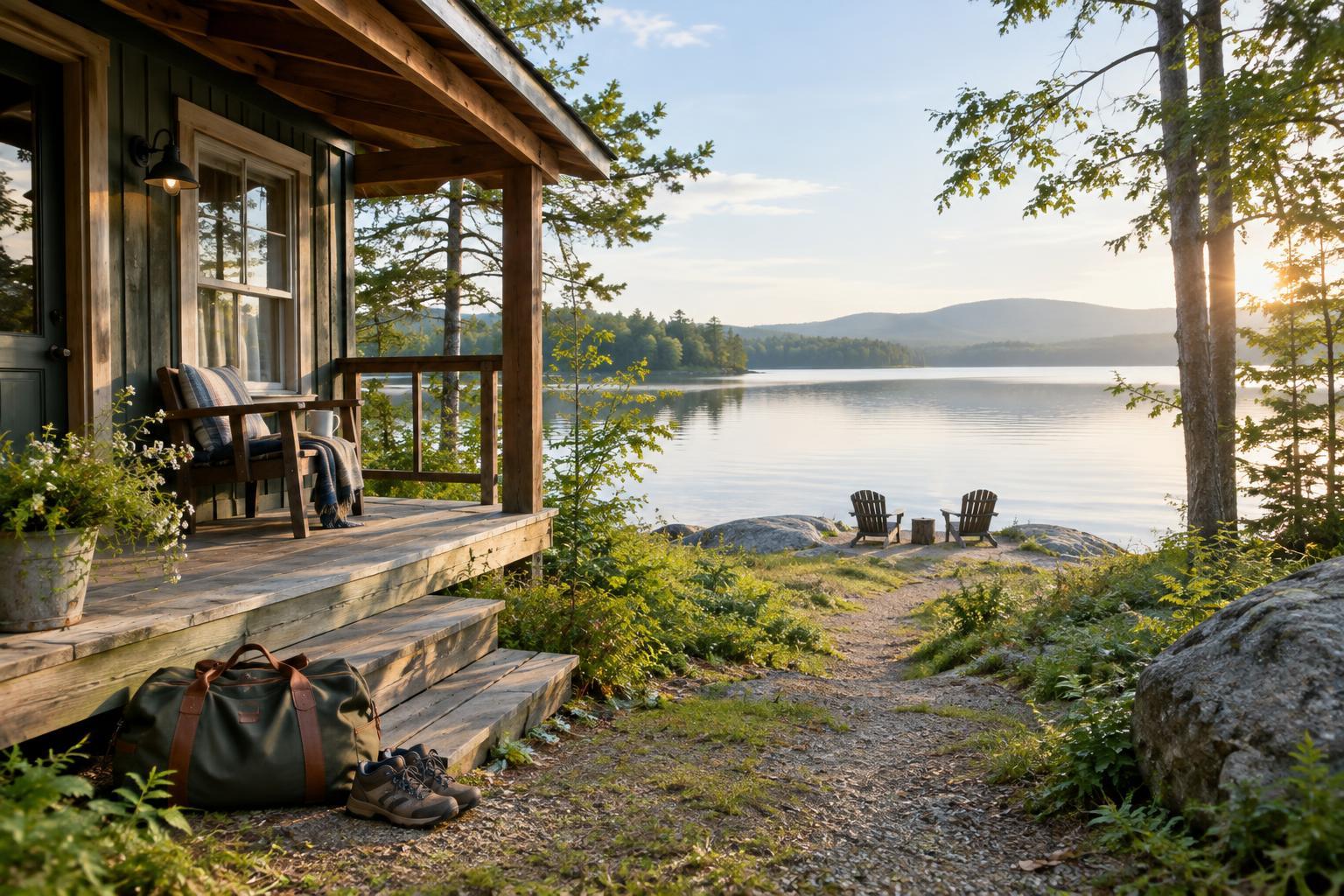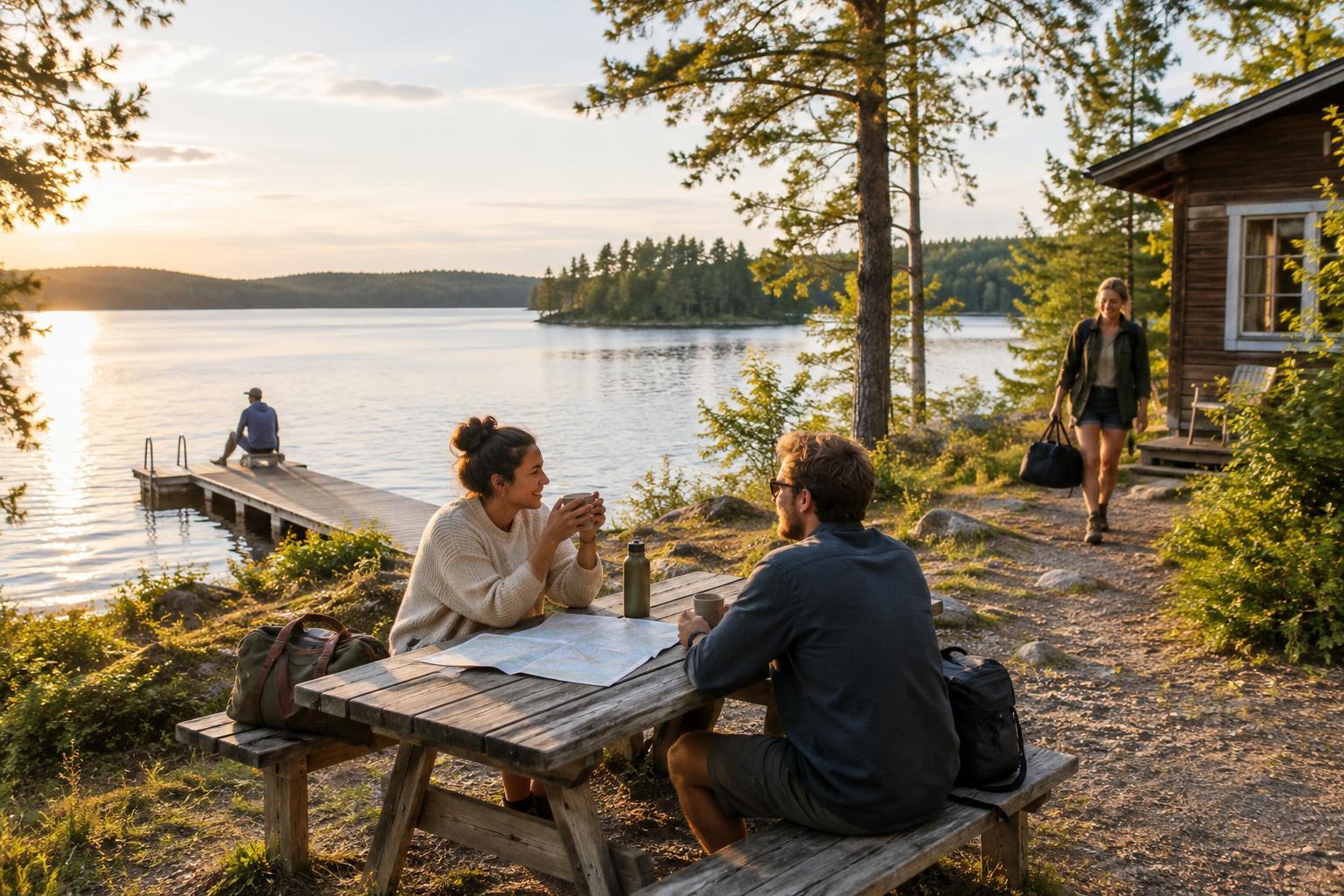
Start with the time you actually have together
Before choosing activities, ask each person for a realistic arrival window and the time they need to leave. Include travel time between the station, parking area or accommodation and the lake itself. Someone who reaches town at dusk may not be ready for a sunset outing; someone leaving after breakfast may still have time for a short walk. Working from these windows makes the plan more useful than treating the first and last days as full vacation days.
Choose one or two periods when most people will be present, then give those periods priority. A shared dinner and an unhurried morning by the water may be enough to make the weekend feel like a group trip. Keep everything else optional. This approach avoids asking early arrivals to wait around or late arrivals to race through an activity just to catch up.
Give each part of the weekend a different job
Think of arrival day as a soft landing. An easy meal, a short shoreline stroll or time on a porch works better than an activity with a fixed start or complicated equipment. Early arrivals can settle in, pick up groceries or explore nearby without making later guests feel they missed the main event. If a meal needs to accommodate several arrival times, choose something that can be served simply rather than a dinner that depends on everyone sitting down together.
Put the most appealing shared activity in the clearest overlap window, often the middle of the stay. Leave enough time around it for changing clothes, travel and a slower pace than expected. A swim, paddle or walk can be followed by a flexible meal, without filling every hour. Keep departure day light: coffee, breakfast and a brief outdoor stop are easier to enjoy when bags need packing and guests have different journeys home.
Make arrivals easy to manage independently
Send one concise note before the trip with the accommodation address, parking or transit details, check-in arrangements and the group’s likely location on arrival day. Confirm access details with the host or property rather than assuming an early arrival can enter or leave luggage. If guests are coming separately, make sure each person knows how to reach the stay without relying on someone who may be driving, out on the water or without reliable reception.
Keep the first shared activity easy to join late. Tell guests whether they should head straight to the accommodation or meet somewhere else, and agree on a simple way to share updates if travel plans change. For outdoor plans, note any practical limits ahead of time, such as whether people need their own footwear or whether an activity must finish before dark. Clear information helps people arrive calmly without turning the group chat into a stream of last-minute directions.
Plan for different departures without cutting the day short
A staggered departure can be as awkward as a staggered arrival if nobody knows when checkout, cleanup or transport needs to happen. Confirm checkout time, decide when shared spaces should be cleared and give early leavers a chance to pack without rushing everyone else. If one person booked the stay or provided the car, discuss keys, luggage and rides before the final morning.
Divide shared tasks in a way that fits people’s schedules. Someone leaving early might wash dishes the night before, while those staying later can do a final check for forgotten belongings. For a group meal, settle the grocery plan in advance so late arrivals are not expected to shop on the way and early departures are not left with food they cannot take. Small agreements make the practical work feel fair without turning a short break into a detailed timetable.
Leave room for the lake, not just the schedule
Weather, energy levels and travel delays can change the shape of a weekend. Have a low-effort alternative for the main outdoor plan, such as a scenic drive, a café stop or time reading with a view. If the group heads onto or into the water, check local conditions and follow the guidance for the place and activity. It is easier to change plans when no one feels that a single excursion has to justify the whole trip.
The best itinerary is one people can join at different points without needing a recap. Mark the few fixed details, including check-in, checkout and any reservations, then leave open time between them. Guests who arrive first can begin enjoying the lake, those who come later can settle in without apology, and those who leave early can still share the moments that matter most.