Choose quieter moments, not just a quieter lake
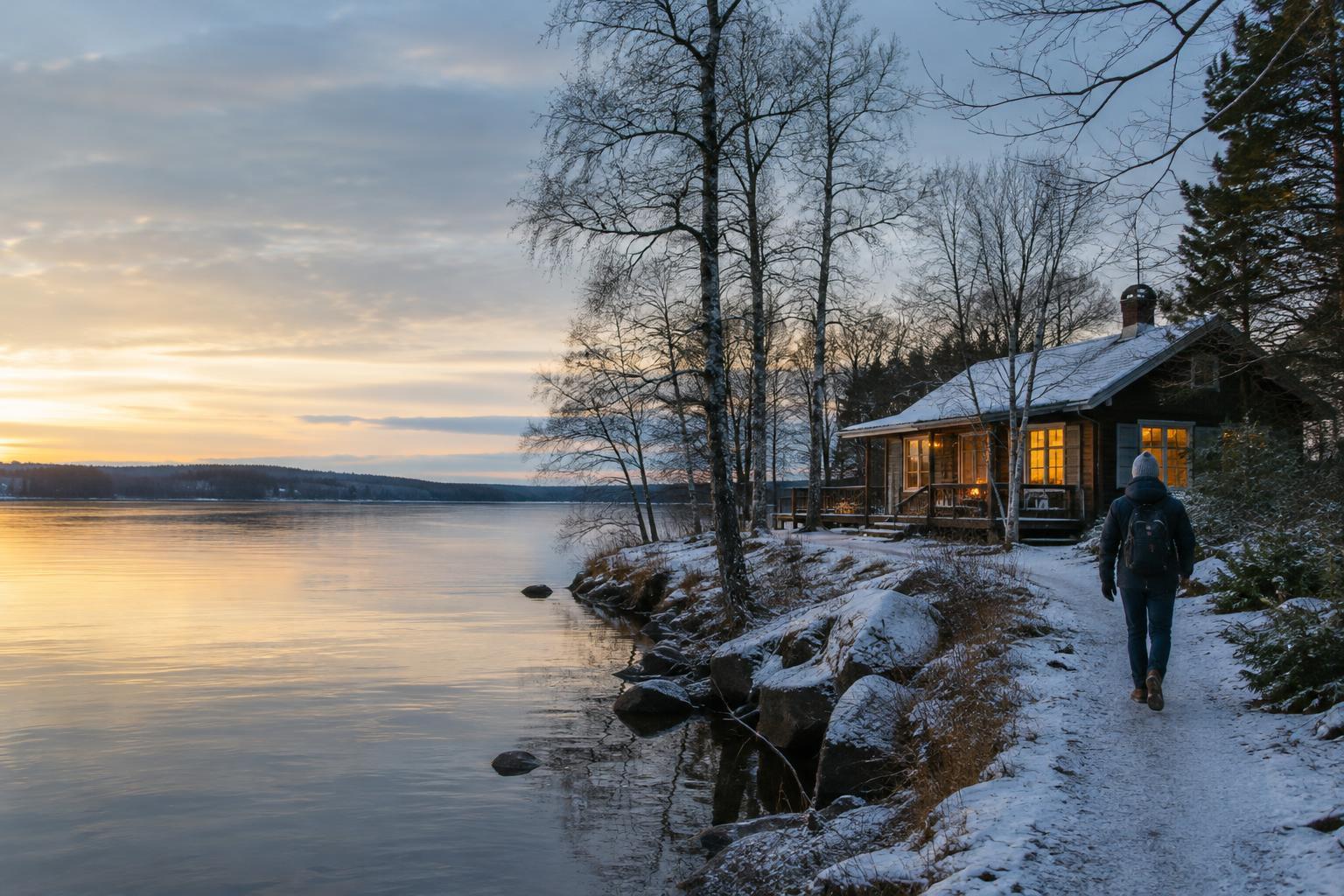
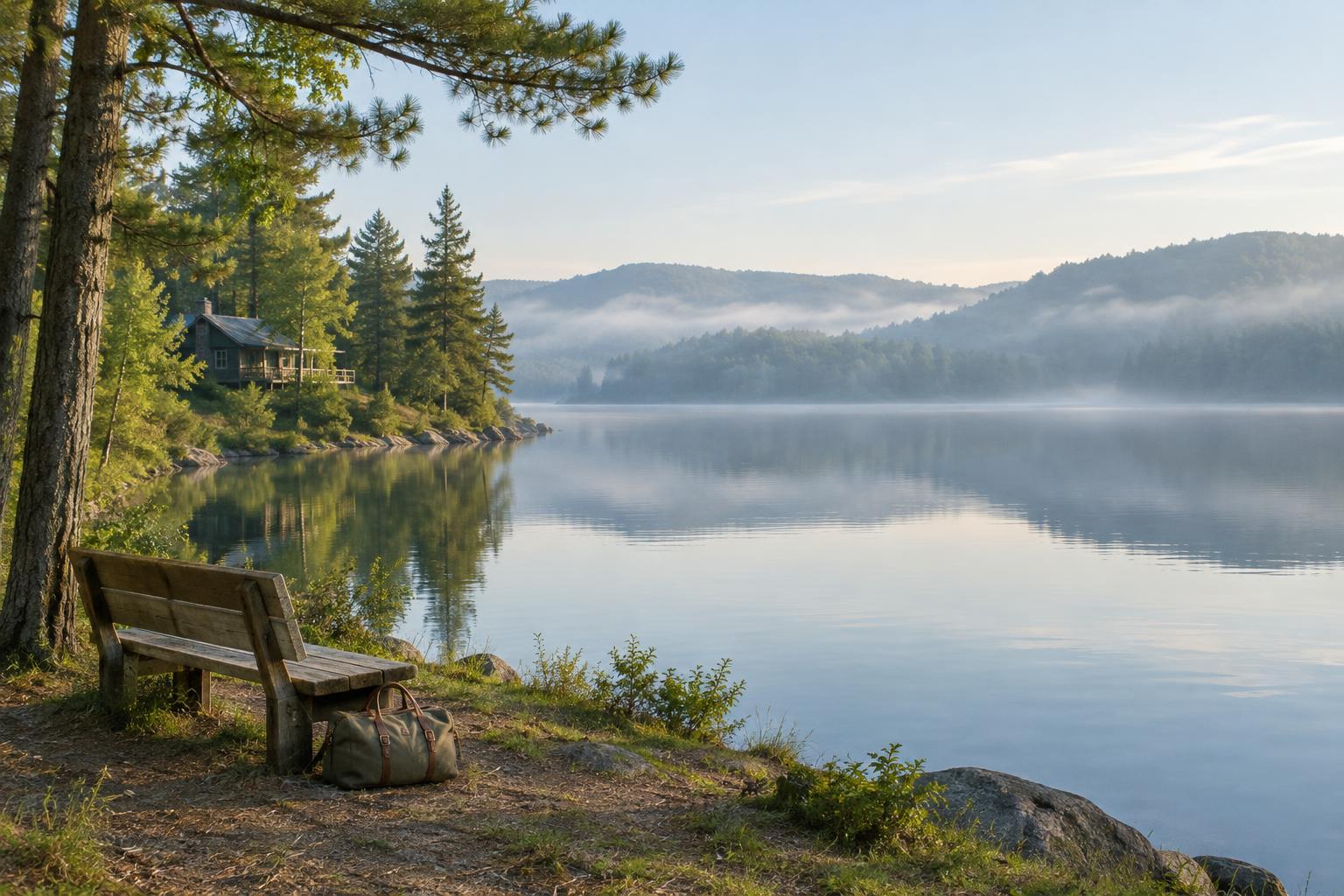
A lake does not have to be remote to feel restful. The same shoreline can feel busy during a sunny weekend afternoon and peaceful earlier in the day. Before choosing a destination, think about the kind of quiet you want: a slow breakfast with a water view, an uncrowded walk or simply a place to read without a full schedule.
If your dates are flexible, consider a weekday stay or a weekend outside a destination’s busiest holiday periods. When that is not possible, plan your most anticipated outdoor time for the morning and leave popular midday hours open for a relaxed lunch or time at your accommodation. Check local opening hours and access rules before relying on an early start; parks, launches and trails may have different schedules.
Pick a base that makes slowing down easy
A quiet weekend depends as much on where you sleep as on what you do. Look for a small stay that suits your usual pace. A porch, comfortable seating or easy access to a walking route may matter more than a long list of amenities. Read descriptions carefully so you know whether a property is beside the water, has a view of it or requires a drive to reach the shore.
Map the places you expect to visit before booking. A stay that looks secluded may add a lot of driving if meals, groceries and public access points are far away. Conversely, a convenient base can let you park once and keep the weekend simple. Check the property’s check-in arrangements, cancellation terms and quiet-hour expectations so there are fewer decisions to make after you arrive.
Treat privacy with realistic expectations. Lakeshores are shared spaces, and sound can carry across the water. If a peaceful setting is a priority, consider the distance to busy roads, gathering spots and boat launches, while remembering that a map cannot guarantee silence.
Build an itinerary with room to change your mind
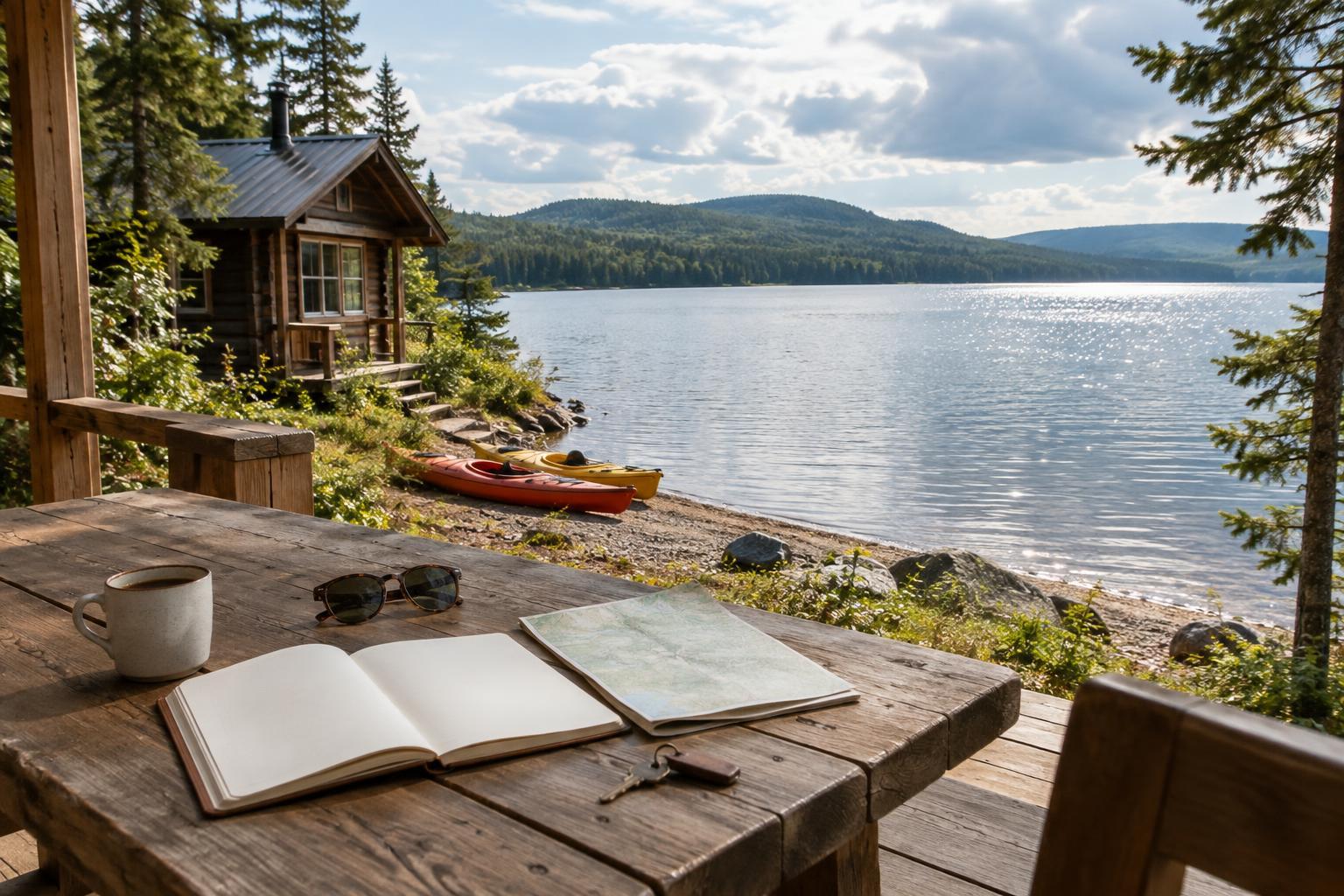
Give each day one main idea rather than a packed list. Saturday might center on a shoreline walk, a paddle where rentals and conditions allow, or a visit to a nearby village. That leaves space to linger over coffee, stop at a viewpoint or head back when the weather changes. A loose plan is especially useful if you are traveling with people who enjoy different levels of activity.
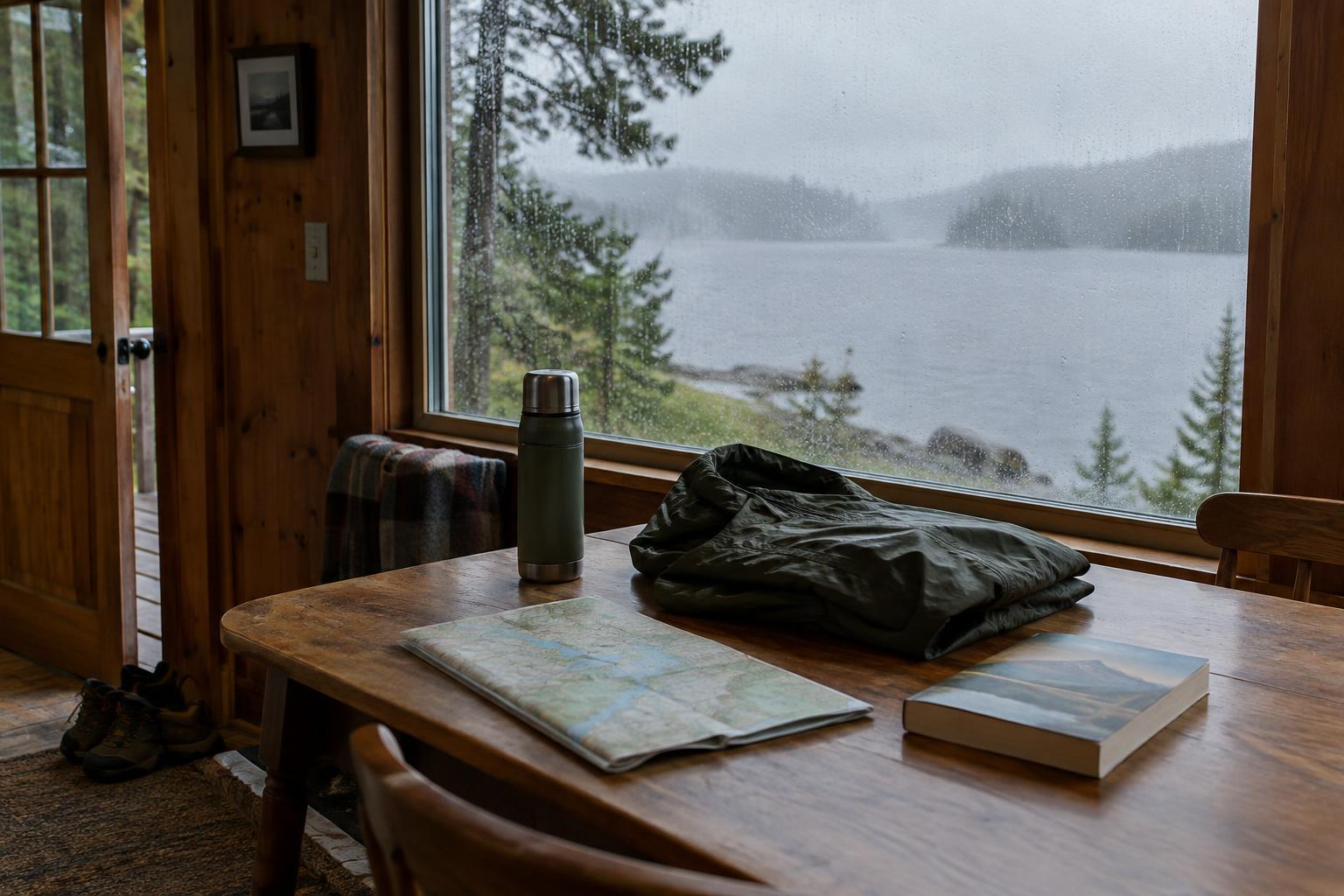
Keep one backup for each outdoor plan. If the trailhead is full, choose a shorter walk or a quieter public access point that you have identified in advance. If wind or rain makes time on the water unappealing, a covered porch, a book and an unhurried meal can still make the trip feel worthwhile. Check forecasts and local guidance before setting out, and do not treat a calm-looking lake as proof that conditions are safe.
Leave the final morning mostly open. Packing, breakfast and a short last look at the water are often enough. A gentle departure can preserve the feeling of a break better than squeezing in one more stop.
Pack for comfort rather than every possibility
Bring layers that can handle a cool morning and a warmer afternoon, along with comfortable shoes for the ground you expect to cover. Sun protection, a refillable water bottle and a small bag for day outings are useful basics. If you plan to spend time near or on the water, pack for the specific activity and check what equipment, including appropriate life jackets, will be provided.
A few familiar comforts can help a quiet stay feel intentional: a book, a simple game or supplies for an easy breakfast. Avoid bringing so much that arrival and departure turn into major projects. If you enjoy photography, a phone or one familiar camera is enough to capture soft morning light, shoreline details and the small moments between activities without making the weekend feel like an assignment.
Enjoy the calm without claiming the shore
Finding a quiet spot is easier when visitors share it thoughtfully. Use designated parking and access points, follow posted rules, keep noise considerate near homes and other guests, and take your belongings and rubbish with you. If a favorite viewpoint is occupied, give others room and try another stop rather than waiting for the scene to be empty.
The goal is not to engineer a perfectly silent getaway. Weather shifts, neighbors arrive and popular paths attract people for good reason. Plan around what you can control: a comfortable base, a few well-chosen activities and enough uncommitted time to enjoy the lake as you find it.