Start with the conditions, not the itinerary
A lakeside weekend often invites an easy plan: rent a kayak, paddle to a quiet cove or take a small boat out for the afternoon. Weather can make each of those trips feel very different from the one you imagined. Before committing, check a forecast for the lake area and the hours you expect to be out. Look beyond a simple sun-or-cloud icon: wind direction, sustained wind, gusts, precipitation and the chance of thunderstorms all matter on open water.
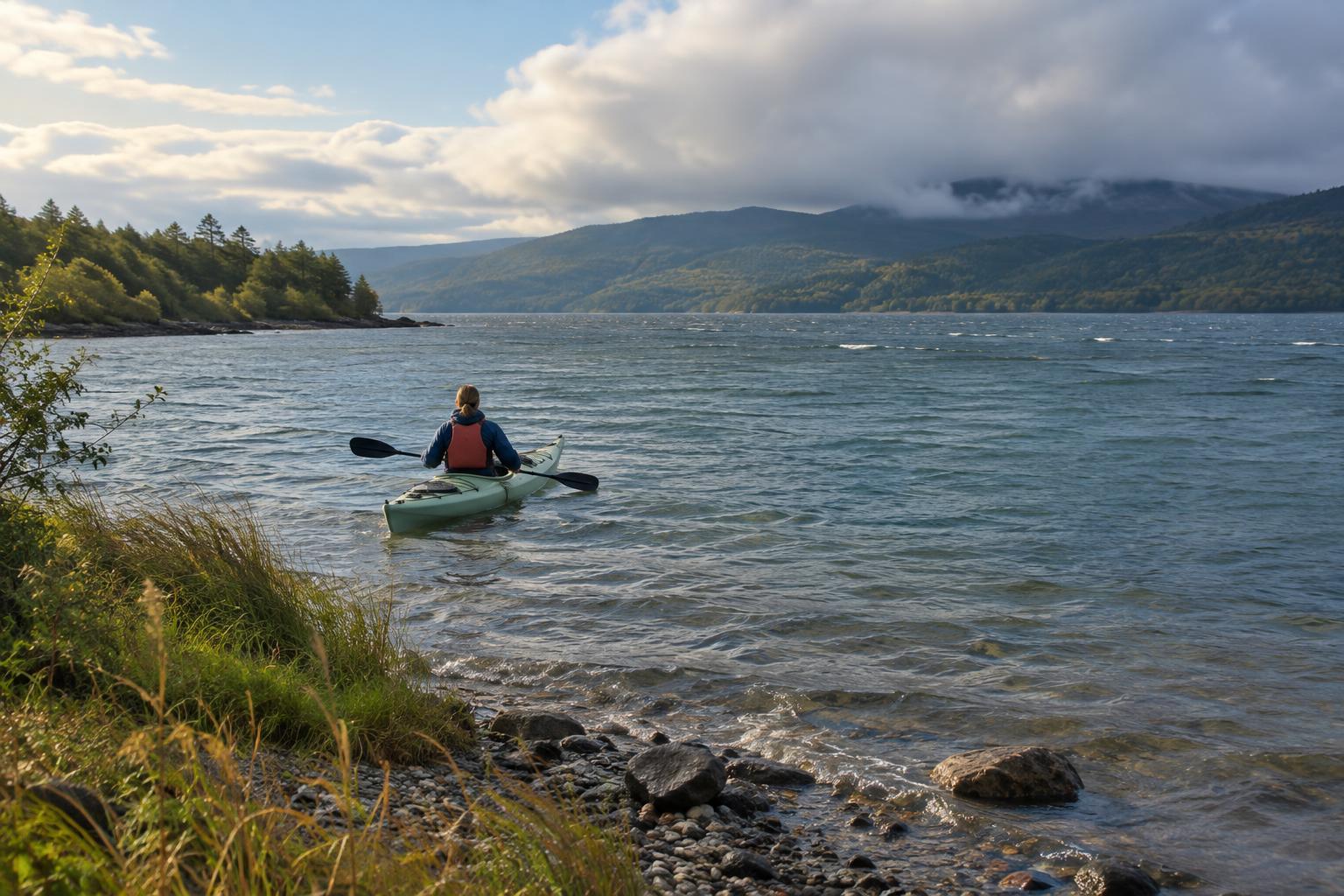
Compare the forecast with what you can see at the shore. Moving treetops, ripples spreading across an open stretch and darker water in the distance may tell you more about the immediate outing than conditions in a sheltered launch area. If you are renting equipment, ask the provider about local exposure and any operating limits. A short trip you can comfortably shorten is often a better choice than a fixed destination across the lake.
Understand what the wind will do to your route
Wind affects more than how hard you need to paddle. A headwind can make the outward leg slow; a tailwind may make the return unexpectedly tiring. A crosswind can push a kayak, canoe or small boat away from the line you intended to follow. On a broad, unobstructed stretch of water, wind also has room to build waves. A protected cove and an exposed crossing can therefore feel like two different lakes on the same day.
Check which way the wind is blowing in relation to your launch and planned return. Keep a shoreline route in mind where practical, identify places to get off the water and avoid assuming you can turn around only after you feel tired. Be especially cautious of a wind that would push you away from shore. Conditions can vary around points and narrow passages, so reassess as you go rather than treating the launch as a preview of the entire route.
Watch for weather that changes the decision
Cloud cover can make a warm morning pleasant, but a drop in air temperature, rain or spray can leave you chilly once you stop moving. Pack layers that suit getting wet, and keep a dry layer protected for afterward. Sun deserves attention too: glare off the water can make it harder to see, while exposed skin may get more sun than expected. A hat, suitable clothing, drinking water and sun protection are useful even when the forecast looks mild.
Thunderstorms call for a different plan, not simply a faster paddle. If storms are possible during your outing, consider going earlier, choosing an activity on land or postponing. If you hear thunder or see threatening weather approaching, head to shore promptly and seek appropriate shelter; do not wait to finish a scenic loop. Fog and heavy rain can also hide landmarks and other water users. When you cannot clearly judge where you are going and how you will return, it is time to stay close to shore or end the trip.
Build in room to turn back
A flexible route makes a lake day more relaxing. Choose a first destination that is close enough to reach without using all your energy, and set a point at which you will decide whether to continue. Tell someone on shore your general route and expected return time. Bring a way to communicate that you can keep dry, while recognizing that coverage and battery life may be unreliable. Wear an appropriately fitted life jacket, follow local rules and use equipment suited to the craft and conditions.
If you are new to paddling, traveling with children or sharing a boat with people of mixed experience, plan for the least experienced person’s comfort. Wind, waves and a delayed return can turn a pleasant outing into a difficult one long before conditions look dramatic. There is no prize for completing the original route: turning around early is a good use of the information you have gathered.
Keep a satisfying shore plan
A weather change does not have to cancel the day. A sheltered waterside walk, a picnic set back from the wind or an hour of photography from shore can preserve the reason you came to the lake. Notice how wind draws patterns across the surface and how shifting clouds alter the light. If you brought a camera, protect it from spray and keep your attention on your footing rather than stepping close to an edge for a better frame.
When conditions settle, you can reconsider a shorter outing without trying to make up for lost time. The aim is not to fit the most water time into a weekend; it is to choose the kind of time on the water that fits the day.