Pack for the places you will actually go
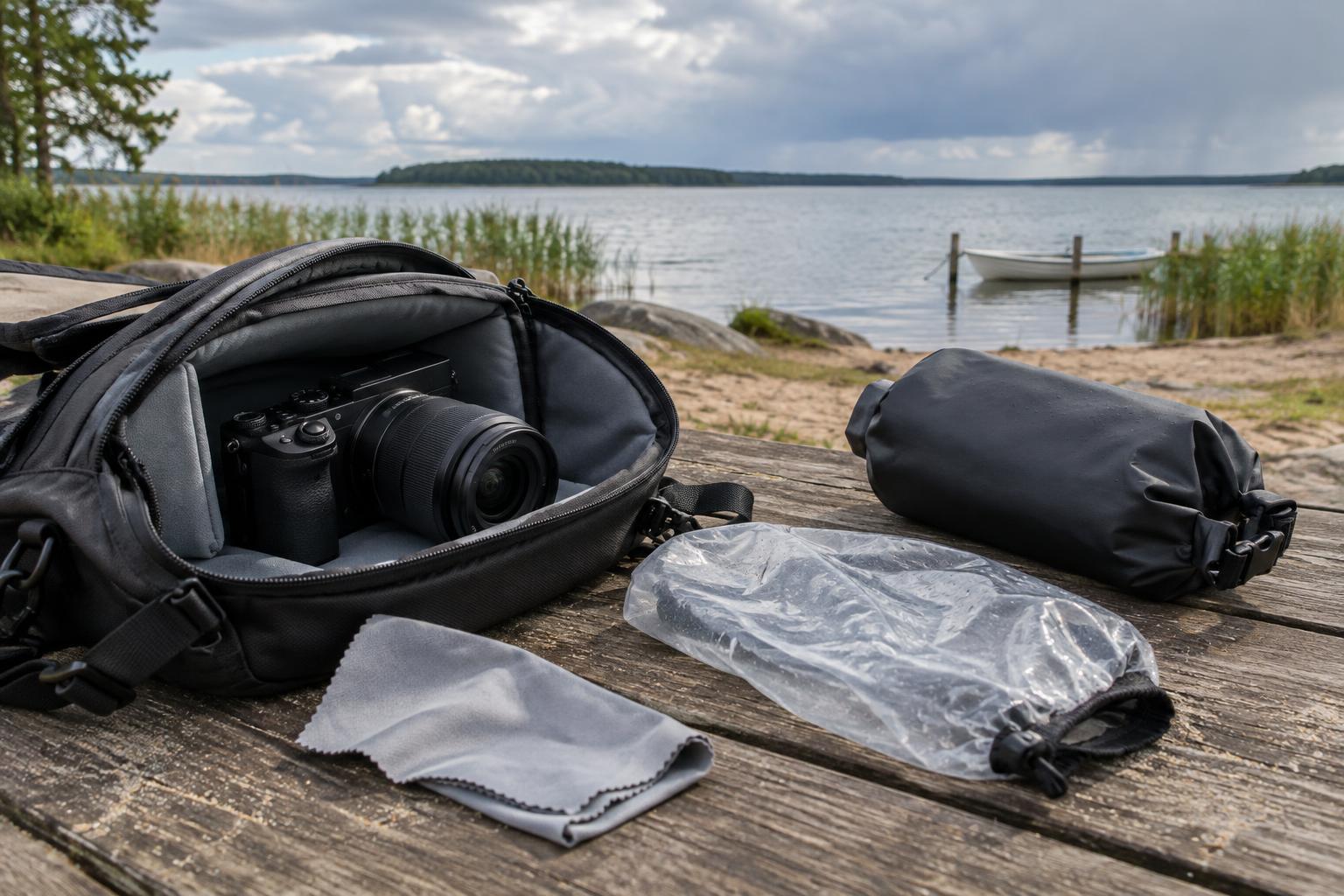
A camera bag does not need to be complicated to be useful by the water. Start with a bag that closes securely and gives your camera enough padding to keep it from knocking against a water bottle, keys, or other hard objects. Put the camera in an inner compartment rather than an exposed outer pocket. If your route includes a beach, dock, or boat, a simple rain cover or a sealable bag can add a layer of protection while the camera is not in use.
Pack a clean microfiber cloth, a lens cap, and a small air blower where you can reach them without emptying the whole bag. Keep spare batteries and memory cards in separate, closed cases. A lightweight dry bag can be useful for transport, but check its closure before relying on it near water. Unless equipment is specifically designed for submersion, treat any cover as a way to reduce exposure, not as permission to put the bag in the lake.
Keep sand outside the camera
Sand tends to travel farther than expected: it collects on hands, straps, towels, and the bottom of bags. When you reach a sandy spot, choose a clean bench or keep your bag on your shoulder instead of setting it on the ground. Before picking up your camera, brush sand from your hands. Keeping the lens cap on between shots also gives you one less surface to clean later.
If you use interchangeable lenses, avoid changing them in wind or beside active foot traffic when possible. Move indoors, into a sheltered vehicle, or at least away from blowing sand. If grit reaches the camera or lens, do not rub it off with a cloth; particles can scratch a surface or work into moving parts. Use an air blower gently first, then wipe only after loose grit is gone. If a control feels gritty or sticks, stop forcing it and consult the equipment’s care instructions.
Treat spray and splashes as separate risks
A fine mist from a boat ride or a windy shoreline can settle on gear even when no obvious splash occurs. Wear the camera strap so an unexpected movement does not send it overboard, and keep the camera inside its bag when you are not taking a photograph. From a boat or dock, pause before lifting it out: if you are concentrating on your footing, the photo can wait.
Wipe visible droplets from the outside with a clean, soft cloth as soon as you can. Avoid opening battery doors, card slots, or lens mounts while the camera is wet. If water gets into an opening, turn the camera off and follow the manufacturer’s guidance rather than repeatedly testing whether it still works. Be especially cautious around saltwater, which can leave corrosive residue; gear exposed to it may need more than a quick surface wipe.
Plan for rain and temperature changes
Check the forecast before setting out, then pack as though the sky might change during a long walk. A compact cover is easier to carry than a heavy backup bag, and it lets you put the camera away quickly when rain begins. Under a shelter, take a moment to dry the cover’s outside before opening it so collected water does not run onto the gear.
Moving between a cool, air-conditioned room and warm, humid lakeside air can cause condensation on a camera or lens. If you expect a large temperature change, leave the camera in its closed bag for a while so it can adjust more gradually. Should condensation appear, give the gear time to dry before changing lenses or opening compartments. Resist the urge to wipe moisture from hard-to-reach internal areas.
Make the after-trip check part of unpacking
Back at your room, look over the bag before putting gear on a clean surface. Remove any sand from its exterior and check straps, pockets, and seams where grit may hide. With the camera switched off, inspect the lens and body for droplets or debris, then clean accessible surfaces according to the maker’s instructions. Let damp bags and covers dry fully before storing them.
Finally, back up your photographs and return batteries and cards to their cases. This small routine is easier than discovering trapped moisture or sand at the start of the next outing. The goal is not to keep a camera sealed away all weekend; it is to make opening, using, and packing it away deliberate enough that you can enjoy the shoreline with fewer worries.