Start with the weekend you want
Lake Champlain is long enough that “a weekend at the lake” can mean several different trips. Vermont’s eastern shore offers an easy mix of waterfront walks, town amenities and access to the lake’s islands. New York’s western shore puts the lake beside the Adirondack landscape, with smaller settlements and stretches that can feel quieter. Neither side is the better choice for everyone; the useful question is how much of your short break you want to spend exploring versus settling in.
For a first visit built around cafés, a walkable waterfront and flexible dining plans, consider a Vermont base near Burlington. If you would rather follow a scenic road, stop in small towns and make the shoreline part of a broader Adirondack outing, look toward New York. You can visit both shores, but choosing one as your base usually leaves more time for the lake itself.
Choose Vermont for town time and island detours
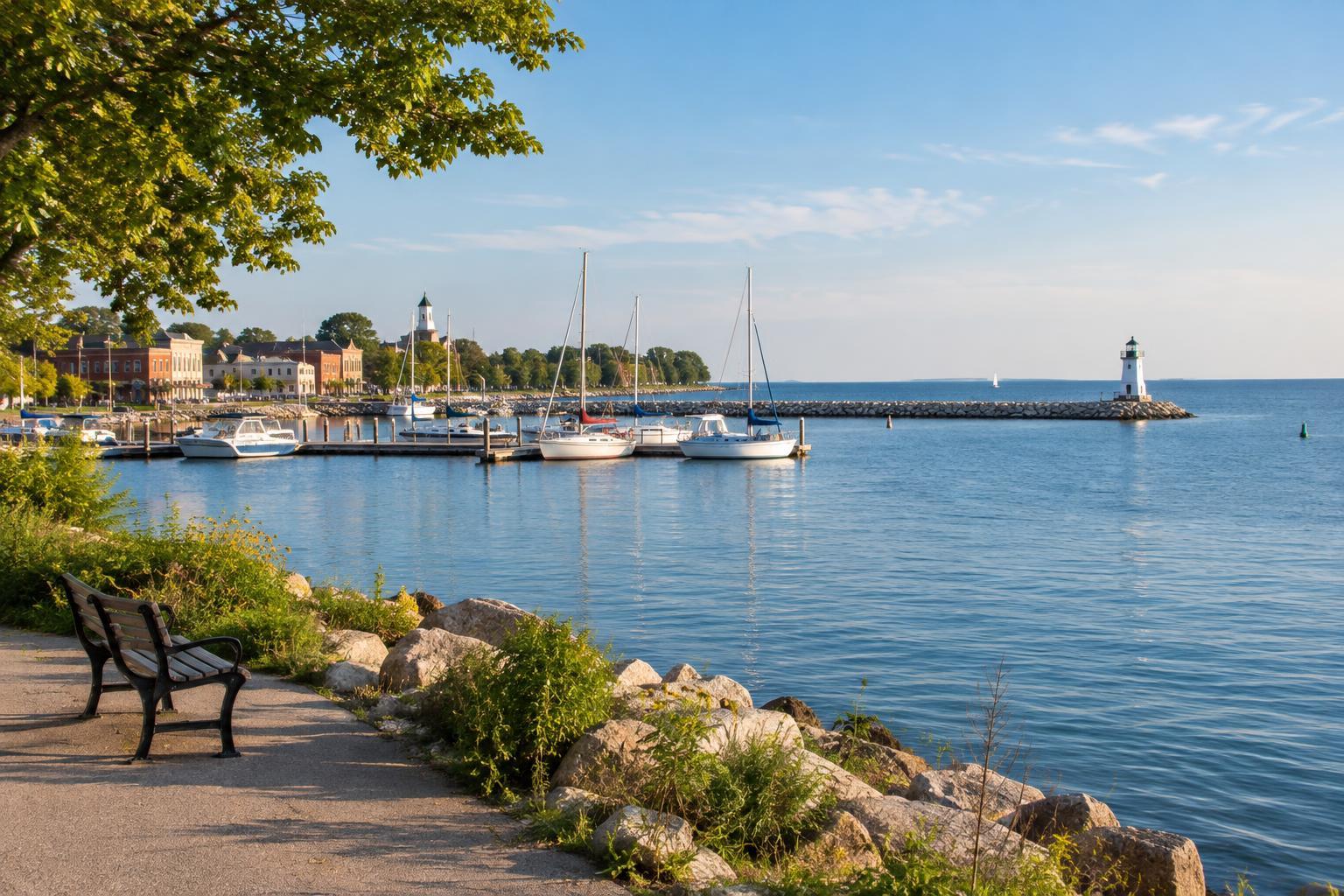
Burlington makes a practical starting point when you want lake views without building every hour around a car. Its waterfront suits an unhurried walk, and the city gives you options if the weather changes. Farther along the Vermont side, the pace shifts: a drive can connect shoreline stops, smaller communities and places to pause over a view. Check access before setting out, since a spot that looks inviting on a map may not be a public beach or trail.
The Lake Champlain Islands offer another way to shape a Vermont weekend. Connected by roads, they invite a slower itinerary of short drives, waterside breaks and time outdoors. Rather than trying to see every island, pick one or two stops and leave room for an unexpected viewpoint or a long lunch. This is a good choice for travelers who like gentle exploration more than a tightly scheduled list of sights.
Choose New York for an Adirondack-side route
On the New York shore, places such as Essex, Westport and Plattsburgh can anchor different styles of visit, from a small-town pause to a base with more everyday services. The lake is the constant, while the surrounding roads and mountain views give this side a distinct feel. A weekend here works especially well if you enjoy the drive as part of the trip and do not need every stop to be close together.
Build your day around one area rather than tracing the entire shoreline. You might pair a lakeside walk with an easy outdoor outing, then return to your accommodation before dinner. If boating or swimming is the main event, identify a suitable public launch or swimming area in advance and check local rules and conditions. Waterfront access, parking and facilities differ from place to place, so a little preparation protects the relaxed pace you came for.
Treat a shore crossing as an outing, not a shortcut
A map can make the opposite shore look tantalizingly close. In practice, getting there depends on where you are and which crossing you plan to use. Ferries can be a memorable part of the day, but routes, operating periods and timetables may vary. Bridges may require a substantial drive. Before booking a stay around a two-shore itinerary, check the crossing you intend to use and allow for waiting, weather and the drive on either side.
For a two-night break, one cross-lake excursion is often more satisfying than repeated back-and-forth trips. Choose a destination on the other shore with a clear purpose—a town to wander, a meal or a walk—then give it most of a day. If the crossing does not fit comfortably into your plans, save that shore for another weekend. Lake Champlain is easier to enjoy when the itinerary has breathing room.
Pick a base and pack for the water
Location matters more than a long list of amenities. A central town base may suit travelers who want dining choices within easy reach; a small lakeside stay may suit those who would rather begin and end the day outdoors. Before reserving, confirm the practical details that affect your trip: distance to the places you hope to visit, parking, meal options and whether “lake access” means a view, a path, a dock or a place to swim.
Bring layers even if the forecast looks mild; conditions beside open water can feel different from those inland. Comfortable walking shoes, sun protection and a light rain layer cover many low-key plans. For photographs, leave space in the schedule for changing light rather than racing between viewpoints. Vermont’s west-facing views can be lovely late in the day, while a morning on the New York side can offer a fresh look across the water. The best shore is the one that lets you slow down enough to notice it.