Start by noticing the light
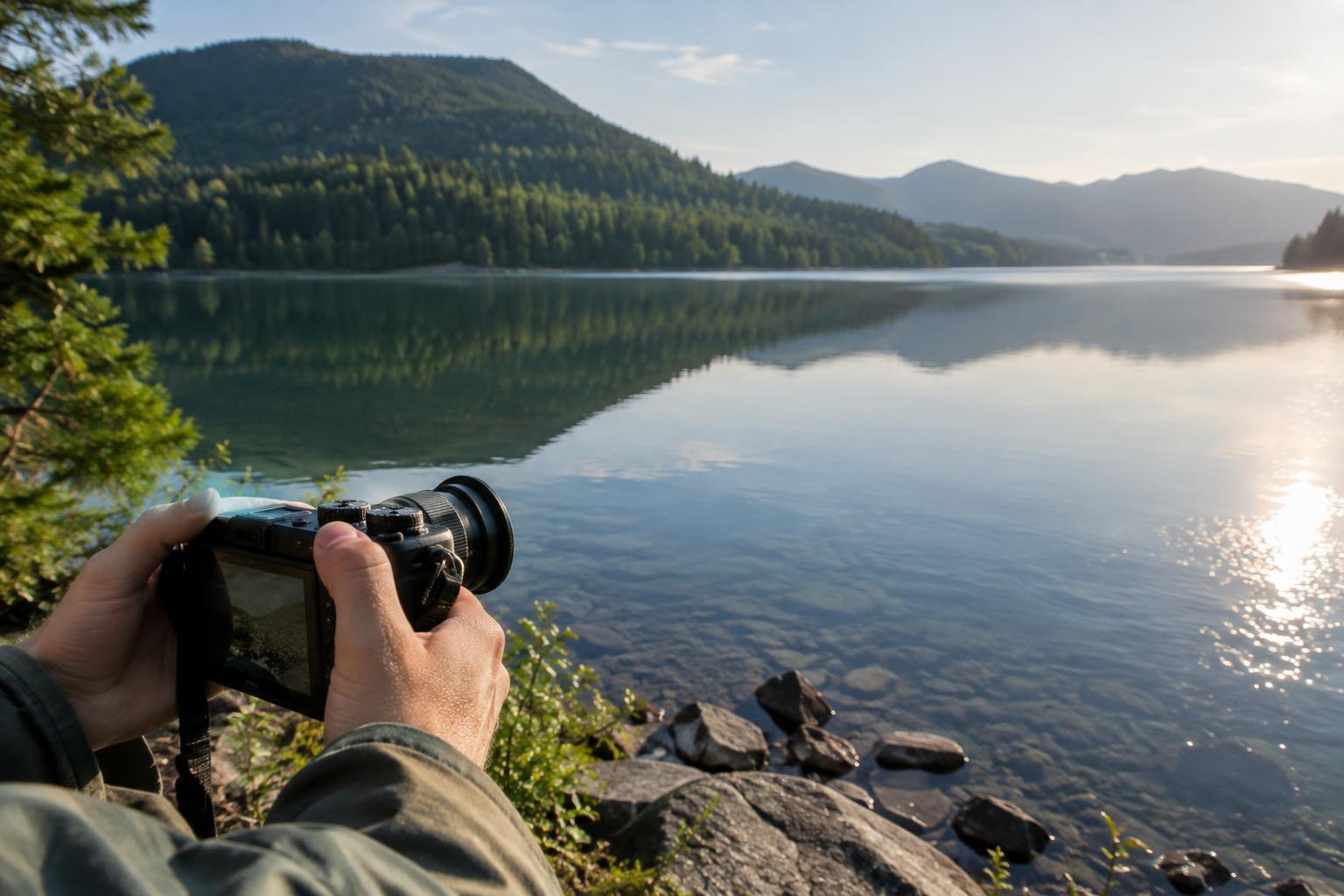
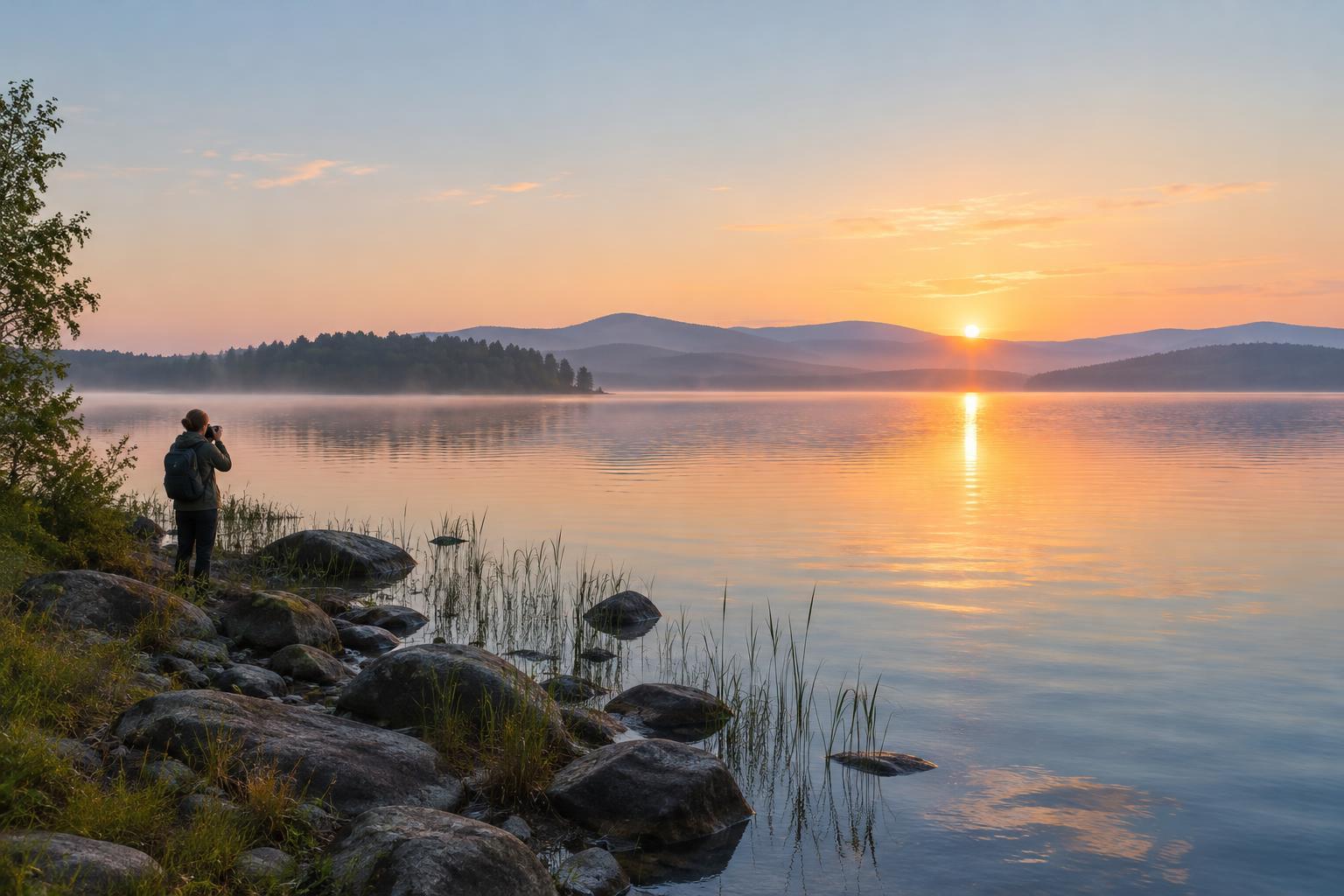
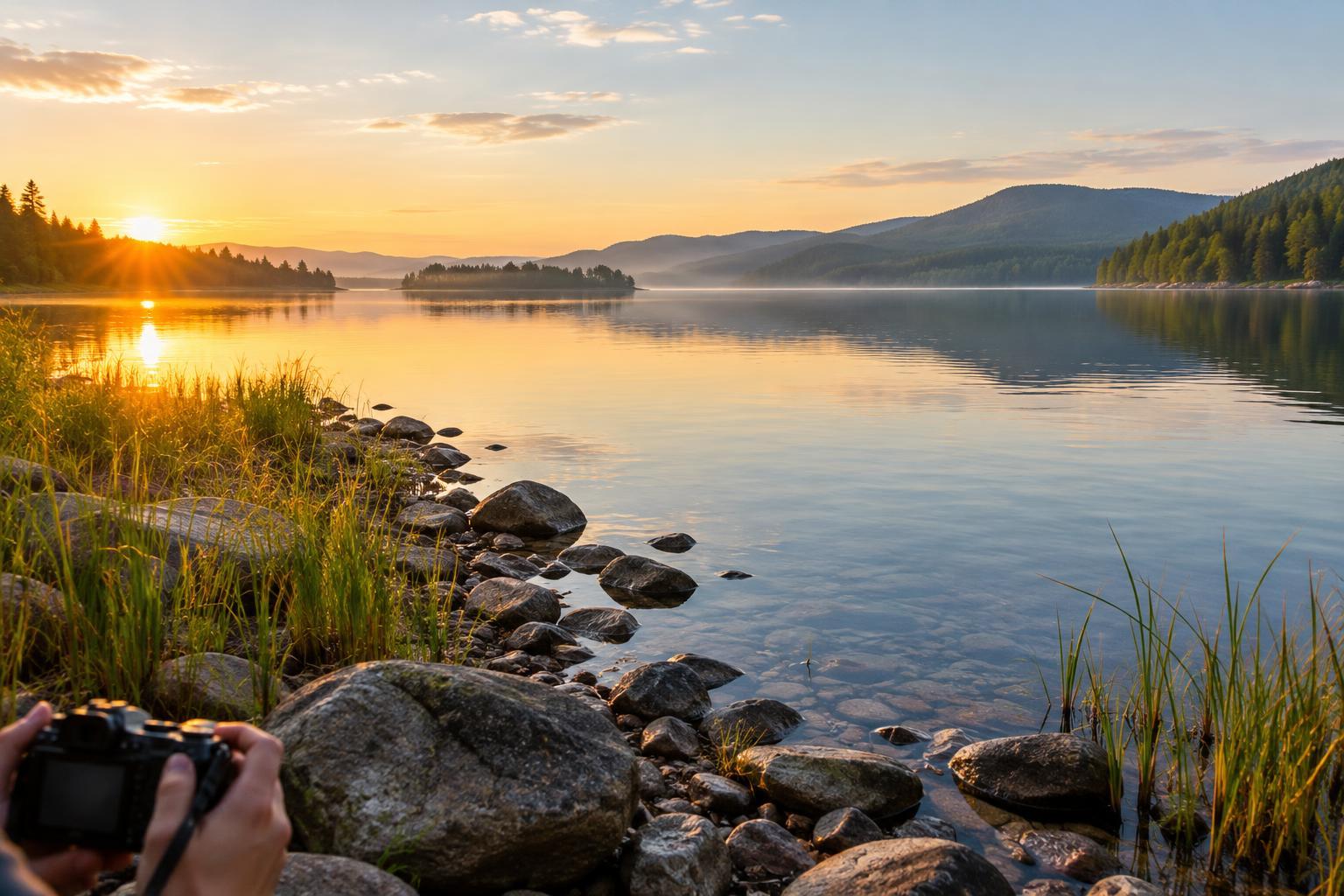
A lake can look entirely different from one hour to the next. Low light in the morning or late afternoon often brings out texture in the water and gives trees and buildings a softer appearance. Brighter midday light can be useful too, especially when you want clear colors or lively scenes of people on the shore. Rather than waiting for one “perfect” moment, look at where the light falls and choose a subject that suits it.
Before taking a photo, glance at the brightest and darkest parts of the scene. If a pale sky dominates the frame, a phone or camera may leave the shoreline looking too dark. Try lowering the camera so there is less sky, moving to a viewpoint with light on your subject, or tapping the subject on your phone screen to adjust exposure. Take a second version that is a little brighter or darker; small differences can change the mood considerably.
Make the horizon a choice
A tilted waterline is easy to notice, even in an otherwise lovely image. Turn on your phone’s grid or your camera’s level display if it has one, then line up the distant shore or the visible edge of the water. Don’t worry if the opposite shoreline curves or slopes naturally; the aim is to make the scene feel steady, not to force every line to be perfectly horizontal.
Where you place the horizon matters as much as keeping it level. Put it higher in the frame when ripples, a reflection, or a boat approaching shore is the main subject. Put it lower when clouds or open sky deserve attention. A centered horizon can work well for a strong reflection, but it need not be your default. Try both a high and a low version from the same spot, then compare which one makes the photograph’s subject clearer.
Give the viewer a way into the scene
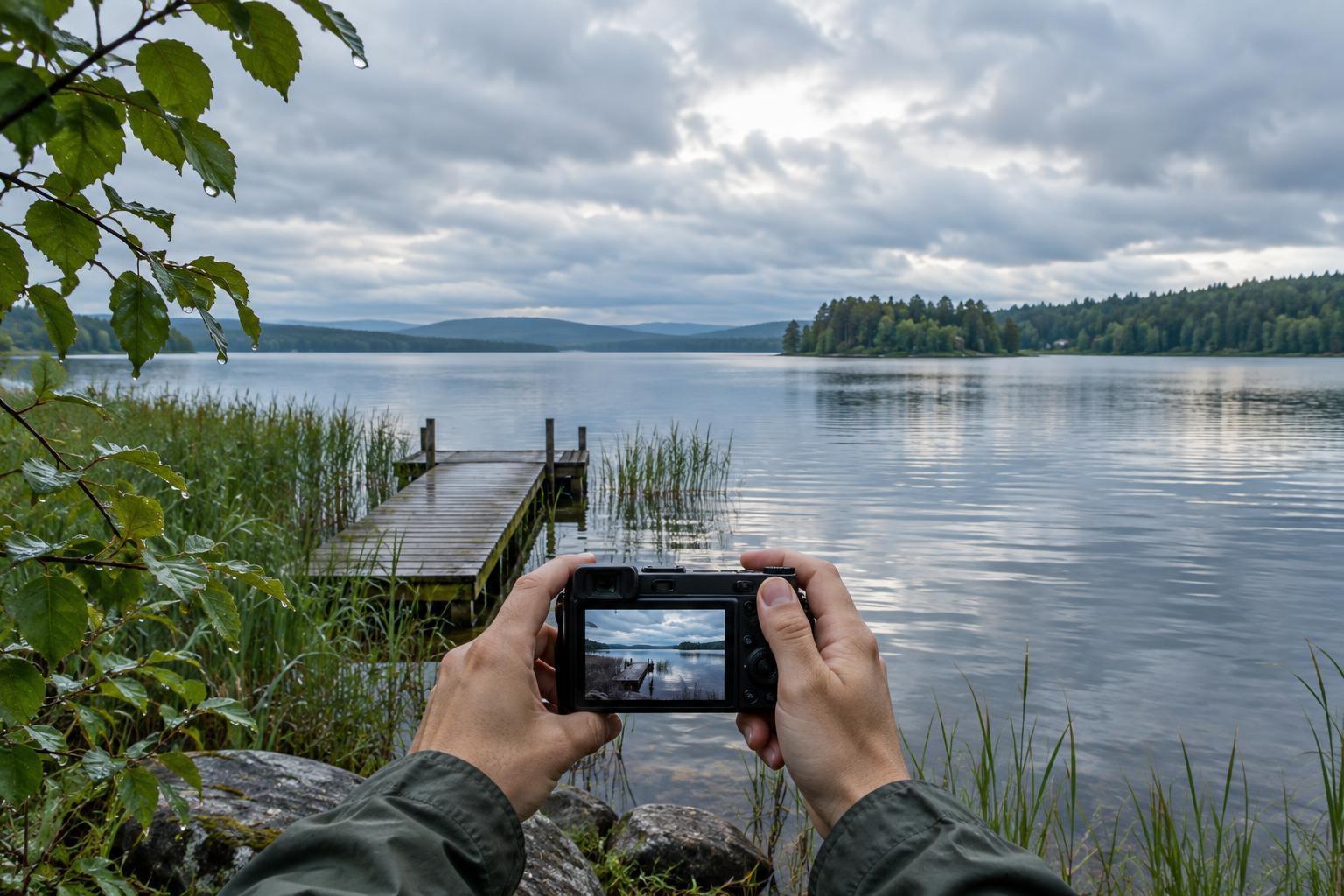
A wide view of water and sky may capture the feeling of being there, but it can look empty in a photograph. A simple foreground gives the eye somewhere to begin. Look for a dock, a patch of reeds, a smooth stone, or a chair near the shore. Position that element near an edge of the frame and let the lake stretch beyond it. If you are close to the foreground, tap it to focus and check that the background still looks the way you want.
Paths, railings, and shorelines can also guide the eye through an image. Move a few steps left or right and watch how their shapes change on your screen. You may find that a dock leads toward a distant hill from one angle but cuts awkwardly across the frame from another. Before pressing the shutter, scan the corners for stray objects and make sure nothing distracting appears to grow out of your subject.
Use reflections without relying on them
Still water can mirror clouds, trees, and small lakeside buildings. To make a reflection prominent, leave enough room for both the subject and its image in the water. Crouching closer to the shore may make the mirrored shape easier to see. If the water is moving, photograph the ripples instead of waiting for a flawless reflection: their patterns can be a subject in their own right.
Reflections are not the only way to show what makes a place distinctive. A close view of a weathered dock, a paddle resting beside the water, or sunlight catching leaves can tell a quieter story. Pair a few detail shots with your wider views. This gives you a more varied set of pictures from the weekend and takes the pressure off any single grand landscape.
Keep the process simple and comfortable
A phone is enough to practice these ideas. Wipe the lens before you begin, hold it steady, and take an extra frame when wind or movement might cause blur. If you bring a camera, pack only what you are comfortable carrying for the walk you have planned. A protective pouch or bag is useful near splashes and damp ground, and a cloth helps with fingerprints or mist on the lens.
Give yourself a small assignment: photograph the same stretch of shore in wide view, from a lower angle, and as one close-up detail. Then pause and look at the results. Is the horizon where you intended? Does the light help the subject stand out? Is there a clear place for the eye to land? Those questions are more useful than taking dozens of nearly identical frames. With a little attention to light, lines, and what you leave out, even a familiar lakeside scene can become a photograph that recalls the pace of the visit.