Start with the activity, not just the size
A life jacket is easiest to choose when you know how you will spend your time on the lake. A paddler needs room to move their shoulders. Someone riding in a boat may prefer a different cut, while a person being towed on the water needs a jacket intended for that activity. Look for a label that identifies the jacket’s intended use, size range and any restrictions. Choose one that meets the applicable requirements where you will be boating, and check local rules before your trip.
Comfort matters because a jacket left on a seat cannot help someone who falls overboard. Try it over the clothing you expect to wear, including a light layer if the morning may be cool. Move your arms as you would when paddling or climbing back aboard. The jacket should allow that movement without feeling loose. Do not assume a swimming aid or inflatable design is suitable for every activity; use it only as its label directs.
Check the fit before leaving shore
Put the jacket on, fasten every buckle or zipper, and tighten the straps according to its design. It should feel snug but still allow comfortable breathing and movement. To check for excess room, have someone gently lift the jacket at the shoulders while you keep your arms raised. If it rides up toward your chin or ears, adjust it or try another size or style. A fit check at home is useful, but repeat it at the lake after changing clothes.
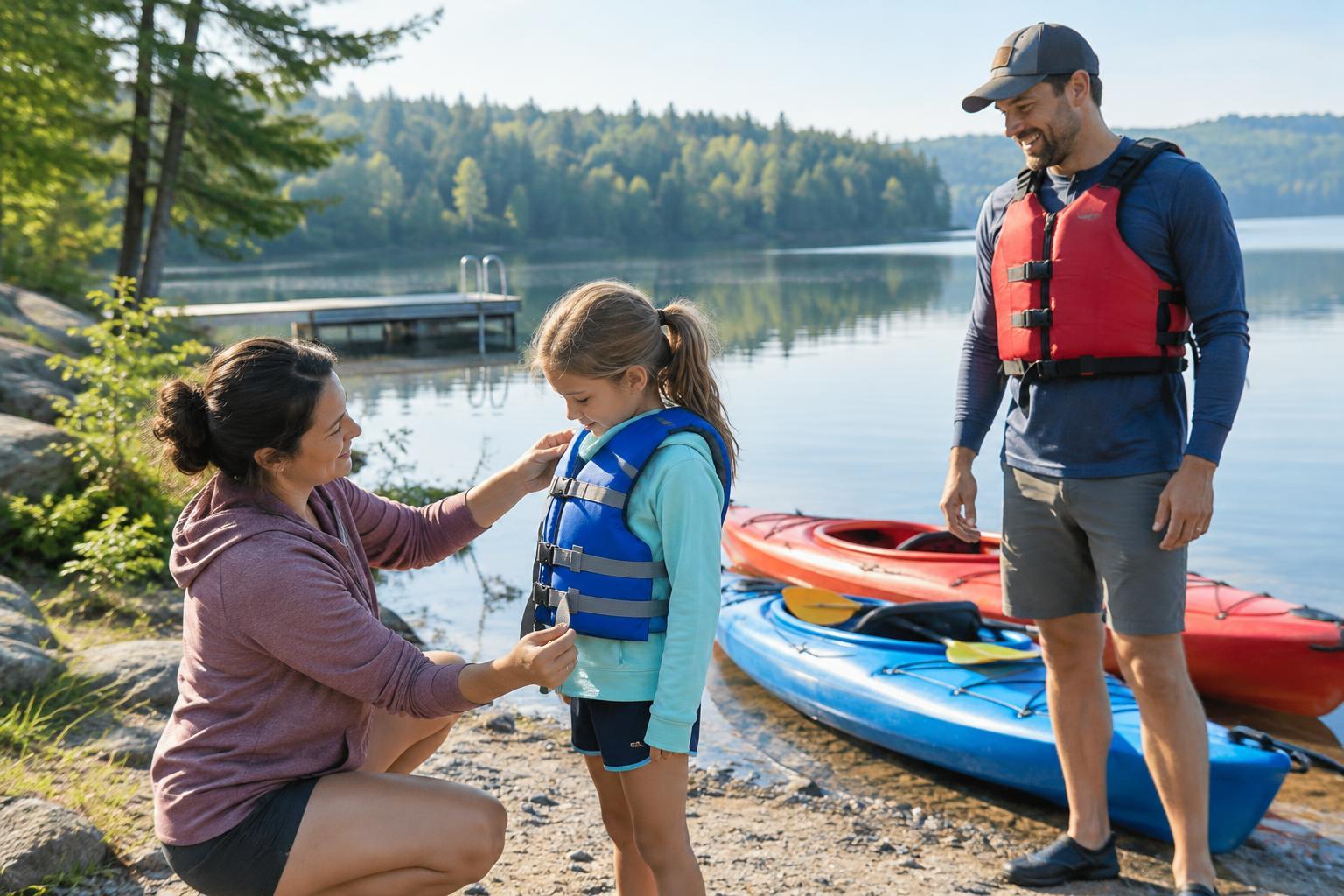
For children, follow the jacket’s marked size or weight range rather than buying one to grow into. A loose jacket can shift at the moment it is needed. Check that the child can move comfortably and that the jacket stays in place when gently lifted. If the design includes a crotch strap, fasten it as directed. Children’s fit can change quickly, so make this a routine check rather than a once-a-season decision.
Put it on before you need it
The simplest routine is to wear a properly fitted life jacket whenever you are on a small boat, kayak, canoe, paddleboard or other watercraft. Unexpected falls leave little time to find and fasten one. It is especially sensible to keep it on when the water is cold, visibility is poor, wind or waves pick up, or you are unfamiliar with the lake. Follow any rules that apply to your craft and location, which may set specific requirements for wearing or carrying jackets.
Shoreline activities call for judgment too. Children and people who are not confident swimmers may benefit from wearing an appropriate life jacket near docks or when playing close to deeper water. A jacket does not replace close supervision, a safe entry and exit, or attention to changing conditions. Agree on simple boundaries before anyone gets wet, and make sure each person knows where they can get out of the water.
Make wearing one part of the plan
Before a lake weekend, ask everyone to try on their jacket rather than assuming a shared supply will fit. Pack a suitable jacket for each person and activity, and keep them easy to reach while loading the boat. At the launch, take a moment to fasten them before handling paddles, bags or cameras. This small pause is easier than trying to adjust straps once you are underway.
If someone resists wearing a jacket because it rubs or limits movement, look for a better-fitting style rather than leaving it behind. Adjust straps, check that clothing is not bunched underneath, and try the movements the outing will require. For an inflatable jacket, follow its instructions for wear and upkeep and confirm that it is appropriate for the wearer and activity. Familiarity with a jacket makes it less distracting on the water.
Inspect, dry and store it for the next trip
Give each jacket a quick inspection before use. Check the fabric, seams, straps, buckles and zippers for damage, and follow the maker’s guidance for any features that need maintenance. If a jacket is damaged, no longer fastens securely or does not fit, replace it rather than counting on it for another outing.
After the day, rinse off dirt when appropriate, let the jacket dry fully, and store it where it will not be crushed or left damp. Recheck fit when you return to the lake, especially for children or after changing the layers worn underneath. The goal is not to complicate a relaxing trip: it is to make a well-fitting life jacket an ordinary part of getting ready to enjoy the water.