Find out what the kitchen actually has
“Kitchen included” can mean anything from a full set of cookware to a mini-fridge and a microwave. Before you pack, check the accommodation listing for an inventory, then ask about anything your meals depend on. A refrigerator, cooking surface, kettle, coffee maker, sharp knife and dish soap are worth confirming. If you hope to eat outdoors, check whether there is a table and whether grills or camp stoves are permitted; a lakeside setting does not necessarily mean outdoor cooking is allowed.
Make a short list with three columns: provided, uncertain and bring. Put essentials in the last column only after you have checked what is available. This keeps you from packing a second frying pan while forgetting the one item you would genuinely miss, such as a can opener. If details remain unclear, plan meals that need little equipment rather than trying to outfit an entire kitchen.
Build a meal plan around one simple cooking method
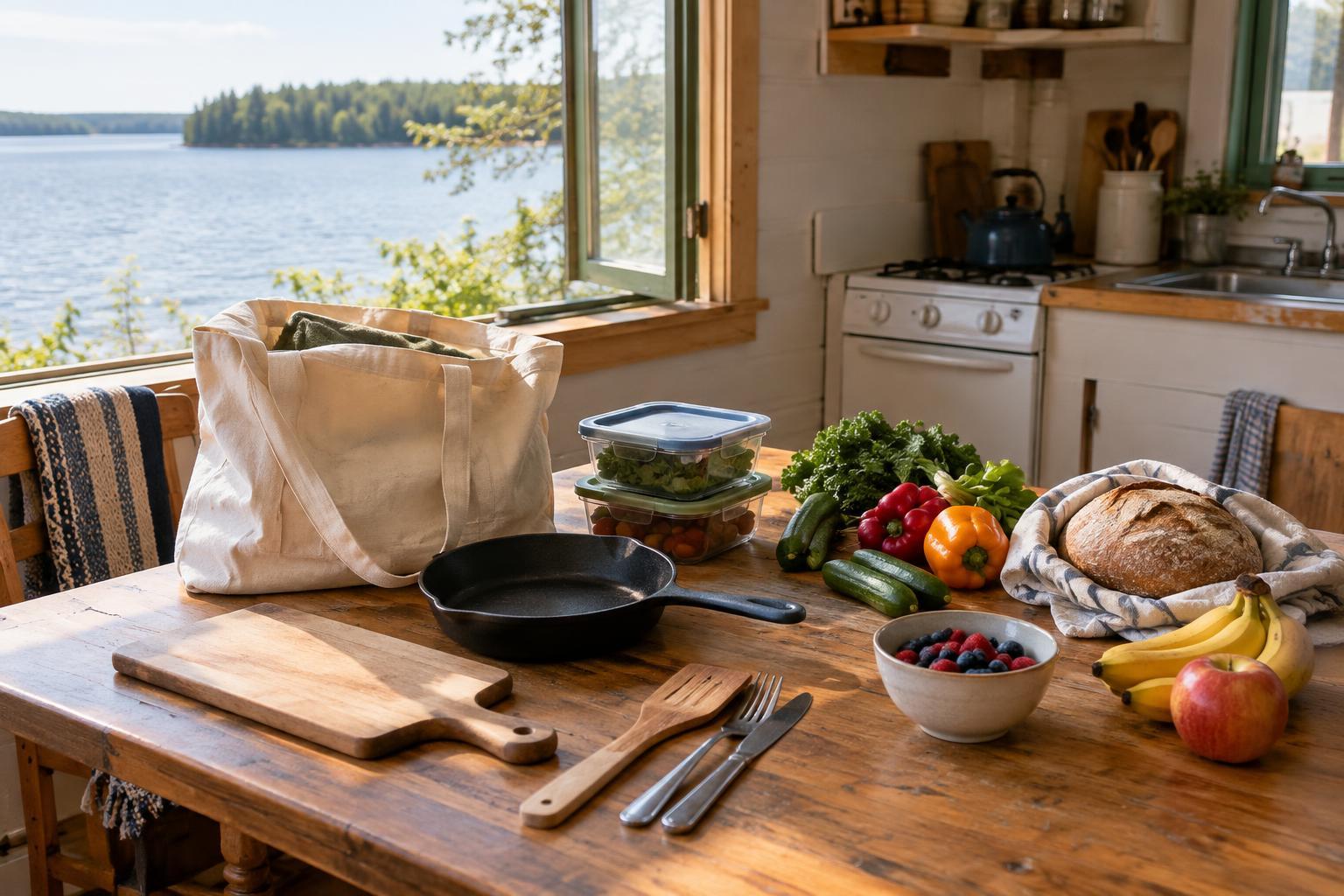
For a short stay, choose meals that share ingredients and use the same pot, pan or appliance. Breakfast might be yogurt and fruit, lunch could be sandwiches or a picnic, and dinner could be a one-pan meal with vegetables and a quick-cooking grain. These are starting points, not a rigid menu: adapt them to the appliances you have confirmed and the amount of time you want to spend cooking.
Think through the small steps each meal requires. A salad needs something to wash produce in and a way to dress it. Pasta needs a pot, a way to drain it and a bowl to serve it in. If those steps sound awkward in a tiny kitchenette, choose an easier version. Pre-washed produce, ingredients measured at home and a sauce in a sealed container can reduce both packing and cleanup. Keep one shelf-stable backup meal in case you arrive late or decide to stay by the water longer than planned.
Pack a compact kitchen kit
A modest kit can cover the gaps without taking over your luggage. Consider a small cutting board, a versatile knife with a secure cover, a can opener if needed, a spoon or spatula, reusable food containers and a few sturdy bags for leftovers. Add salt, pepper and small portions of any seasonings or cooking oil you know you will use. Pack liquids upright in a washable pouch so a leak does not reach your clothes.
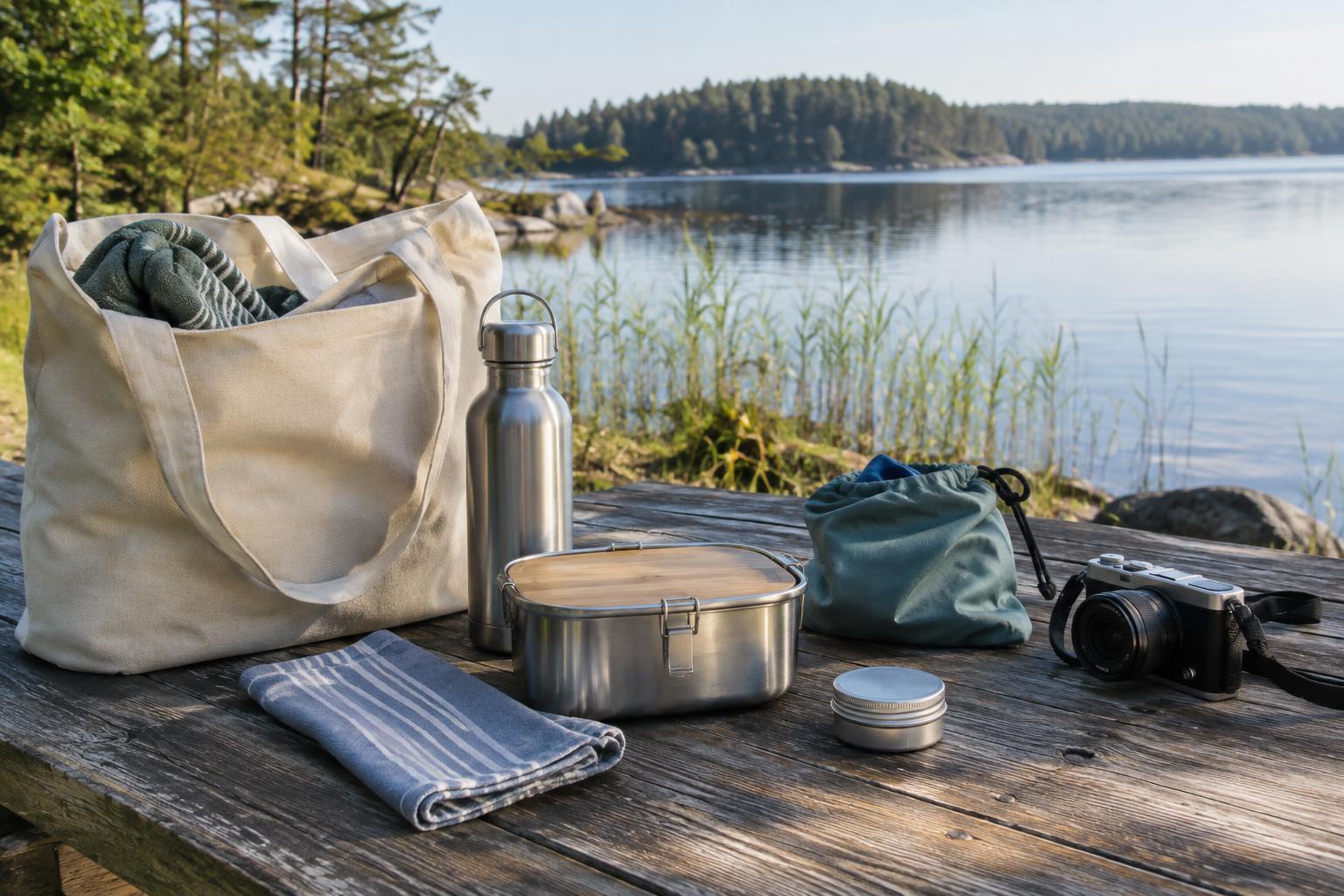
Cleanup deserves its own corner of the bag. A sponge or dishcloth, a small amount of dish soap if none is provided, a towel and a few rubbish bags are often more useful than an extra gadget. Bring reusable plates, cups or cutlery only if the stay does not supply enough. A tote bag makes it easier to carry a meal, drinks and used dishes between the room and an outdoor table without repeated trips.
Keep food practical from arrival to departure
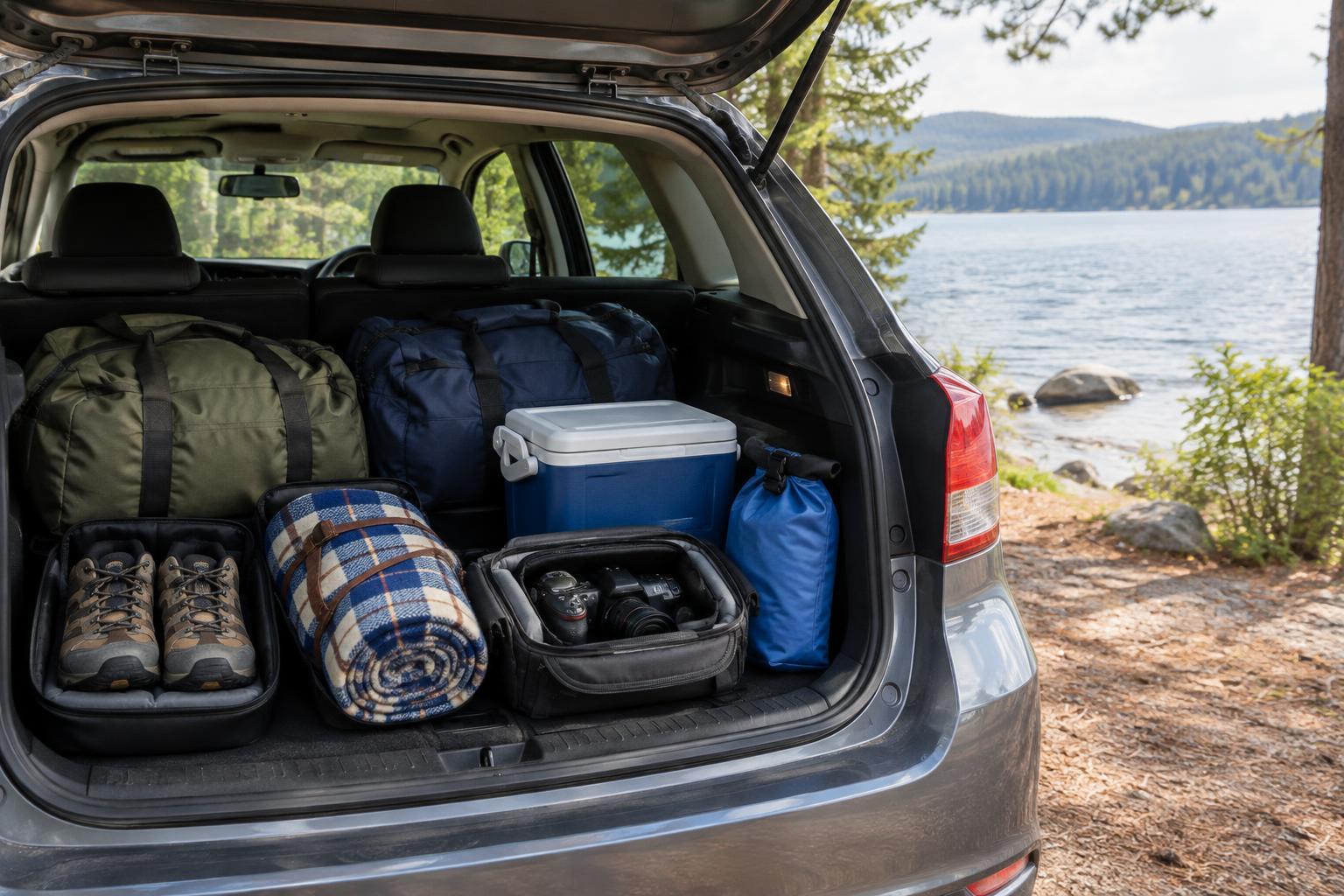
Separate food into what can travel at room temperature and what needs to stay chilled. Use an insulated cooler with cold packs for perishable items, and move them into a working refrigerator when you arrive. If refrigeration is limited or uncertain, favor shelf-stable ingredients and buy perishables close to when you will use them. Keep raw foods contained and separate from ready-to-eat items, and follow any storage or disposal guidance at the property.
Pack snacks that travel well for the moments when cooking is inconvenient: crackers, whole fruit, nuts or other foods your group enjoys. Bring refillable water bottles, too. For an outdoor meal, use containers with secure lids rather than relying on loose wrapping that can blow away. Before leaving a picnic spot, collect scraps and packaging so the next visitor finds it as you did.
Leave space for the lakeside part of the stay
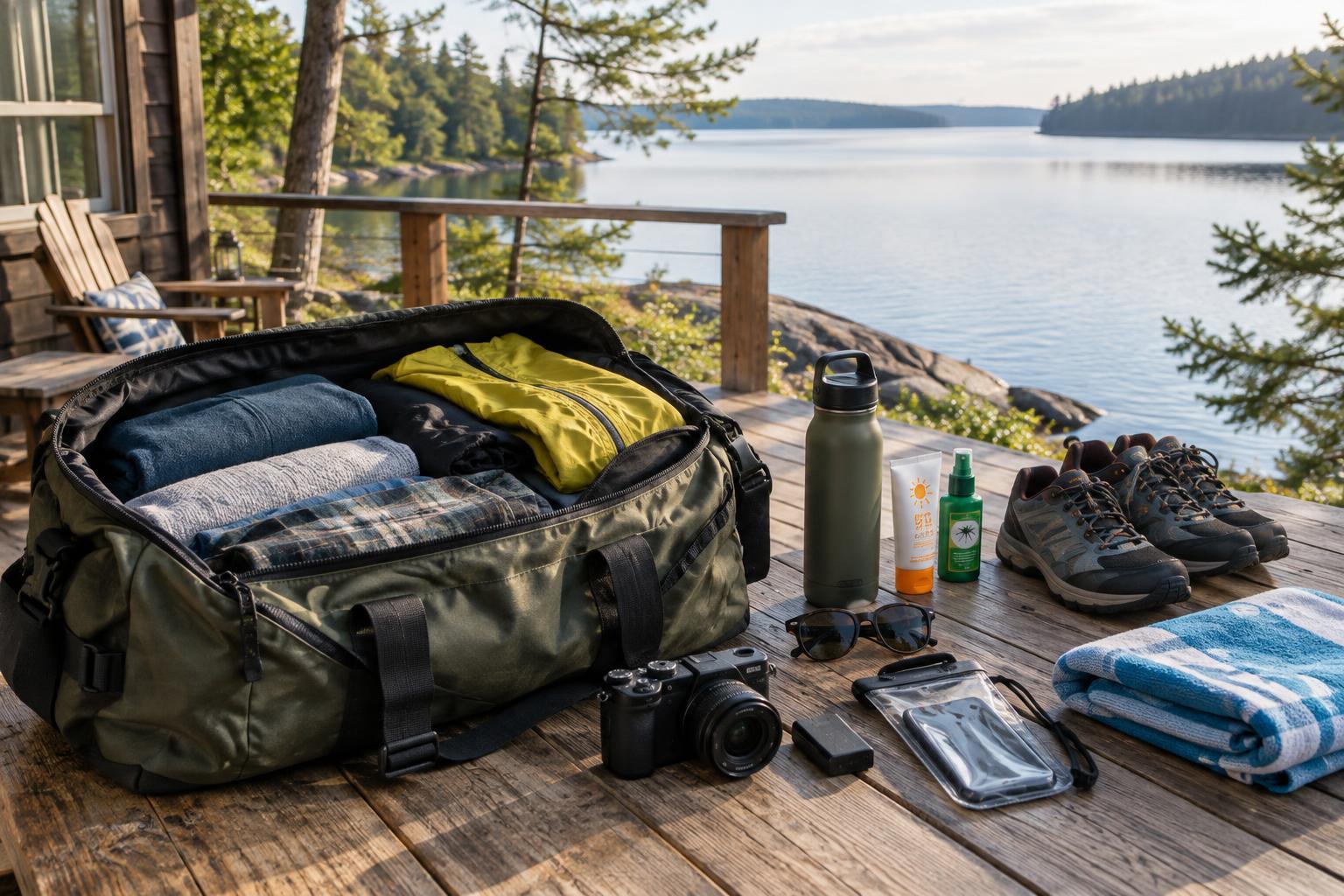
The goal is not to recreate your home kitchen. It is to make a few satisfying meals without turning the weekend into a packing exercise. Once your food plan is set, reserve space for a light layer, comfortable shoes and a blanket or towel for sitting outside. A small bag that holds drinks, snacks and your phone or camera can turn an ordinary breakfast or sunset walk into an easy outing.
On the final morning, check the fridge, cupboards and cooler before loading the car. Wipe down the surfaces you used, pack leftovers safely or dispose of them as appropriate, and make sure your kitchen kit is dry enough to travel. You will leave with less to sort out at home—and a clearer idea of what is worth bringing next time.