Choose a forgiving place to begin
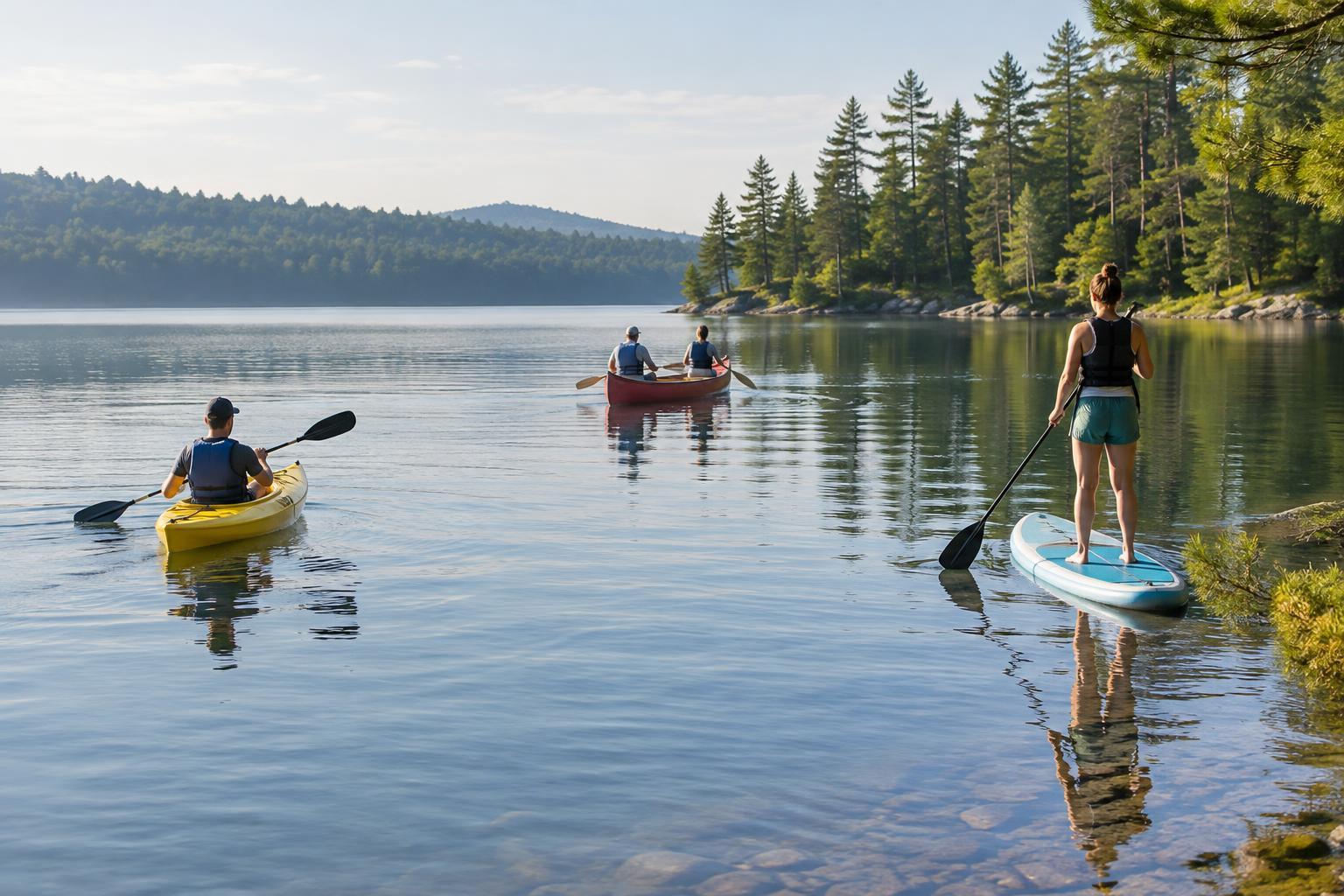
For a first paddleboard outing, look for a sheltered stretch of lake with a straightforward launch and plenty of room away from swimmers, docks and boat traffic. A calm surface makes it easier to notice how your movements affect the board. Check the weather and local access rules before you go, and remember that conditions can change during a weekend visit.
Choose a board suited to beginners, and ask a rental provider how to adjust and use its paddle and leash. Wear a properly fitted personal flotation device and follow local requirements. The right leash setup depends on the water and surroundings, so ask about that too rather than assuming every setup is appropriate. Tell someone where you plan to paddle, and keep your first route close enough to shore that returning feels manageable.
Build balance from the board upward
Start on your knees near the board’s center, usually around its carry handle. Place your hands on the deck in front of you, bring one foot and then the other to where your knees were, and rise slowly. Looking toward the horizon instead of down at your feet can help you stay upright. If standing feels unsteady, keep paddling from your knees while you get used to the board.
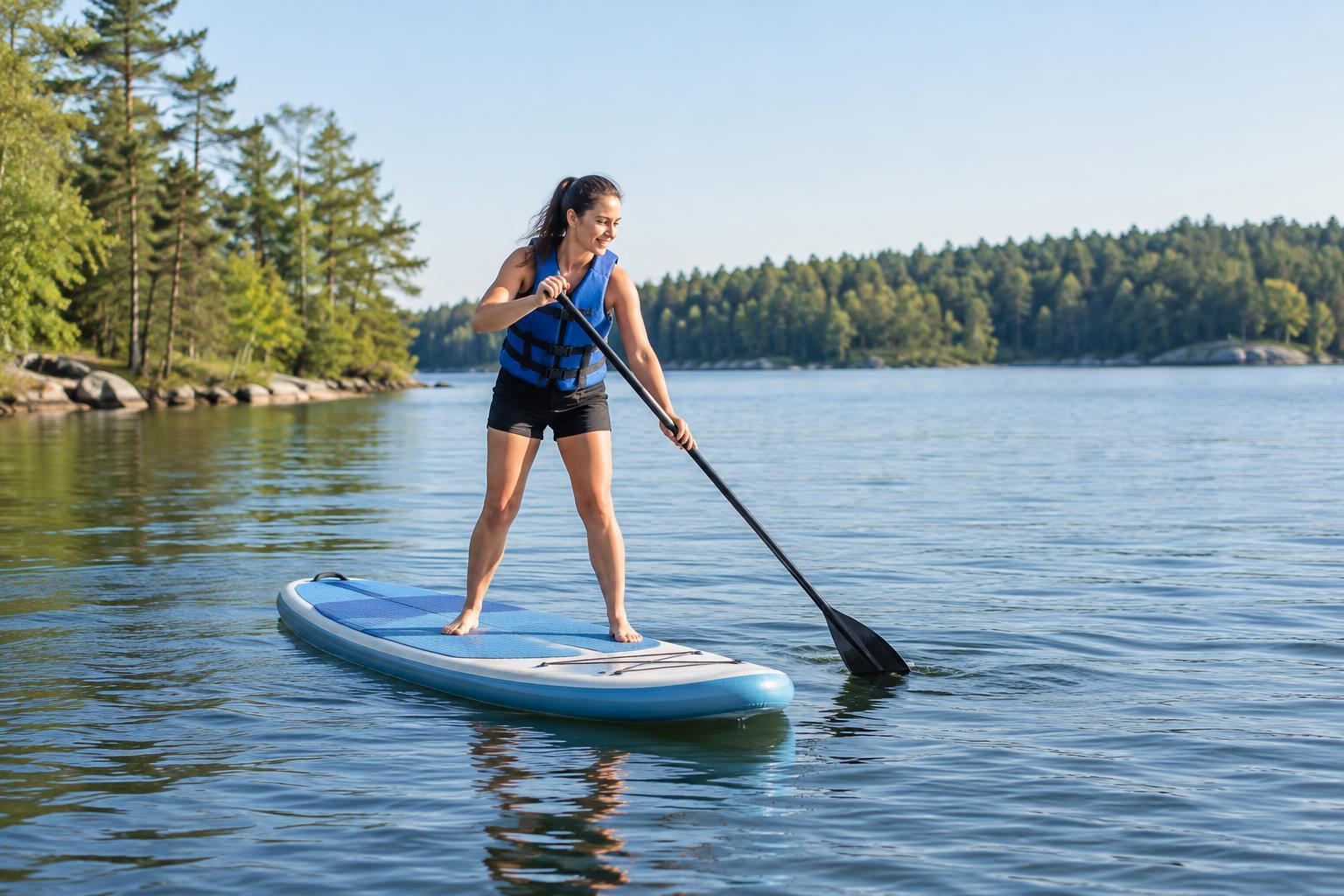
Once standing, set your feet about hip-width apart, parallel to each other, with soft knees and your weight centered. Let your ankles and knees absorb small wobbles rather than trying to hold your whole body rigid. The board may move beneath you without actually tipping over. Make small adjustments and breathe normally; sudden, large corrections often make balancing harder.
Before traveling far, try gently shifting your weight from foot to foot. Notice where the board feels most level. Moving too far toward the nose or tail can change how it sits in the water, so return to the center whenever you feel unsure.
Use simple strokes to travel straight
Hold the paddle with one hand on the top grip and the other on the shaft. Put the blade fully in the water ahead of your feet, then draw it back toward your ankle while keeping the stroke fairly close to the board. Lift the blade out and bring it forward for the next stroke. Long pulls far behind your feet are less useful for straightforward travel and may make the board veer.
Switch paddling sides every few strokes to keep a roughly straight course. When you change sides, swap your hand positions too, so the hand on top remains opposite the side you are paddling. Aim for smooth strokes rather than speed. A short practice run parallel to shore gives you a chance to find a rhythm without committing to a long crossing.
Turn with wide strokes and small adjustments
To make a gentle turn while moving, use a sweep stroke: reach forward with the blade and draw a broad arc away from the side of the board. Paddling a wide arc on the right generally turns the nose left; an arc on the left generally turns it right. Keep your feet in your familiar stance and look toward the direction you want to go.
For a tighter, slower change of direction, place the blade in the water beside or slightly behind you and pull it forward along the board. This reverse stroke can help bring the nose toward the paddle side. Try both strokes in open water and notice how your board responds. If a turn feels awkward, slow down, return to a centered stance and try a smaller stroke. There is no need to step toward the tail to make your first turns.
Plan for the return, not just the departure
A beginner session can be satisfying without covering much distance. Practice starting, stopping and turning near your launch point before heading farther along the shore. Pause occasionally to check the wind and identify your route back. If paddling away feels unusually easy because the wind is behind you, the return may take more effort.
Falling is possible even on a quiet lake. If you lose balance, try to fall clear of the board rather than onto it, and keep track of where your paddle goes. To get back on, approach the board from the side, hold its center, kick your legs behind you and pull your chest onto the deck before settling onto your knees. Practicing this in a suitable shallow area can make it less surprising later. End the outing while you still have energy to paddle back and carry your gear ashore.