Start with the trip, not the gear
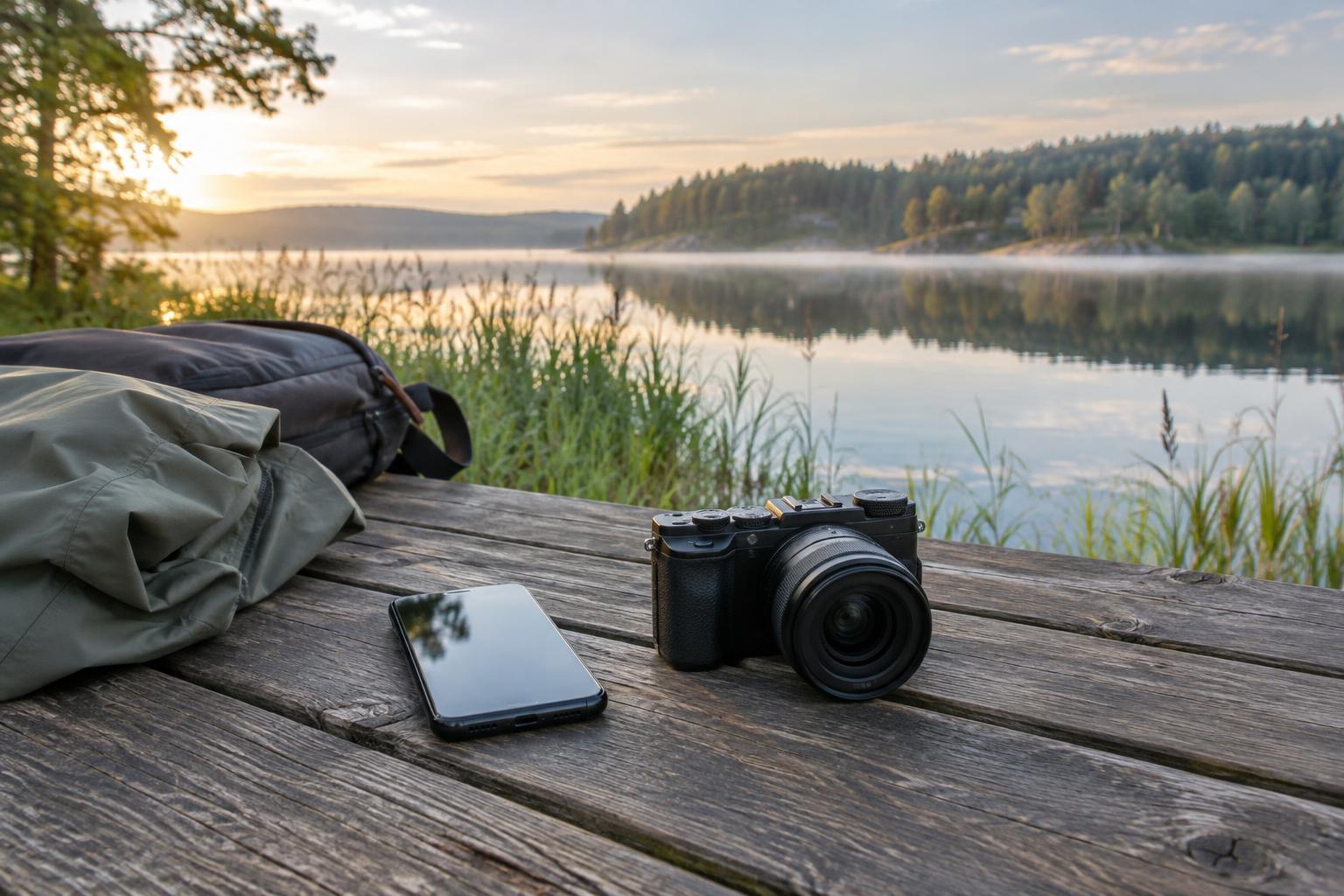
The best camera for a lakeside weekend is the one you will enjoy carrying and using. If your plans revolve around a quiet cabin, a short walk, and meals by the water, your phone may cover everything you want to remember. It is already close at hand for a view from the dock, a shared breakfast, or the changing color of the lake.
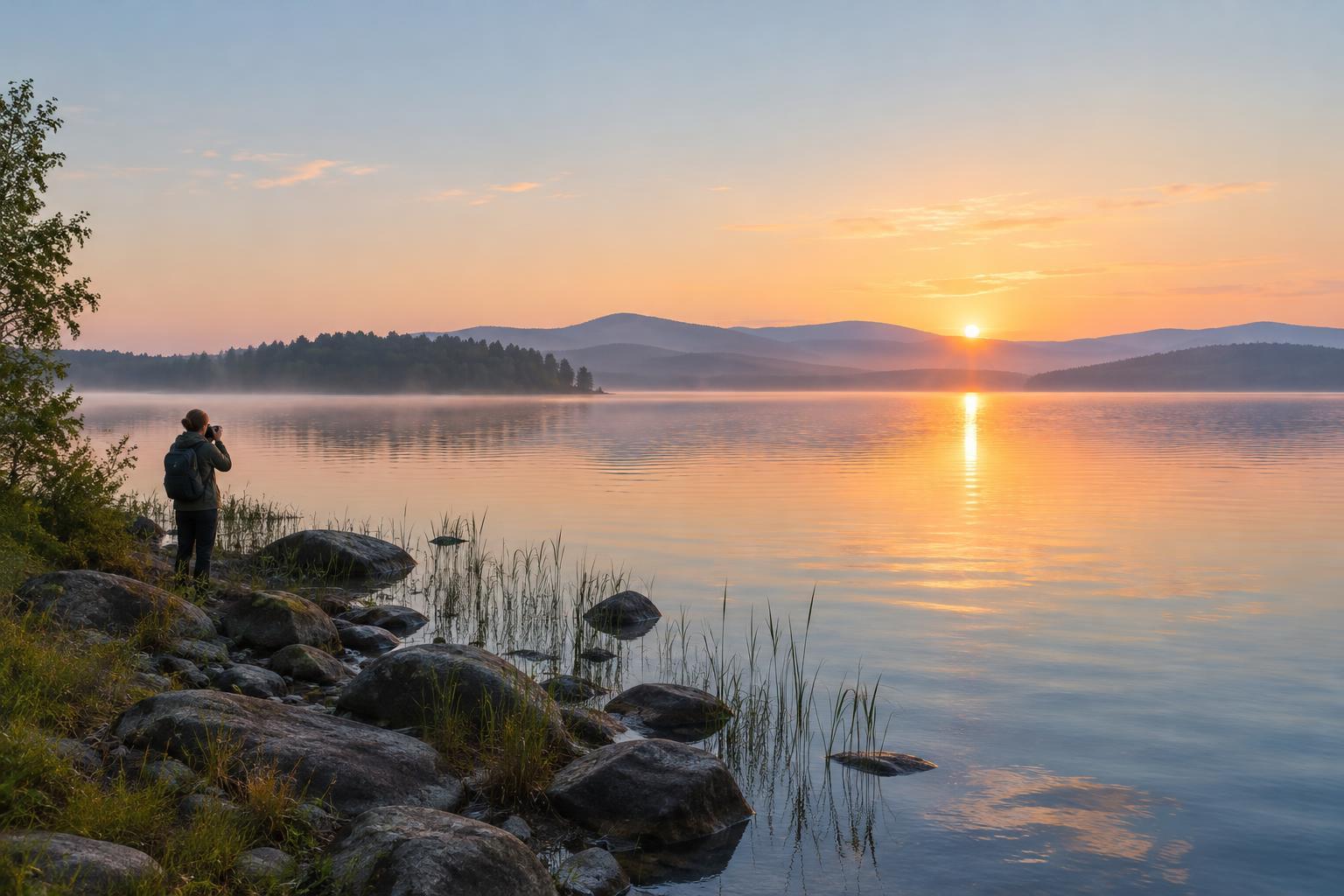
A dedicated camera becomes more appealing when taking photographs is a main reason for the trip. You might want to linger over sunrise, frame details along a wooded trail, or photograph birds from a respectful distance. Before packing extra equipment, ask what you hope to photograph and how much time you want to spend on it. A simple answer can save you from carrying gear that stays in its bag.
When a phone is the easy choice
For casual travel photos, a phone keeps your kit light and your day flexible. It is convenient for wide views, people, cabin details, and quick pictures during a walk. It also makes it easy to review, edit, and share images without adding another device to your packing list. If you are moving between a café, a lakeside path, and a small boat, having one less item to manage can be a real advantage.
Phones do have limits. A distant bird may look tiny, even if it seemed close in person, and digital zoom can leave fine details looking soft. Dim light can make moving subjects difficult to capture clearly. Rather than fighting those limits, look for nearby subjects: ripples against the shore, reflections under a pier, or a friend silhouetted beside a window. Wiping a smudged lens and tapping the screen to set focus can also improve a quick shot.
When a camera earns its space
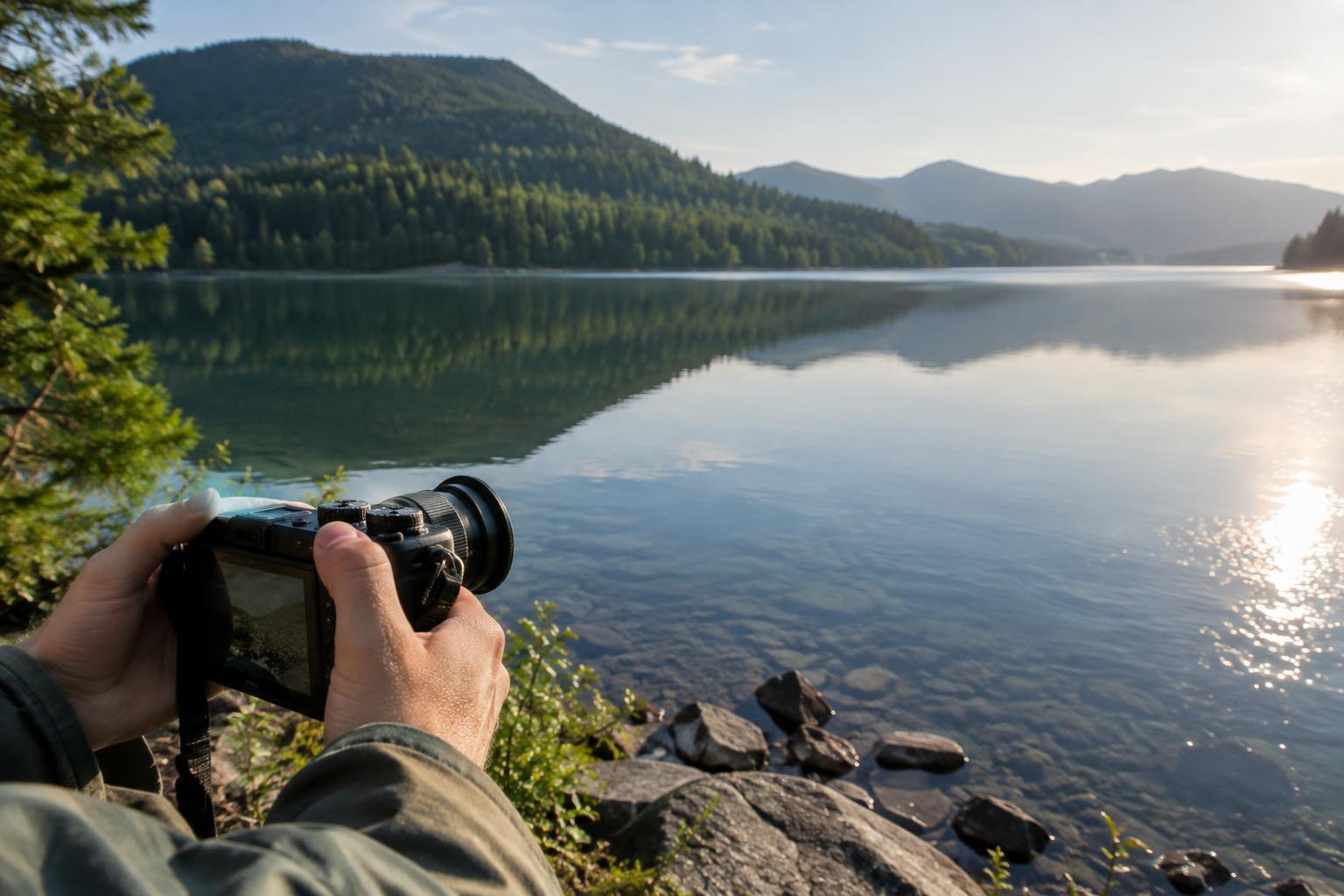
A dedicated camera is worth considering if you already own one you know how to use and you want more control over your pictures. Depending on the camera and lens, it may help you photograph distant subjects without relying on a phone’s digital zoom, adjust exposure for bright water, or work more deliberately in low light. These advantages matter most when you have time to pause, experiment, and take several frames.
The trade-off is more to carry and protect. A camera, lens, spare battery, and charger can take up space in a small overnight bag. If bringing it means worrying about every splash or leaving it behind on spontaneous outings, the benefit may be modest. Consider taking one versatile lens rather than a collection of options. You can still use your phone for quick moments and bring out the camera when a scene invites a slower approach.
Pack for water, weather, and comfort
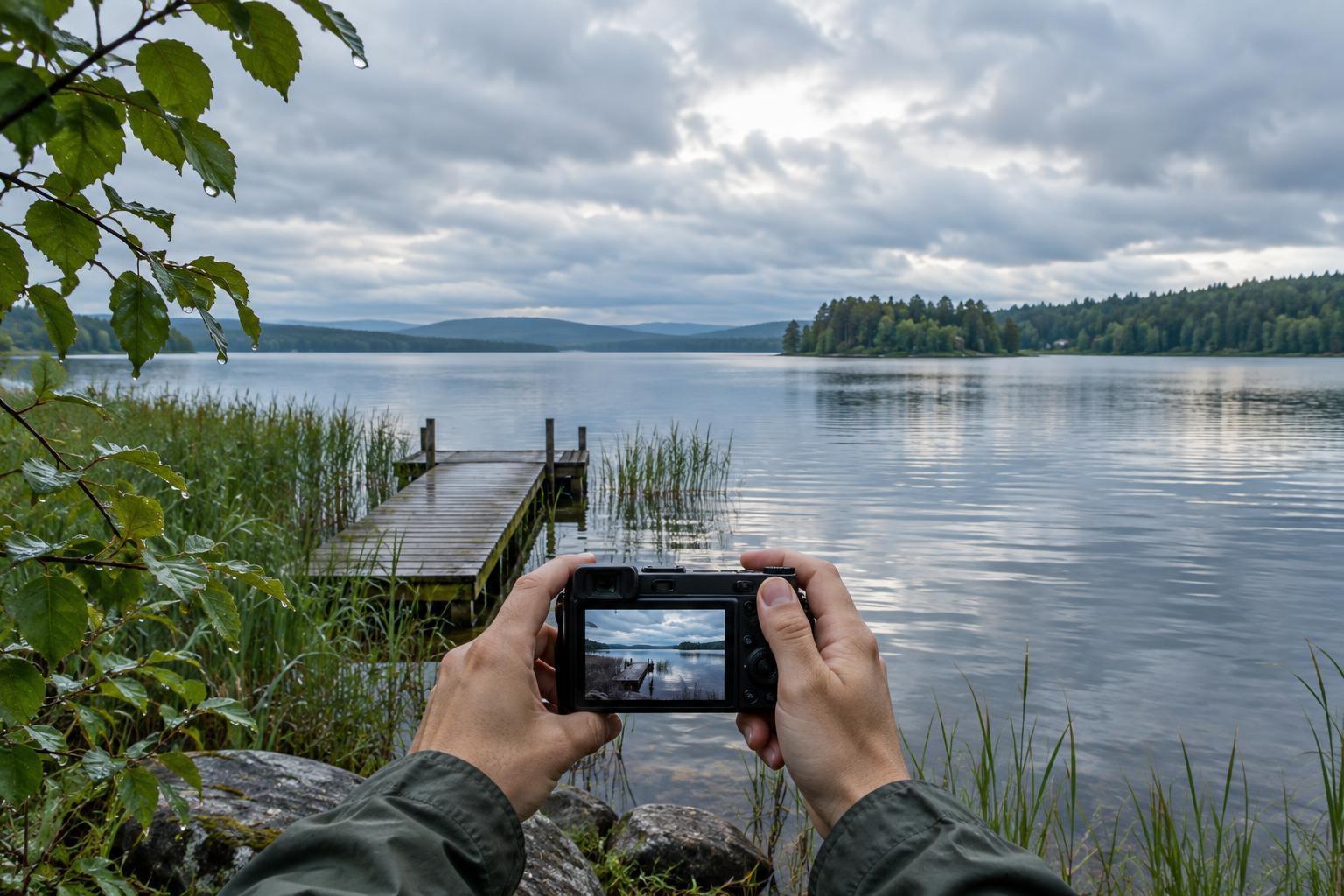
Whether you choose a phone or a camera, plan for damp surfaces and sudden changes in weather. Keep your device in a protective pouch or dry bag when you are near splashes, paddling, or caught in rain, and check that the closure is secure before setting out. A wrist strap or comfortable camera strap can help you keep hold of your gear, but neither replaces careful handling around water.
Charge your devices before leaving and pack the cable or charger you actually need. If you expect a full day away from an outlet, a charged power bank can be useful for a phone; a camera may call for a spare battery. Clear enough storage for new photos, and give your gear an accessible place in your day bag. Equipment that takes too long to retrieve tends to miss the relaxed, unplanned moments that make a weekend feel like yours.
Make better lake photos with either one
Good lake photographs depend as much on attention as on equipment. Look for a clear subject rather than trying to fit every part of a broad view into one frame. A canoe tied beside a dock, grasses against open water, or a path leading toward the shore can give the eye somewhere to settle. Take a wider image to show the setting, then move closer for a detail that tells a smaller story.
Light changes the mood quickly beside water. If a bright reflection overwhelms your image, try shifting your position or including less sky. In softer morning or evening light, watch how the shoreline and reflections change before you take the shot. For photos of other people, ask when appropriate and let the moment stay relaxed. Bring the gear that suits your plans, then leave room to enjoy the lake without seeing every minute through a screen or viewfinder.