Choose a walk that fits the day
A short shoreline hike works best when it fits around the rest of your weekend rather than taking it over. Start with the time you actually have, including the drive to the trailhead, a pause by the water, and the return trip. An out-and-back route is often easier to plan than a loop: you can enjoy the shore for as long as conditions and energy allow, then retrace a familiar path.
Distance alone does not tell you how demanding a walk will feel. A narrow path with roots, steps, or frequent changes in elevation may take longer than a wider, smoother trail of the same length. If your group includes walkers with different paces, choose a modest route and agree that reaching a particular landmark is optional. The aim is a pleasant outing, not a mileage target.
Check what the trail may be like underfoot
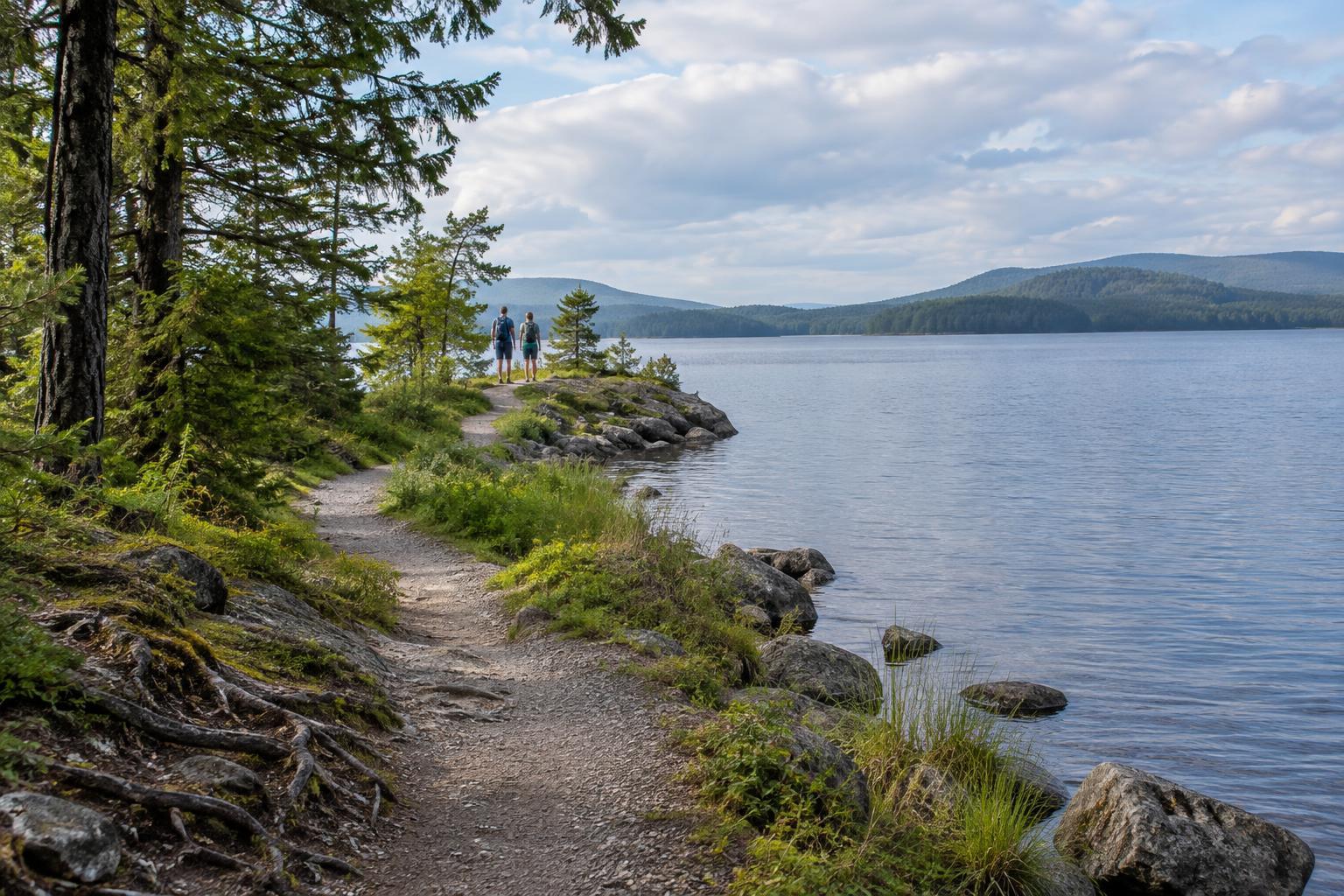
Shoreline paths can change character over a short distance. A firm approach through trees might give way to loose stones, muddy patches, exposed roots, or a sloping bank. Recent rain may leave low areas wet, while wind or changing water levels can affect sections close to the lake. Before leaving, look for route descriptions or notices from whoever manages the trail. Treat any description as a guide, since conditions can change.
Pack for the less convenient part of the route, not just the easy-looking trailhead. Shoes with comfortable support and reliable grip are more useful than footwear chosen solely for a photo stop. If you encounter an eroded edge, a flooded stretch, or terrain beyond your comfort level, turn back rather than stepping into vegetation to create a detour. Staying on the established path helps protect the shoreline as well as your footing.
Confirm access before you set out
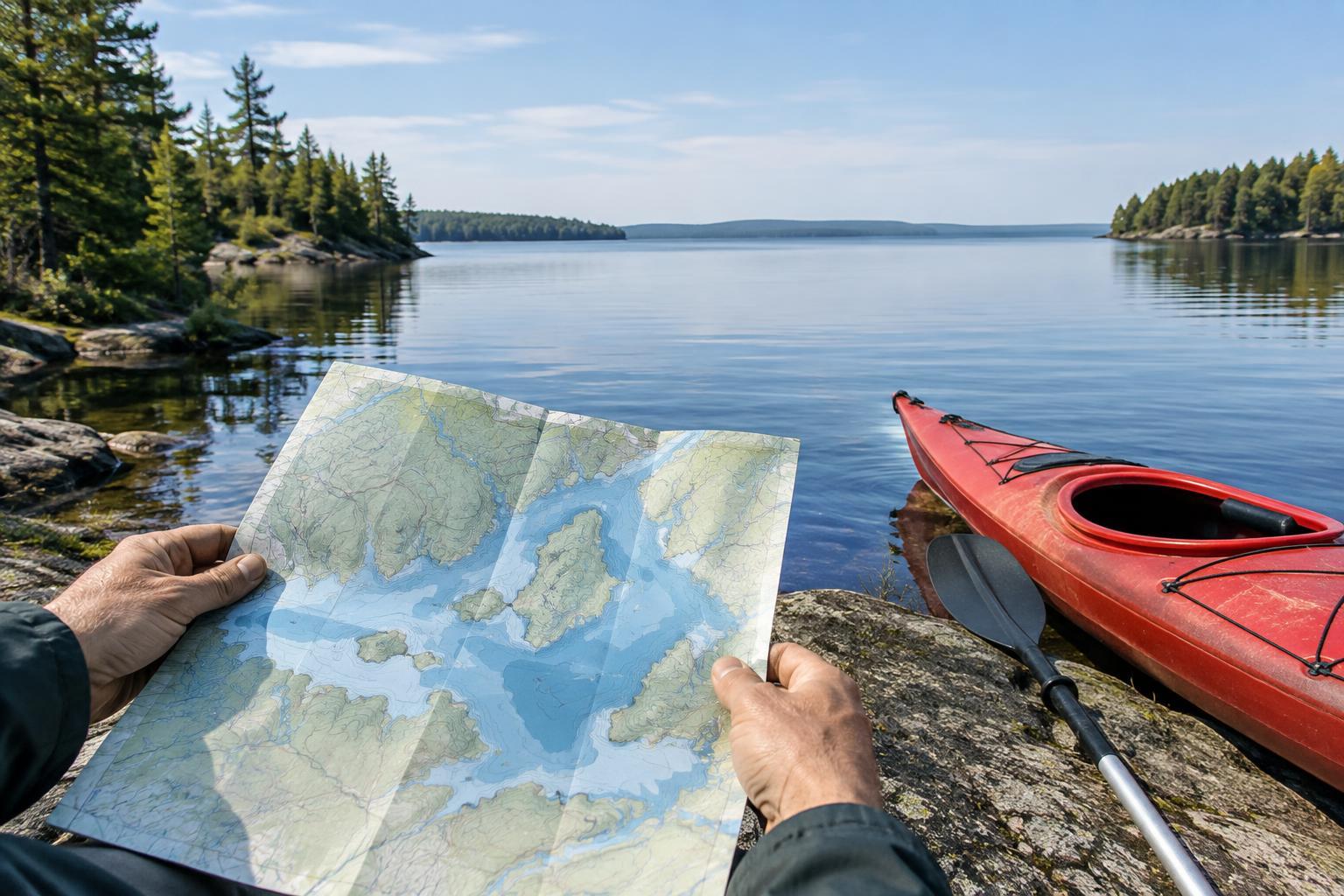
A lake visible from a road is not necessarily open to public access. Check where the trail begins, whether it has designated parking, and whether its route crosses land with limited access. Trail maps and signs can also clarify where walking is permitted along the shore. If you are staying nearby, ask for directions to a public trail rather than assuming that a path behind an accommodation leads to one.
Think through the start and finish of the outing. A small parking area may fill up, and a trailhead can be harder to spot than expected. Save directions before leaving if mobile service may be unreliable, and note where you parked. If the route passes near homes or private docks, follow posted boundaries and keep noise low. These small checks make the walk more relaxed once you arrive.
Set a turnaround point before you need one
Choose a turnaround point while you are still planning: a marked viewpoint, a trail junction, or a time on your watch all work. A time limit is especially useful when the path has many inviting places to stop. Decide when to head back based on your available daylight, the group's pace, and how long the outward walk is likely to take. Allow extra time for the return rather than assuming you will move faster.
The turnaround point is a ceiling, not a promise to keep going. If someone is tired, the weather feels less comfortable, or the trail becomes difficult, turn around early. Before heading back, take a moment to look at the route ahead and confirm you are following the same path. On trails with several side paths, a saved map or a photo of a junction can make the return simpler.
Leave space for the shoreline experience
Bring water, a suitable layer, and a small bag for any rubbish, even on a brief walk. Check the forecast before you go, but pay attention to what you notice on the trail as well. Near open water, a sheltered trailhead may not reflect how breezy an exposed stretch will feel. Let someone in your group know the rough plan, particularly if you expect to walk where reception is patchy.
A shoreline hike does not need an ambitious destination to be memorable. Stop at a durable, permitted spot to watch the light on the lake, take a photograph, or simply rest. Give wildlife room and leave stones, plants, and other natural features where they are. If the planned viewpoint is out of reach, a shorter walk with time to linger can still be exactly the lakeside break you came for.