Confirm the details before you leave
The first hour of a getaway is easier when you know how you will get through the door. A few days before your trip, check the arrival time, check-in method and address supplied by your host. At a small inn, someone may greet you in person; at a rental, you may receive a code or instructions for a key box. Save those details somewhere you can reach without searching through old messages.
Read the arrival information all the way through. Look for parking directions, any instructions about which entrance to use, and whether you need to contact someone when you are close. If your plans change and you expect to arrive outside the stated window, let the host know rather than assuming late access will be straightforward. This is especially helpful at a small property where staff may not be on site at all hours.
Make the last stretch of the journey simple
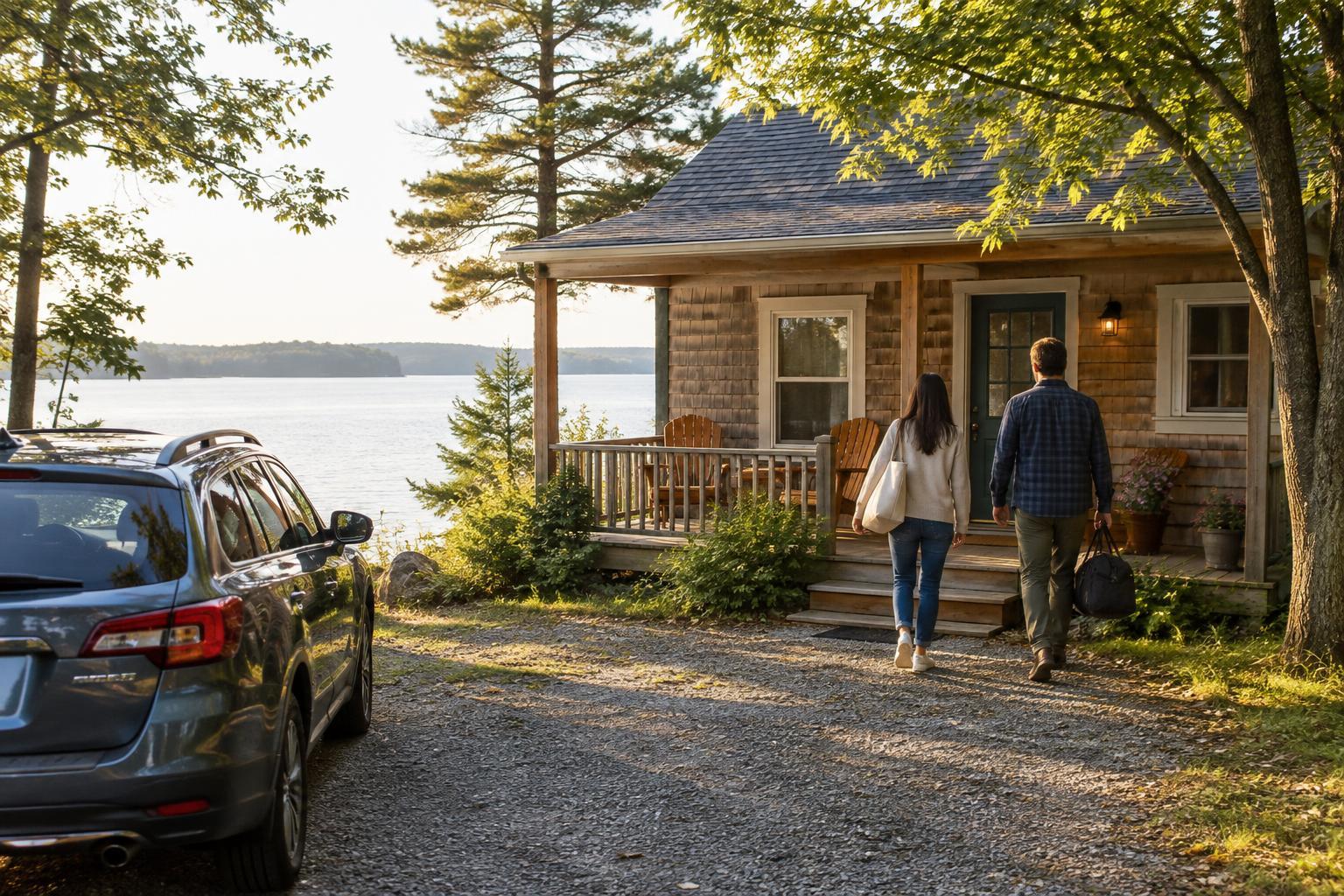
A lakeside address may be easy to find on a map but less obvious from the road. Before setting off, compare the host’s written directions with your route and note any landmarks, gate instructions or turns that might be hard to spot. Download your map or save a screenshot of the final directions in case reception is patchy. If you are driving, identify where guests should park so you do not have to decide while blocking a narrow lane or driveway.
Try to leave some daylight for arrival if your schedule allows. It is easier to find an entrance, carry bags over unfamiliar ground and get your bearings when you can see the layout clearly. If you will arrive after dark, keep a small flashlight or your phone light within reach rather than buried in a suitcase. A planned stop for food or basic supplies can also help if dining options near the stay close before you expect to arrive.
Pack for the first fifteen minutes
You do not need to unpack everything as soon as you arrive. Put the items you will need first in an accessible bag: your phone and charger, booking details, a light layer, any essentials you use daily, and comfortable shoes. Keep valuables and overnight necessities with you rather than in a bag you might leave in the car while checking in. If you are travelling with children or a pet, having water, a snack or a familiar comfort item close by can make the transition calmer.
Once inside, take a few minutes to locate the basics before settling into holiday mode. Find the light switches, bathroom, heating or cooling controls, and any information left for guests. Check how doors and windows secure, particularly if you expect to come and go after dark. If an access code does not work or something important seems missing, contact the host promptly using the method provided instead of spending your first evening guessing.
Learn the property’s lake-side routines
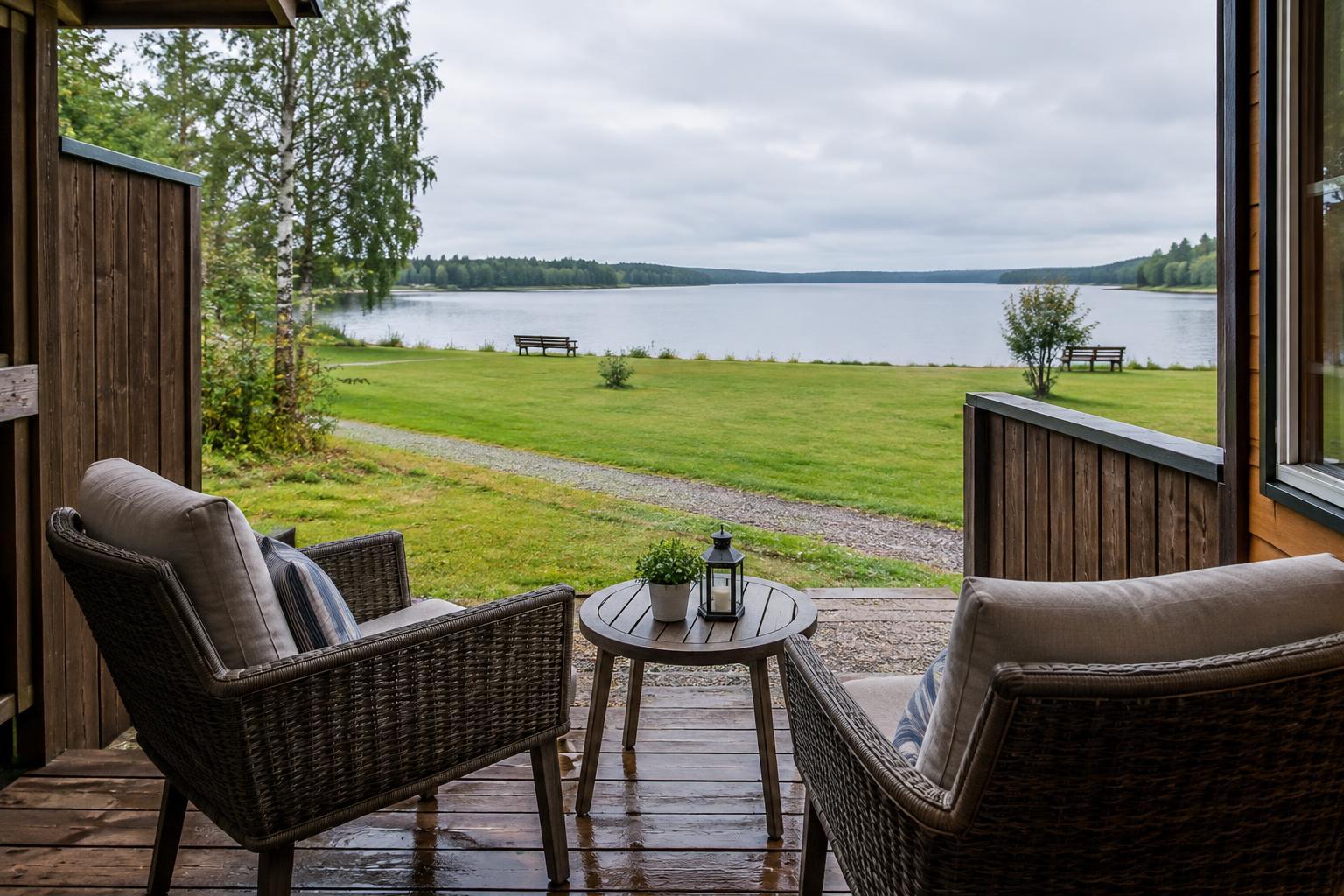
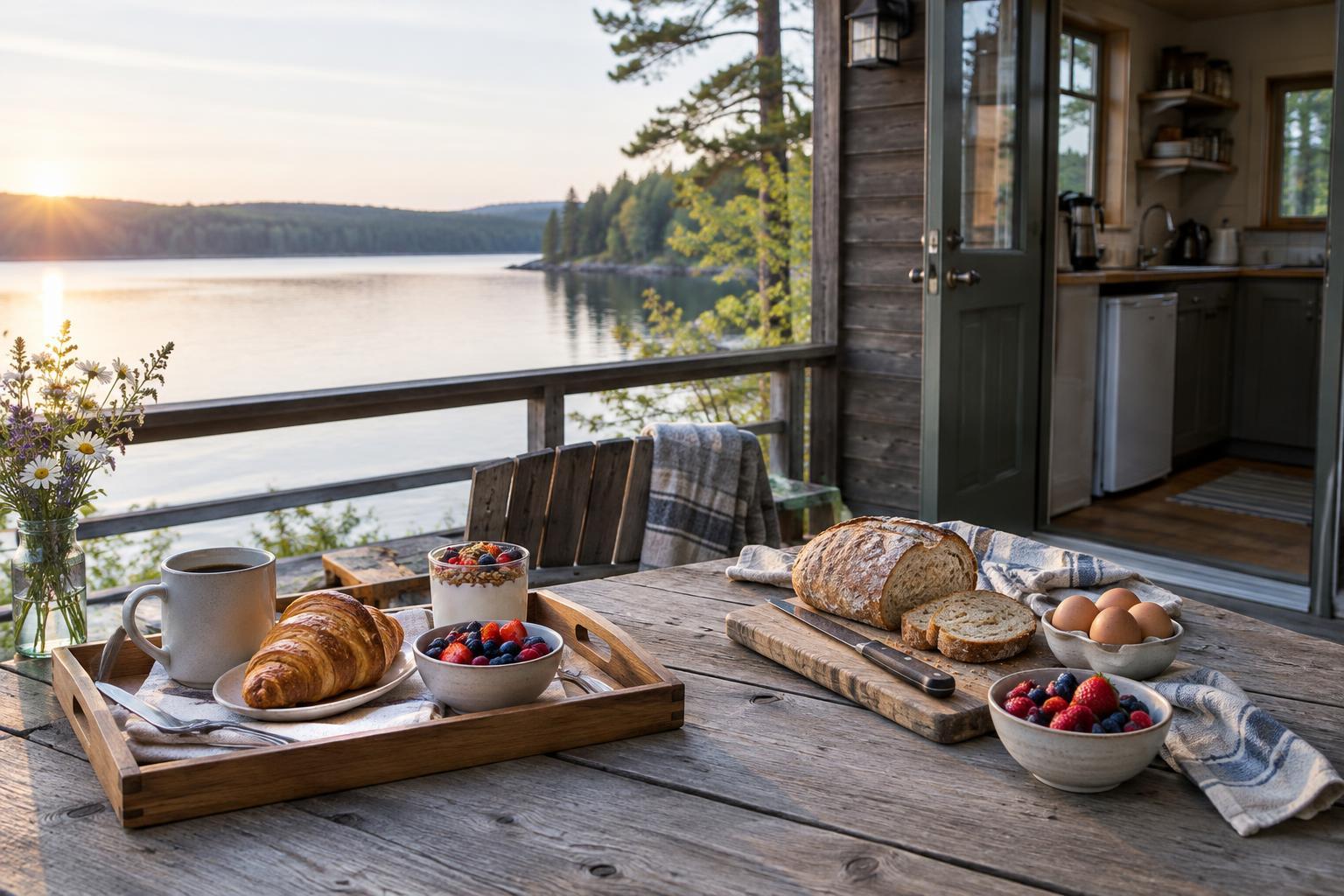
Small stays often have their own practical rhythms. An inn may have set breakfast hours, while a rental may ask guests to follow particular instructions for rubbish, outdoor equipment or shared spaces. Read the house information and look for guidance on paths, docks, fire pits and water access before using them. Being beside a lake does not necessarily mean every shoreline area is open to guests or suitable for swimming.
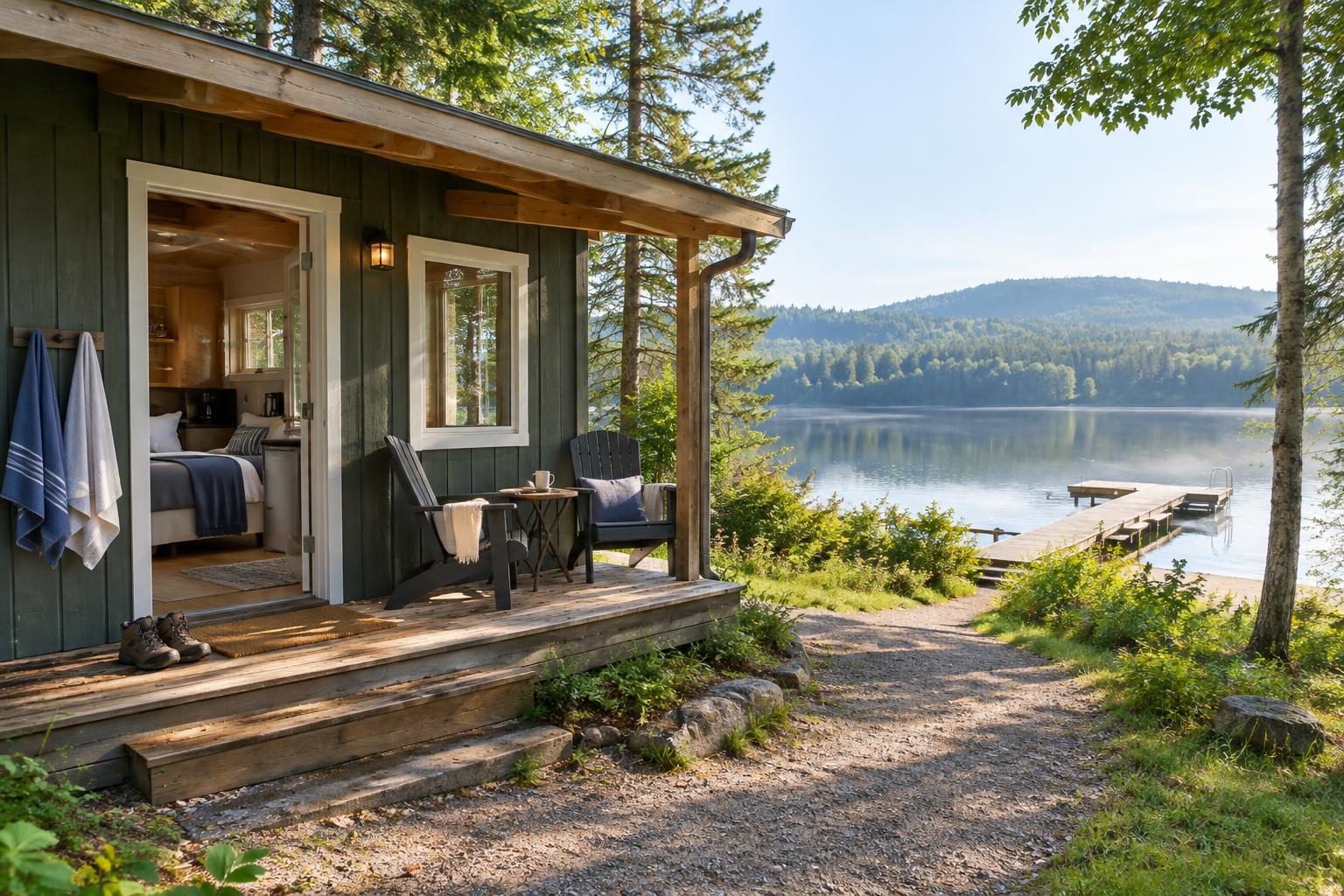
Take a short walk around the parts of the property available to you while there is still light. Notice the route back from the water, any uneven steps, and where other guests or neighbours may be relaxing. Keep noise modest when unloading late, and use only the parking and outdoor areas designated for your stay. These small courtesies help preserve the quiet atmosphere that draws many people to a lakeside break.
Leave room to settle in
It can be tempting to put a sunset walk, dinner reservation and full unpacking session into the same arrival hour. A gentler plan gives you time for a delayed journey, a question at check-in or an unhurried look around. Choose one easy first-evening activity, such as making a simple meal, sitting outside where permitted or taking a short walk on a known path. Save longer outings and unfamiliar trails for when you have more time and better light.
Before turning in, check the next day’s practical details: breakfast arrangements, any plans that require an early departure, and where you will keep shoes or outdoor gear. Then put the itinerary aside. A well-planned arrival is not about following a rigid schedule; it is about removing small uncertainties so you can enjoy being there.