Make a small plan before you leave
You do not need an elaborate system for a two-night trip. Before leaving, check how much free space is available on your phone or camera card, especially if you plan to take video. Charge your devices, pack the cables you actually use and make sure you can sign in to your usual photo account. If you rely on automatic cloud uploads, check that they are enabled rather than assuming they are.
Decide where the trip’s photos will live when you get home. That might be a folder on your computer, a cloud photo library or both. Give the trip a short, recognizable name, such as Lake Weekend, and use it consistently. Making this decision early means you will not have to invent a filing system while sorting through pictures of the dock, the trail and Saturday dinner.
Keep taking photos simple
Photograph what helps you remember the weekend, not just what looks impressive. A wide view can establish the lakeside setting, while a detail such as muddy walking shoes or a book beside the window can bring back the feel of the day. Take a few versions when light or movement is tricky, then put the camera away and enjoy where you are. You can sort the extras later.
If you use both a phone and a camera, check that their clocks show the correct time before the trip. Matching times make it easier to put the pictures in order afterward. When reception is patchy, do not depend on an upload happening immediately. Leave photos on their original device until you have confirmed that a second copy is complete.
Create a second copy when it is practical
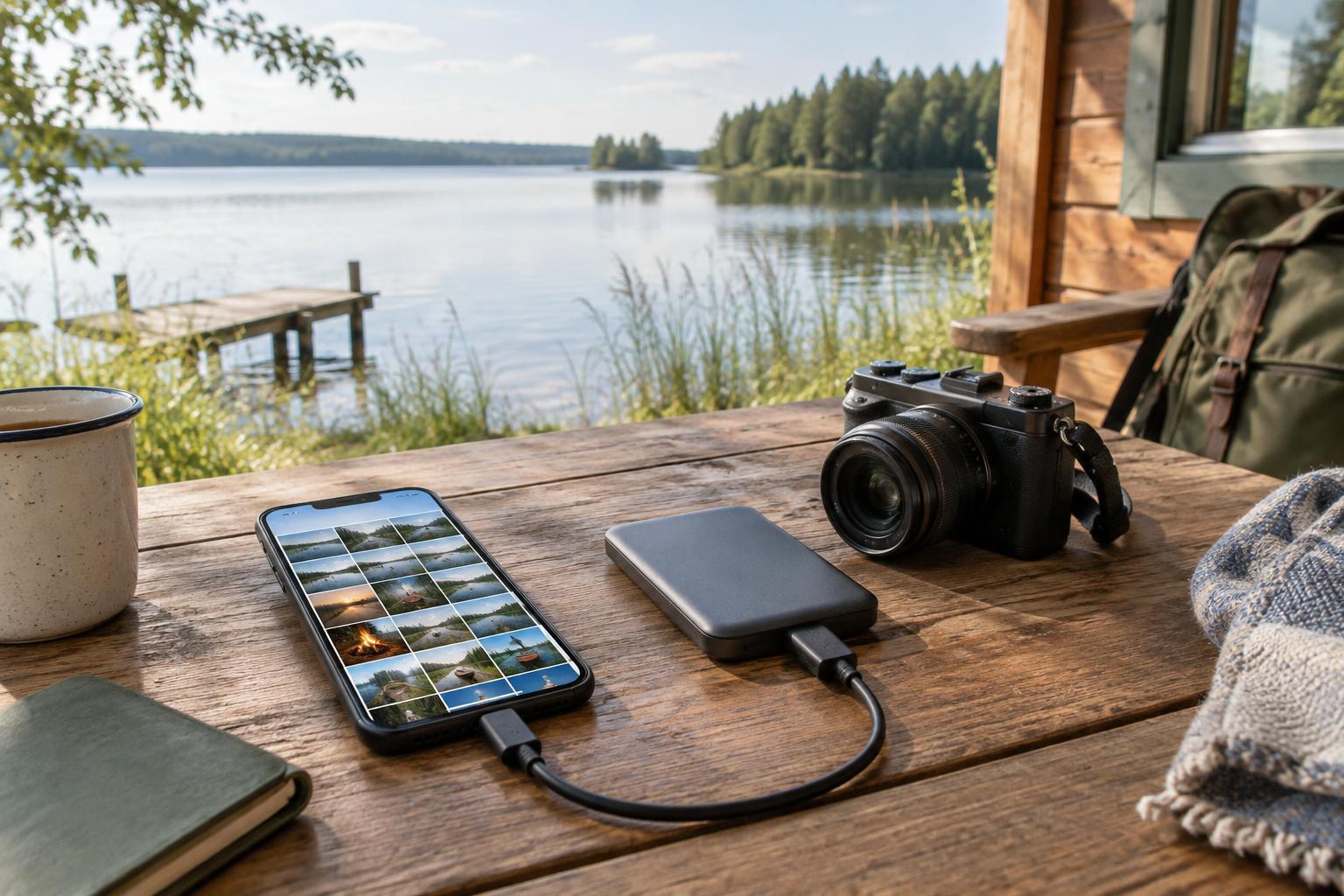
A useful backup habit is to keep copies in two places that will not be lost in the same mishap. For phone photos, an automatic cloud library may provide that second copy once the phone has connected and finished uploading. Look for an upload-complete indicator before deleting anything from the device. Sync settings vary: in some services, deleting an image on one device may remove it elsewhere too.
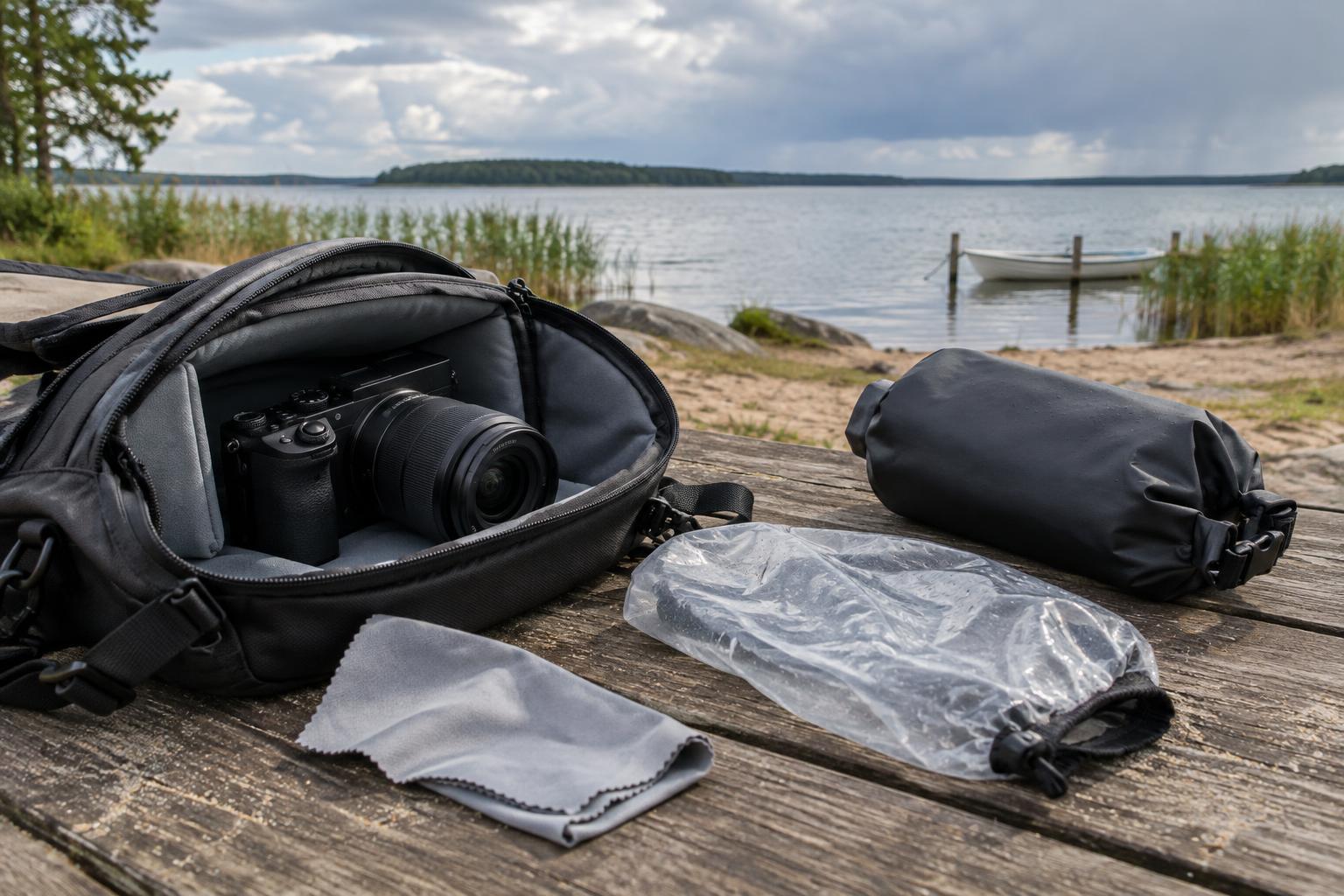
For a camera, you could copy the card to a laptop or portable drive if you already travel with one. Keep the card unchanged until you have opened a few files from the copy and checked that the transfer appears complete. If carrying extra equipment would complicate a short break, take a spare memory card instead and make the second copy when you get home. A spare card gives you room to keep shooting, but it is not a backup of photos still on the first card.
Choose a sensible time for any large upload, such as when you have a reliable connection and your device is charging. Shared accommodation Wi-Fi can be slow or unavailable, so a delayed backup is better than assuming an unfinished one has worked.
Sort the trip into a folder you can recognize
Once you are home, gather the photos from each device in one trip folder or album. A simple name that includes the destination and month is usually enough to distinguish one weekend from another. Keep the original files while you sort; you can make edited versions separately if you want to try different crops or colors.
Review the pictures in a few quick passes. First, remove accidental shots and obvious duplicates. Next, mark the images that tell the story of the weekend: an arrival view, a favorite walk, a quiet moment at your stay and perhaps the journey home. There is no need to keep every near-identical sunset. A smaller collection is easier to browse, share and back up again.
Check your copies before you clear space
After sorting, confirm that the collection exists where you intended to keep it and that you can open several photos from it. If the pictures matter to you, consider a further copy in a separate place, such as an external drive kept at home alongside a cloud library. The important step is checking the copies, not merely starting a transfer.
Share a small album rather than sending every file to everyone who joined the trip. Before posting, look for images of other guests, private spaces or location details you would rather leave out. Once your keepers are safely stored and easy to find, you can clear device space with more confidence. Then your next lakeside weekend can begin with an empty camera roll and a simple plan you already know how to use.