Start with a stretch of shore that suits your group
Some of the best lake activities begin with choosing a comfortable place to settle. Look for a publicly accessible shore or a place where you have permission to visit, with enough room to walk without crowding other visitors. A level path and a shaded place to pause can make the outing easier for young children, older adults and anyone who prefers a slower pace.
Before spreading out, take a moment to notice the ground. Pebbles may shift underfoot, and damp rocks or muddy edges can be slippery. Agree on a meeting spot and a boundary for exploring, especially if some people want to walk while others stay seated. Keep children close to an adult near the water. The plan can be as simple as a short wander followed by time to sit and watch the lake.
Make stone skipping a shared experiment
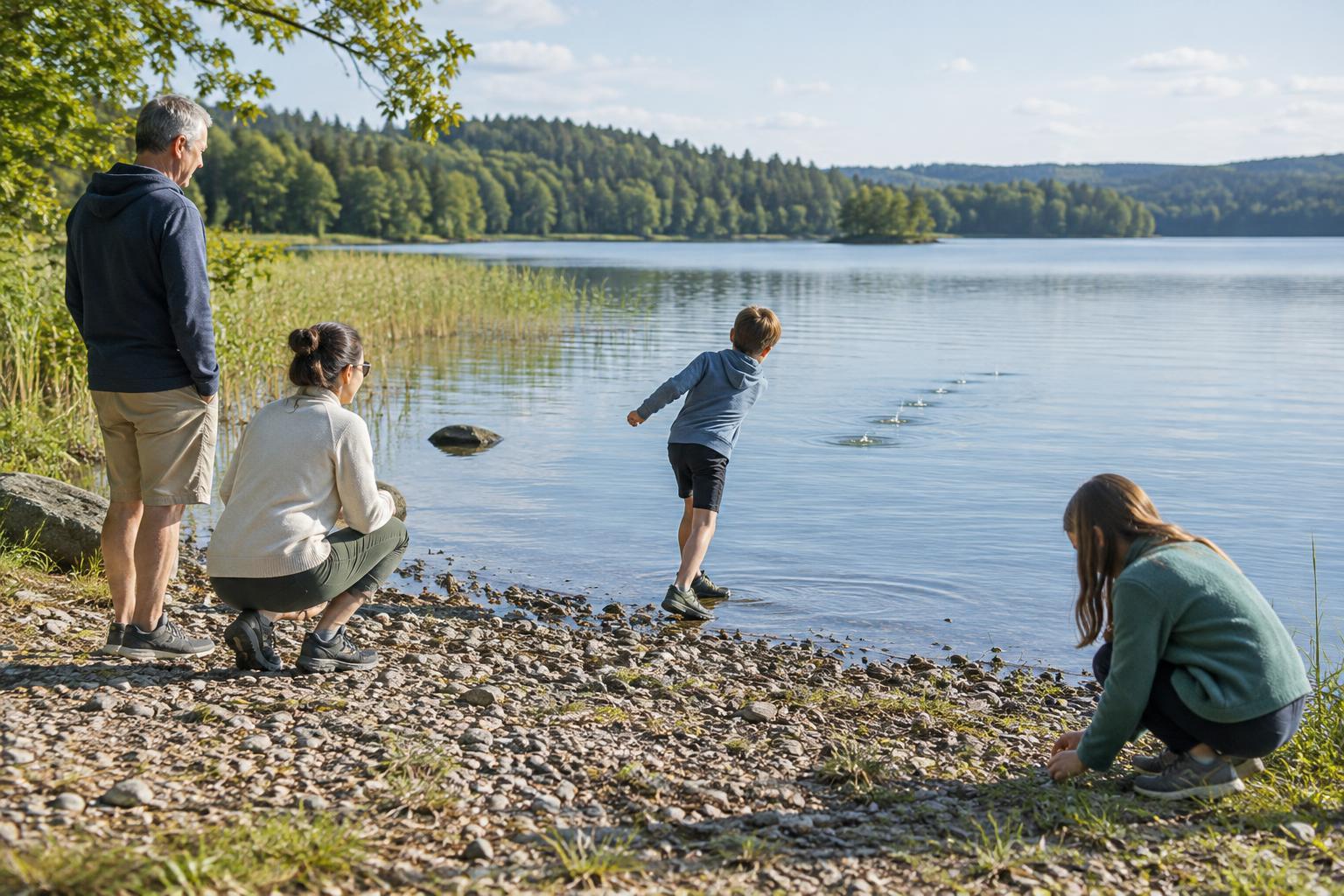
Stone skipping is an easy activity to try without turning it into a competition. On a shore where collecting and tossing stones is allowed, look for small, fairly flat pebbles that fit comfortably in the hand. Face open water, check that no people, boats or wildlife are in the throwing area, and try a low, gentle throw across the surface. Some stones will skip; others will make a satisfying splash.
People who do not want to throw can still join in by finding shapes, comparing textures or guessing which pebble might glide best. Avoid taking stones home, disturbing planted banks or digging into a shoreline to find a better one. If a site prohibits throwing objects into the water, switch to a pebble-free game: watch the ripples already on the lake and see how far you can follow them.
Turn a shoreline walk into a discovery game
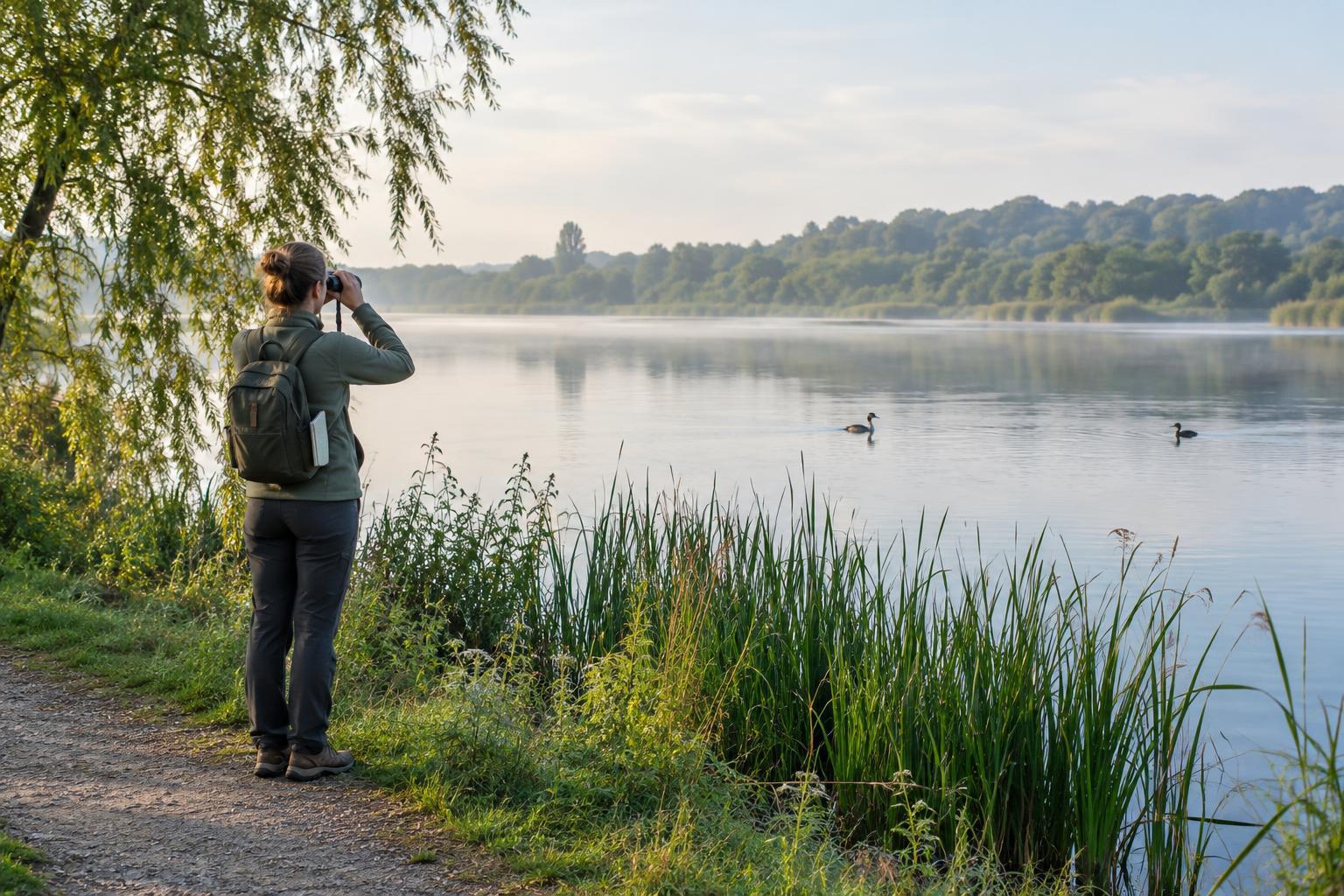
A slow walk gives everyone something to notice. Try a simple search for five things: a curved branch, a patterned rock, a reflection, a bird call and a plant growing near the water. There is no need to identify every species. Describing what you see—its color, shape or movement—can be just as engaging, especially when different ages are exploring together.
Keep the search observational rather than collectible. Leave shells, plants, nests and interesting pieces of driftwood where they are, and give animals plenty of space. Stick to paths or durable ground where possible, since shore vegetation can be easily trampled. If someone in the group would rather stay put, invite them to be the spotter from a bench or picnic blanket. A shared list can bring everyone’s discoveries together afterward.
Add a quiet activity for slower moments
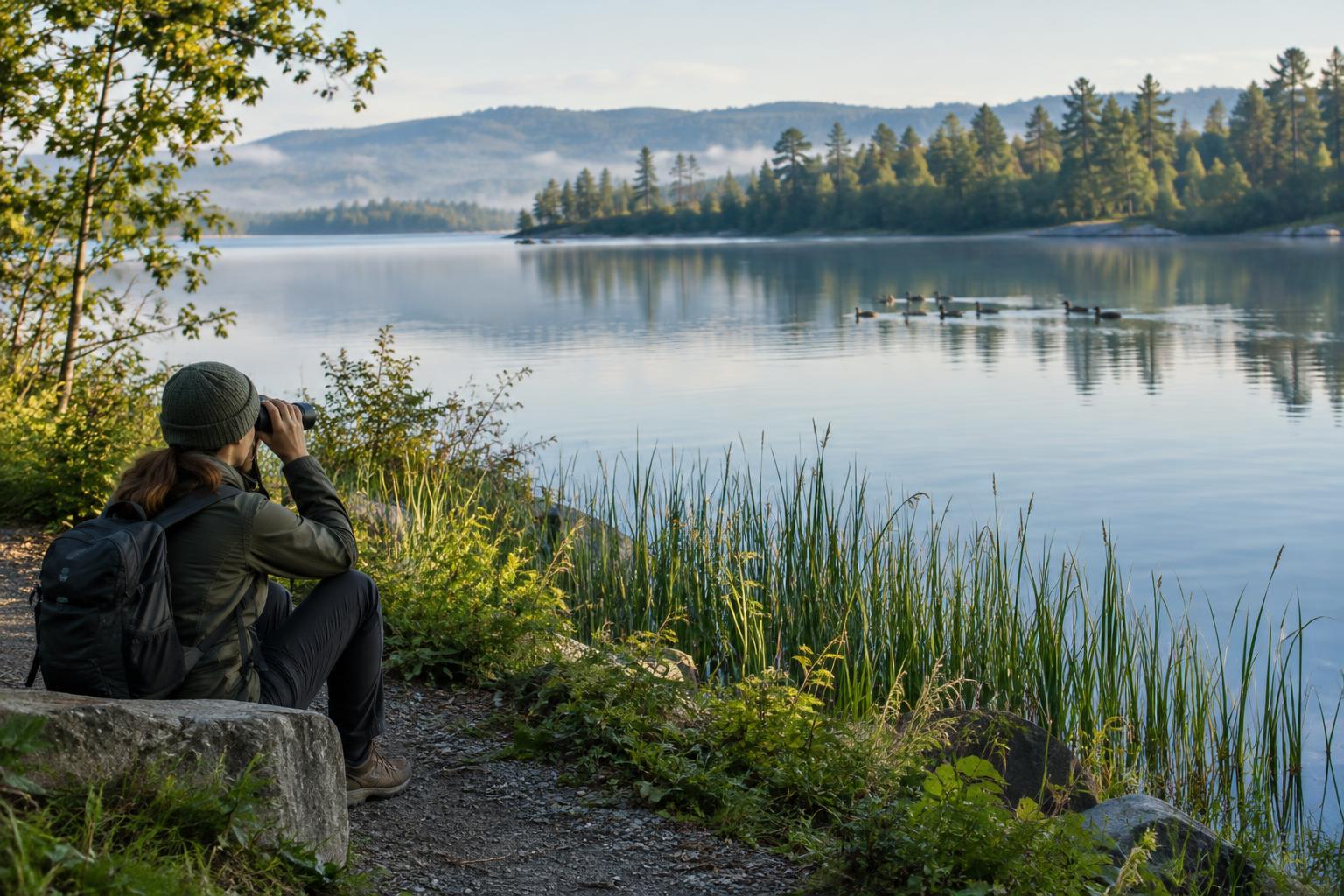
Lakes are good places to practice doing very little. Sit for a few minutes and listen for layers of sound: water touching the bank, leaves moving overhead and conversations farther down the shore. You might sketch the shape of the opposite bank, write a few lines about the view or photograph how the light changes on the water. These activities work well during a rest between walks.
For a playful challenge, choose one small scene and describe it without naming the lake. A child might notice a bright reflection while an adult notices the shadow beneath a dock. If you are taking photos, try a wide view and then a close detail, such as reeds against the water. Take pictures from stable ground rather than leaning over an edge for a better angle.
Pack lightly and leave the shore ready for the next visitor
A few basics can make a casual outing more comfortable: drinking water, sun protection, a layer for changing weather and shoes suited to the ground. Bring a small bag for your rubbish, and consider a towel or spare socks if muddy feet are likely. Check local signs before you start; access rules and permitted activities can differ from one lake to another.
Build in an easy stopping point rather than trying to fill every hour. If the weather turns, the shore gets busy or someone is ready for a break, head back without treating it as a shortened trip. A handful of skips, a few new observations and time spent together can be enough. Before leaving, gather your belongings, return any moved stones to the shore and take one last look at the view.