Look for what soft light does well
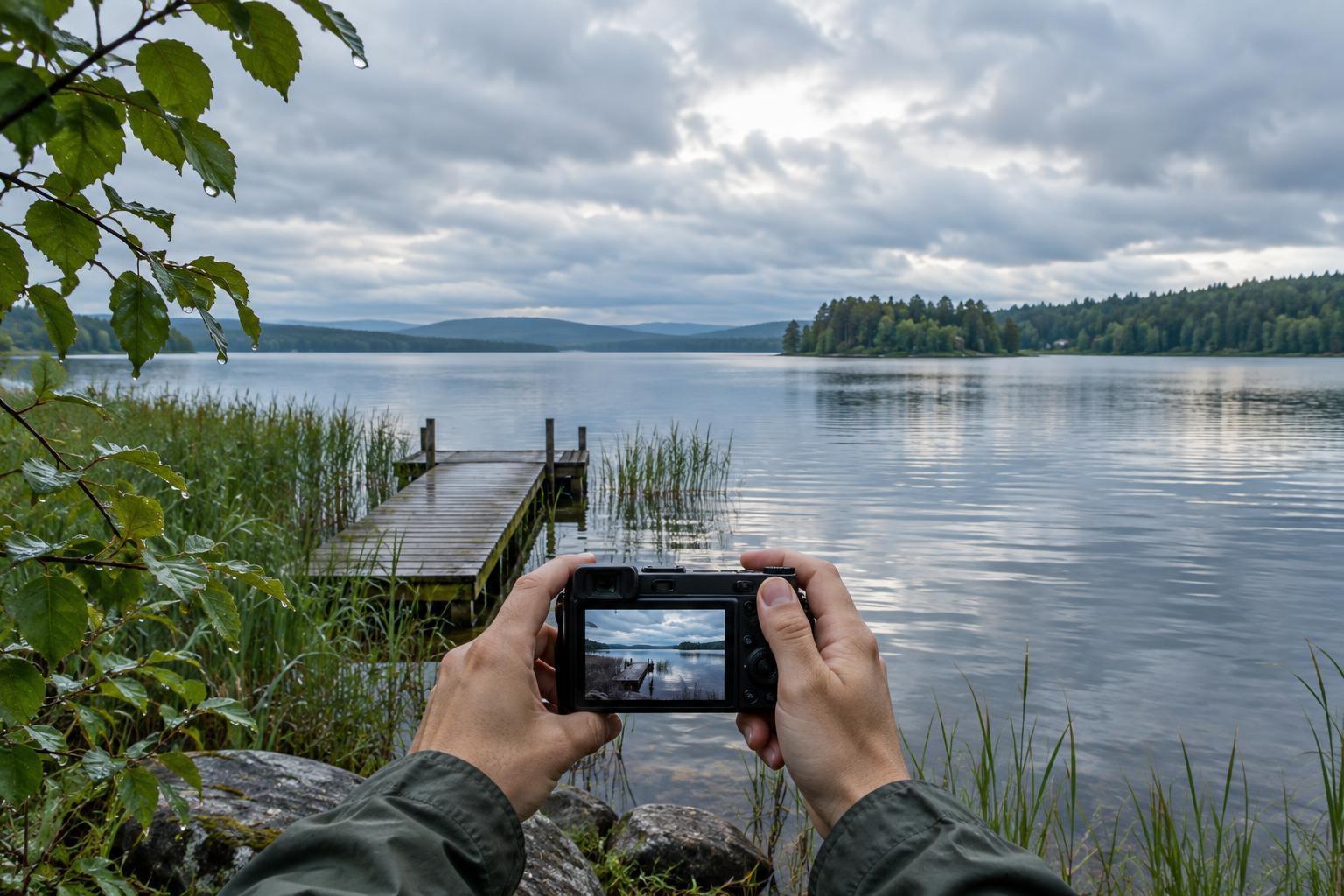
An overcast day may not deliver a glowing sunset, but it can make a lakeside walk easier to photograph. Cloud cover softens shadows, so details in a dock, shoreline path or weathered boathouse are less likely to disappear into darkness. Colors can also look quieter and more cohesive. Rather than trying to make the scene look sunny, lean into its gentle mood.
Start by looking for small subjects within the wider view: reeds against pale water, rain-darkened boards or a bright jacket beside a muted shore. If the sky is a featureless white, give it less room in the frame. Aim slightly down to include more shoreline or water, and notice where a darker foreground helps define the scene.
Give the water a role in the composition
Water can be a subject, a backdrop or a line that leads the eye. On a still morning, try placing a reflection near the center of the frame for a balanced image. When the surface is choppy, look instead for the shape and rhythm of the ripples. A patch of reeds or the edge of a dock can anchor an otherwise open stretch of lake.
Move a few steps before you take the photo. Shooting low may make a nearby stone or length of driftwood feel prominent; stepping back may reveal how a path curves toward the shore. Check the edges of your frame for cut-off railings, stray branches or bright objects that compete with your subject. These small adjustments often matter more than changing camera settings.
Check exposure, especially around bright skies
A pale sky can trick a camera or phone into making the land and people too dark. After taking a test shot, look at the subject rather than judging the image by the screen’s overall brightness. On a phone, tapping the person or object you want to photograph usually tells the camera where to focus and measure light. Many phones also let you adjust brightness before taking the shot. Make a small change, then check that the sky and water still retain any detail you want to keep.
For a person standing against the lake, ask them to turn slightly toward the brightest part of the sky. That soft light may brighten their face without the harsh squinting direct sun can cause. If the background remains much brighter, change your position or include less sky. A simple change of angle can look more natural than a heavy edit later.
Photograph the story of the outing
A satisfying set of weekend photos does not need to be a series of wide lake views. Include an establishing shot that shows the setting, a few details that convey its texture and a moment of activity. Boots beside a cabin door, hands holding a warm drink on a porch or a paddle resting on shore can help you remember what the day felt like. Make room for unposed moments, while respecting other visitors’ privacy.
Overcast conditions suit gentle portraits because the light is relatively even. Look for a simple background and leave some space around the person to show where they are. If trees or buildings create a dark pocket, take a few steps into a more open area rather than asking your subject to face a blank, bright sky. For movement, such as someone walking along a dock, take several frames and choose the one with the clearest gesture.
Keep your gear dry and your edits restrained
Cloudy weather can change quickly near the water. Carry a dry cloth for the lens and a small bag or rain cover for your camera or phone. Wipe away droplets before shooting; even one spot on the lens can make an image look hazy. Keep gear secured when you are close to an edge, and choose a stable, dry place to stand rather than reaching for a risky angle.
When editing, begin with modest adjustments to brightness, contrast and color. You may want to lift dark foreground details or bring back some texture in the clouds, but there is no need to erase the day’s character. Leave a few soft shadows and muted tones intact. The best overcast lakeside photos often feel like an honest record of a quiet place, not an imitation of sunshine.