Start with your plans, not your suitcase
A two-night getaway rarely calls for a large bag. Before packing, sketch out what you actually expect to do: perhaps a walk by the water, a swim, a meal out and a slow morning with coffee. Check the weather forecast close to departure, then look at your accommodation details. A dock, towels, breakfast or a place to dry wet clothes may or may not be available, so avoid packing around amenities you have not confirmed.
Set aside the essentials first: reservation details, identification, payment card, phone, charger, any necessary medication and travel documents. If you are driving, keep directions and arrival instructions accessible even when your bag is closed. Share your rough plans with a travel companion so you do not bring duplicates of items such as a cooler, picnic blanket or camera charger.
Build a small, flexible clothing kit
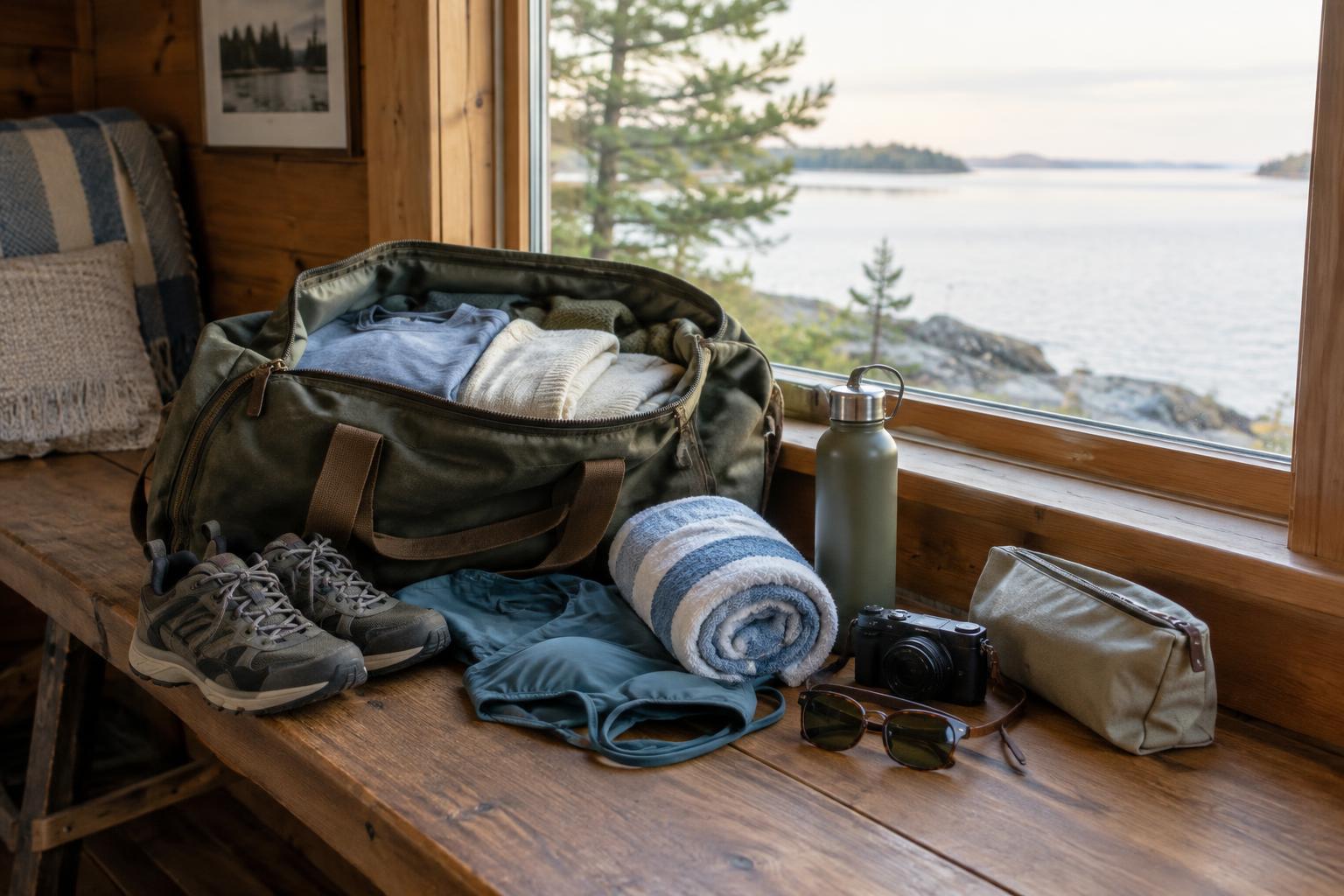
For two nights, pack two daytime outfits, one comfortable evening option and sleepwear. Choose pieces you can mix rather than a separate outfit for every activity. A light layer is useful near open water, where a comfortable afternoon can feel cooler once you stop moving. Add a compact rain layer if the forecast suggests showers, plus enough underwear and socks for the stay and one spare pair of socks if you expect to walk.
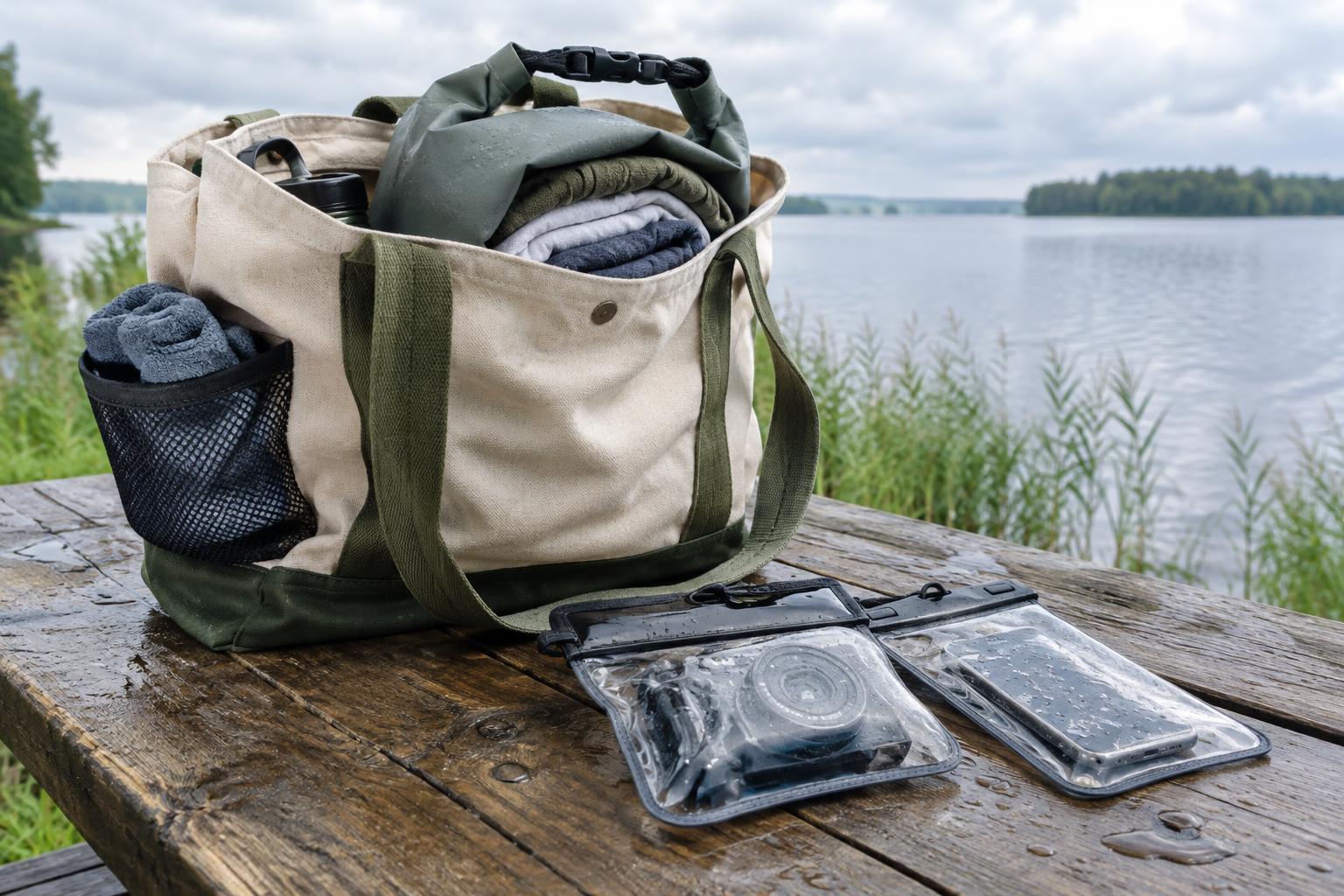
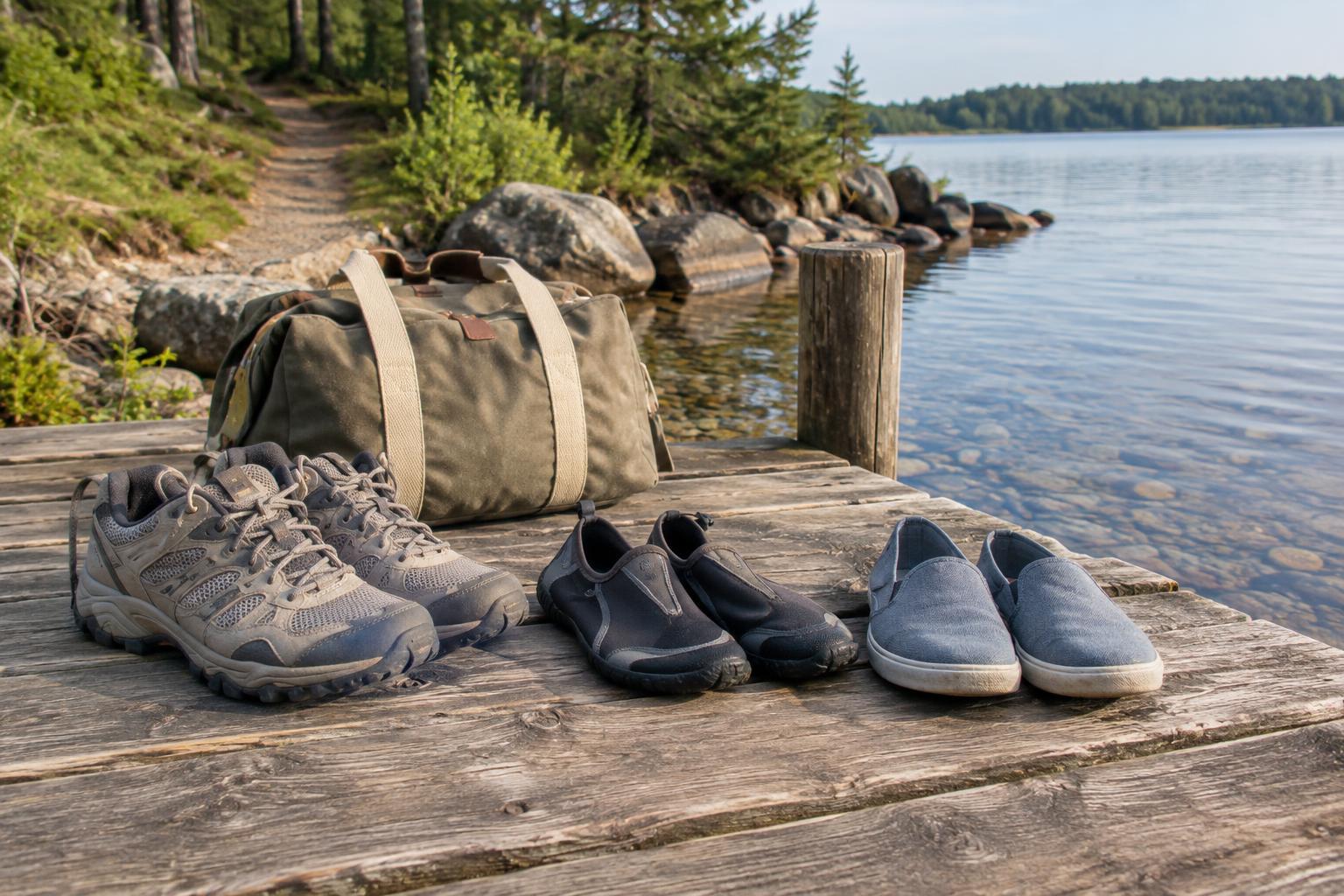
Bring shoes suited to your plans: comfortable walking shoes for paths and casual outings, and sandals or water-friendly shoes if you expect to visit a beach or rocky shore. If swimming is on the agenda, pack a swimsuit and a bag for damp clothing. A hat and sunglasses are easy to forget but useful during long periods outdoors. For a meal out, check the venue rather than assuming you need dressier clothes.
Pack for the shore and the trail
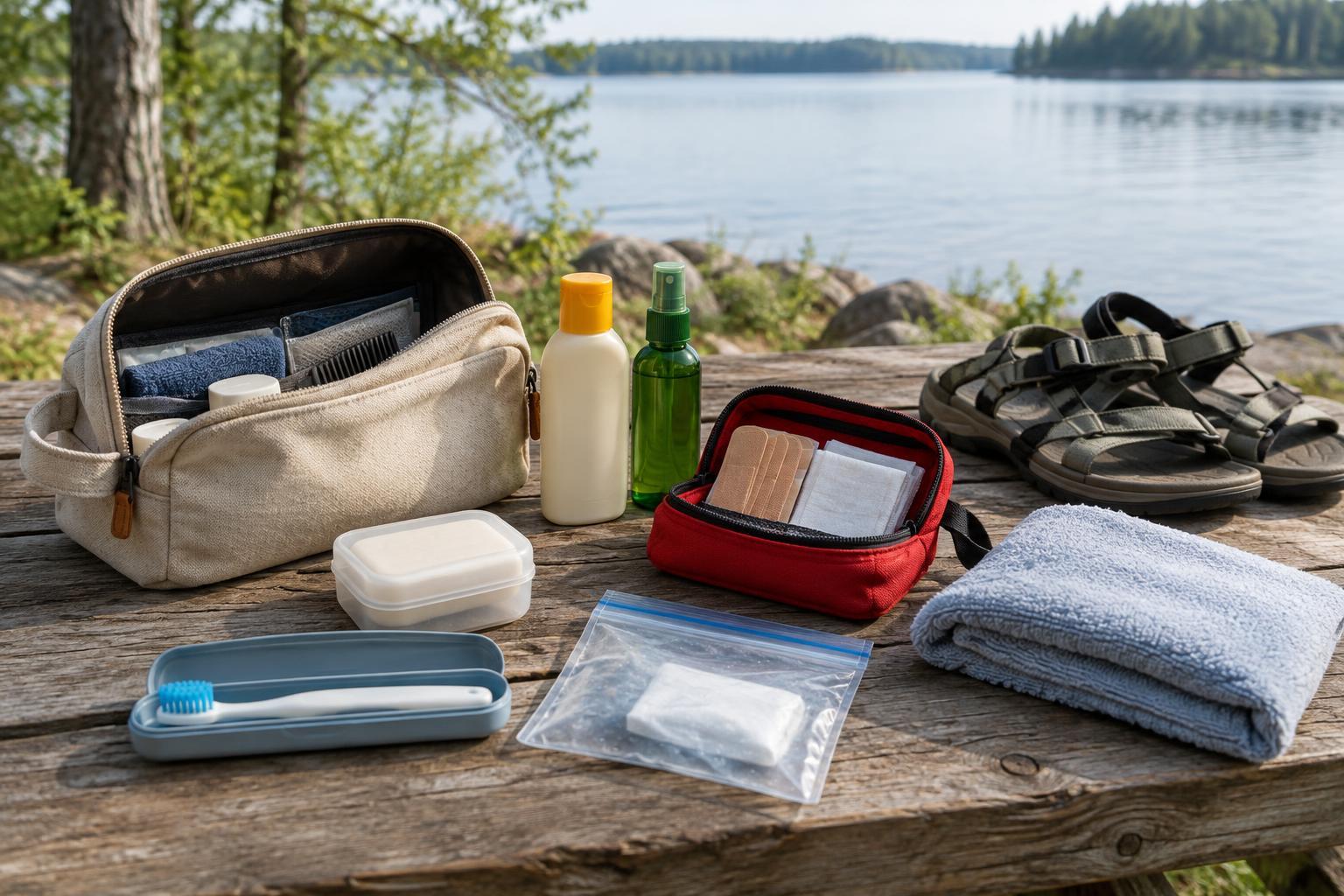
A reusable water bottle, sunscreen and a small day bag cover many short outings. Add insect repellent if you expect to spend time outside, particularly around dusk. A quick-drying towel can be handy when towels for outdoor use are not provided. For a picnic, consider a reusable container, napkins and a compact blanket; keep food plans modest unless you know what refrigeration and cleanup facilities you will have.
If you plan to paddle, fish or hike, make a separate activity list instead of treating specialized gear as an afterthought. Confirm rental arrangements, access rules and any equipment you need to bring. Choose a route or activity that fits your experience, and pack the appropriate safety equipment. A charged phone is helpful, but do not rely on it as your only way to navigate an unfamiliar trail.
Keep comfort and photography simple
Your usual toiletries, a toothbrush, personal care items and any prescribed medication belong in the bag even for a short stay. A small first-aid kit with basic supplies can help with minor scrapes. Pack a sleep aid you already use, such as earplugs or an eye mask, if unfamiliar rooms tend to interrupt your rest. Before adding a hair dryer or extra bedding, check what your accommodation supplies.
For casual photos, a phone is often enough. Clean its lens, free up some storage and bring a charging cable and power bank if you will be out for much of the day. If you prefer a dedicated camera, check its battery, memory card and strap before leaving. A small cloth or protective pouch helps keep gear away from sand and splashes. Early or late daylight can make lakeside scenes appealing, but leave room to enjoy the view without documenting every moment.
Do one final check before you leave
Lay everything out and ask whether each item supports a specific plan, solves a likely inconvenience or would be difficult to replace. This is a good time to remove duplicate shoes and just-in-case outfits. Keep wet items separate from clean clothes on the return trip, and leave a little space in your bag so repacking does not become a puzzle.
Finally, verify the forecast, accommodation address, arrival details and any activity bookings. Charge your devices, fill the water bottle and put the items you will need en route where you can reach them. A short, deliberate check is more useful than filling every corner of the suitcase—and makes it easier to settle into the weekend when you arrive.