Let the lakeshore come to you
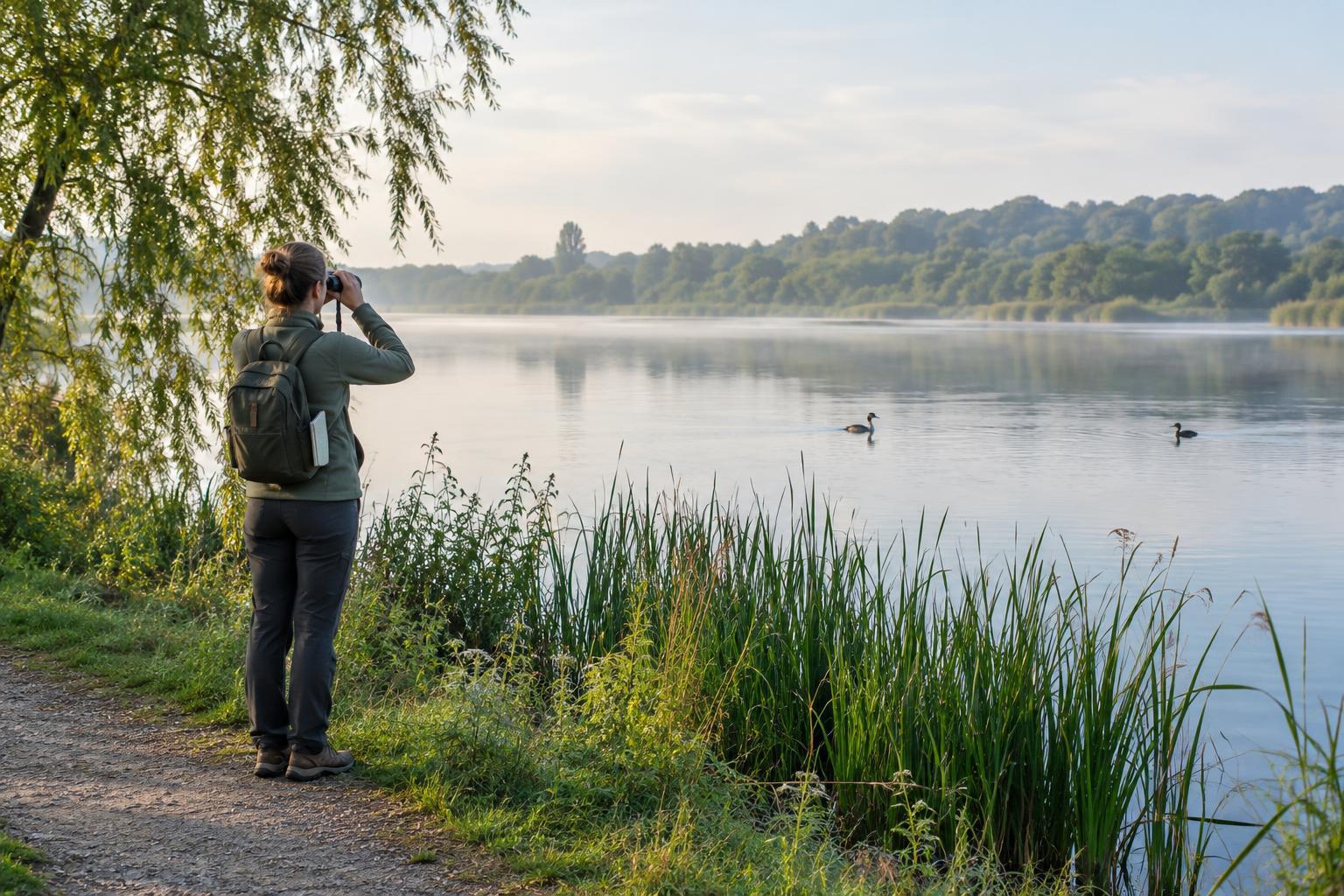
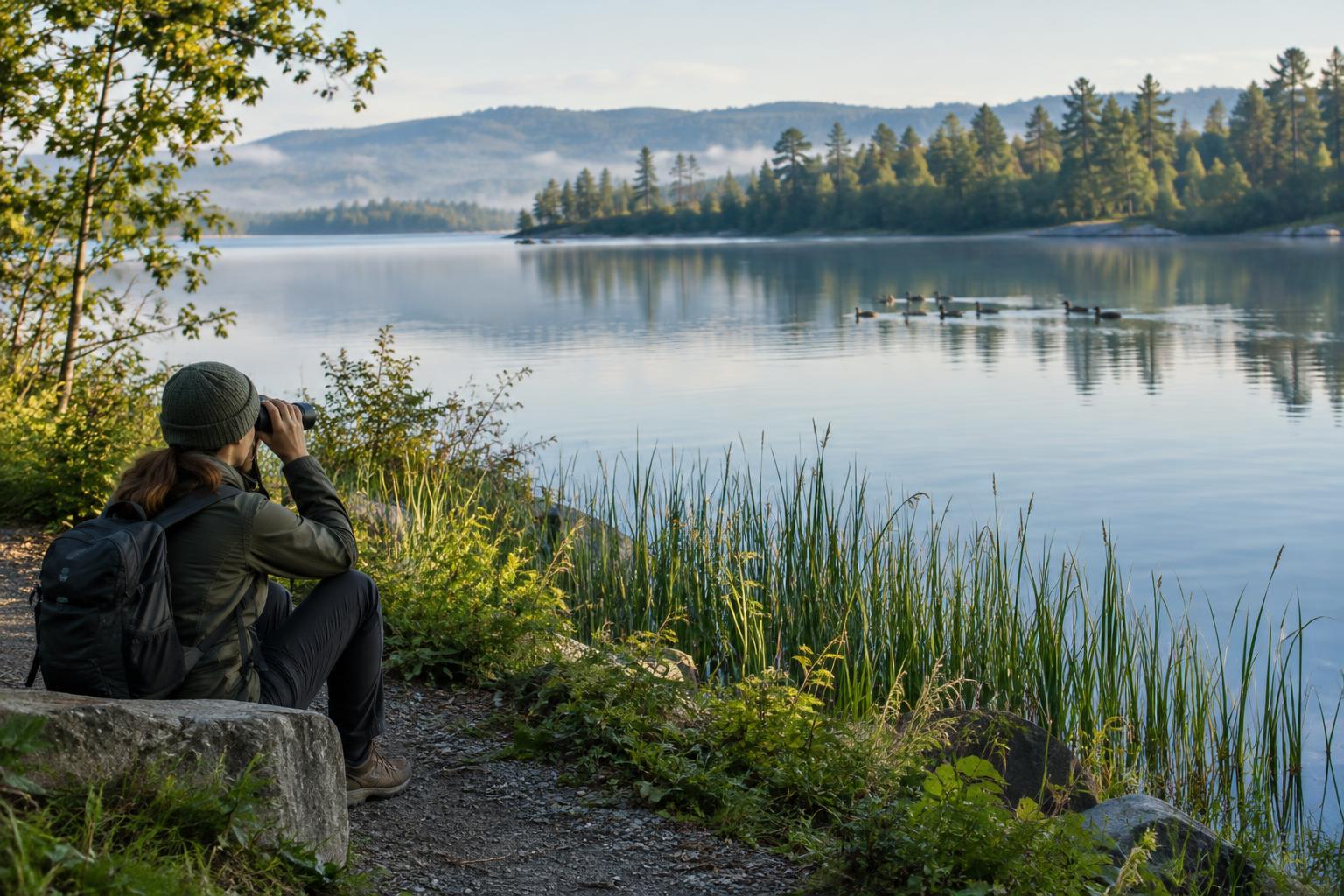
The most rewarding wildlife watching often begins with a pause. Rather than walking the entire shore in search of animals, choose a public trail, overlook or established access point with a view of the water and nearby vegetation. Stand or sit still for a few minutes. Movement that was easy to miss—a bird working through reeds or a turtle surfacing near a log—may become easier to notice once the shore feels quiet again.
Bring binoculars if you have them. They make it possible to see behavior without closing the distance. Early morning and late afternoon can be pleasant times to watch, but there is no need to treat any hour as a guaranteed sighting. Wind, weather and human activity can all change what you notice. A comfortable, unhurried visit is a better goal than a checklist of animals.
Keep enough distance for animals to behave normally
There is no single distance that suits every animal or setting. Use behavior as your guide: if an animal stops feeding, changes direction, calls repeatedly, moves away or focuses on you, give it more space. If you are unsure whether you are too close, step back. Use extra caution around nests, young animals and resting areas, where an approach may interrupt important activity even if the animal does not flee.
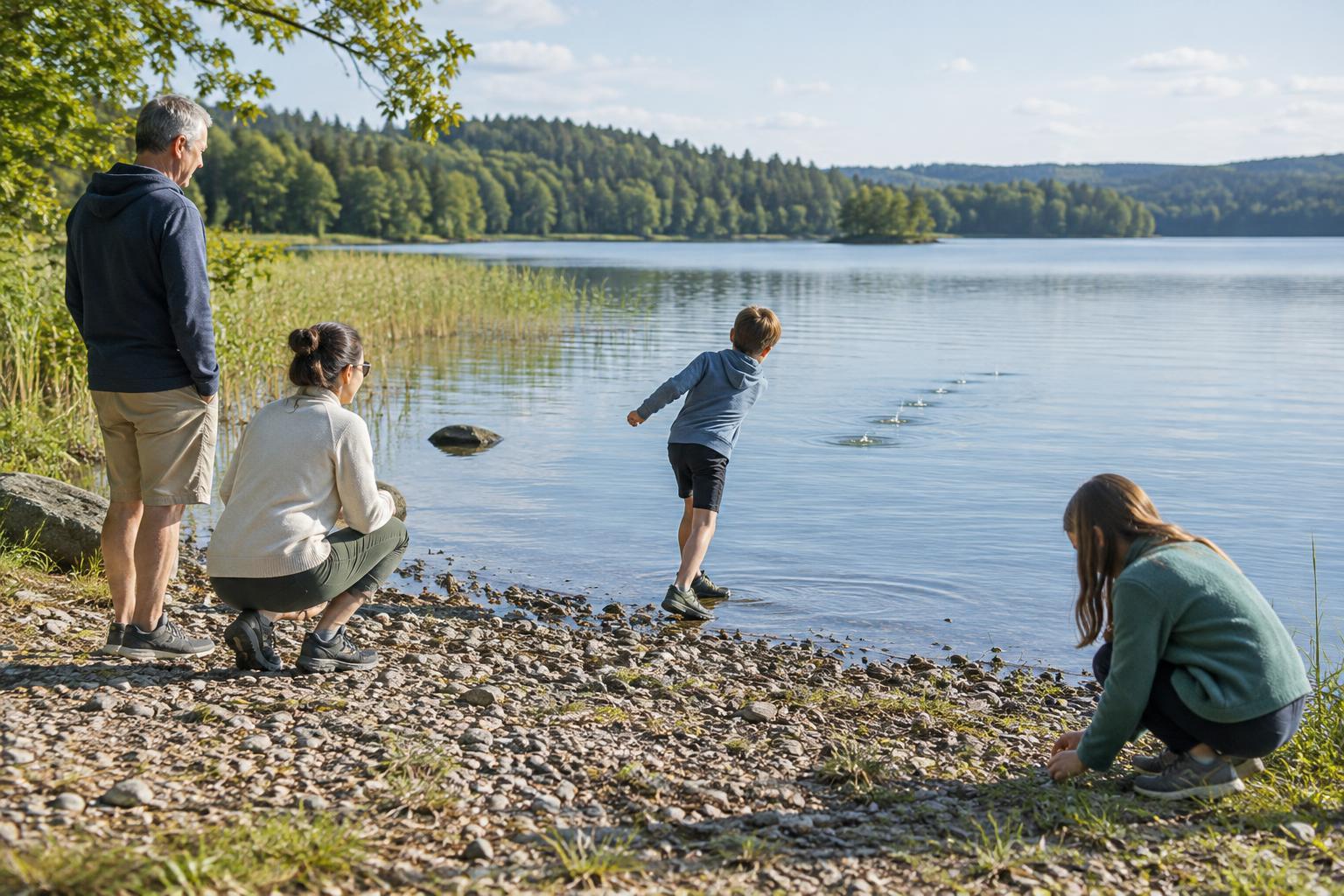
Stay on marked paths and respect closures, signs and property boundaries. Shoreline plants provide cover and can be easily damaged by repeated footsteps. On the water, give animals room to move instead of paddling toward them or positioning a boat between them and open water. Keep pets under control and follow local leash rules; even a friendly dog can startle wildlife.
Watch quietly, and never try to create a sighting
Speak softly, move at an easy pace and silence device alerts. If you are watching with others, spread out only where the path allows rather than surrounding an animal. Avoid throwing stones, splashing or making calls to draw wildlife into view. Feeding animals is best avoided too: it can change their behavior and bring them into closer contact with people.
A small notebook can make a quiet visit more engaging. Record what you notice about movement, habitat, sounds and light, even if you cannot identify a species. Asking “What was it doing?” often leads to a richer memory than rushing to name it. If an animal disappears into cover, let that be the end of the encounter rather than following it.
Make photographs without pressing closer
For simple lakeshore photography, start with the scene rather than a close-up. Reflections, tracks seen from a path, and the shape of a bird against the water can all tell a story. A zoom lens can help, but cropping a wider image later is preferable to disturbing an animal for a tighter frame. Keep your camera ready before you reach a viewing spot so you can avoid sudden movements.
Skip flash near wildlife, and do not clear plants or leave an established path to improve an angle. Be especially careful about sharing the precise location of a nest or another sensitive spot; a vague description of the lakeshore may be enough. Follow any local rules on photography equipment and drones, which may be restricted or disruptive in places where people go to enjoy nature.
Leave the shore ready for the next visitor
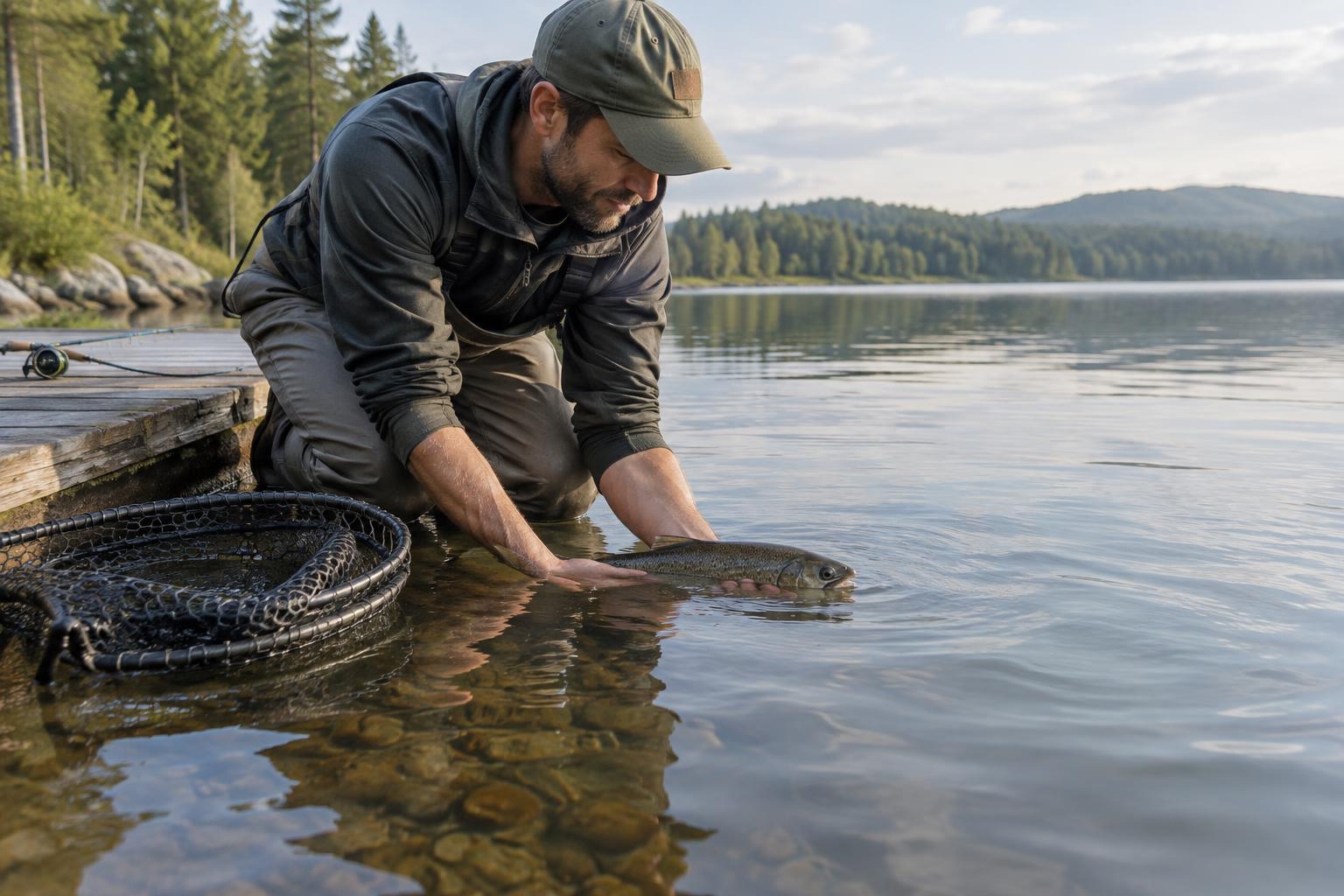
Pack out wrappers, fishing line and other litter you can safely collect. Fishing line in particular can entangle animals, but do not enter unsafe water or disturb habitat to retrieve it. Give other visitors space to enjoy the same view, and keep paths clear when you stop to watch.
Before leaving, take one last look at the place rather than searching for one more sighting. Notice where animals had cover, where people could pass without trampling plants, and which vantage point worked without an approach. Those observations can guide your next lakeside walk. Wildlife watching is at its best when the animals can continue their day much as they would have if you had never arrived.